
Continuation Betting in Poker
In No Limit Hold’em, one of the most effective strategies on the flop is the continuation bet (or ‘c-bet’). This is when the player who raises pre-flop continues their aggressive play by betting again on the flop.
You can make a continuation bet in poker with a value hand or as a bluff. Knowing when to c-bet and when to check instead is a much harder skill to learn, and involves an understanding of your own hand, how it connects with the flop and what your opponent is likely to be holding.
This page will take you through all aspects of c-betting in poker, from understanding the different types of continuation bet to knowing how to avoid common mistakes.
What Is a Continuation Bet in Poker
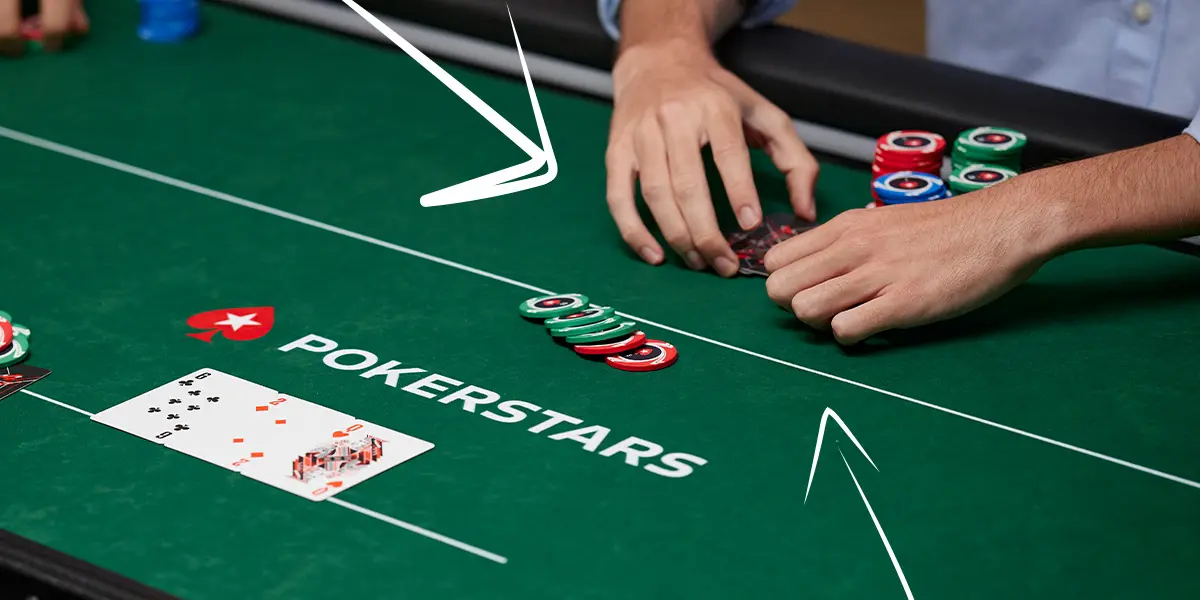
A continuation bet occurs when the preflop aggressor, the player who made the last aggressive action preflop in the form of a bet or raise, continues their aggression by making another bet on the flop.
Continuation bets in poker serve multiple purposes. You can make a c-bet as a value bet, bluff, or semi-bluff. You can also protect weak made hands against draws by betting the flop.
C-betting is a standard part of poker strategy in games like Texas Hold’em and Omaha. It forces the other player to make an early decision on whether they want to continue with their hand.
Example of a c-bet in position:
Player A raises from the cutoff in late position and Player B calls in the big blind. Player B checks the flop and Player A, who has both initiative and position, continues their aggression by making a bet.
Example of c-bet out of position:
Player A raises from early position and Player B calls on the button. Player A then leads the flop with a continuation bet from out of position.
Example of c-bet after three-betting:
Player A raises from middle position and Player B three-bets from the button, which Player A calls. Player A checks the flop and Player B makes a continuation bet.
Why C-Bets Work
Continuation bets are effective because they leverage aggression. As the preflop aggressor, you have an uncapped range, so you could have a very strong hand. As the caller, your opponent has a capped range; they won’t usually have top premiums, or they would have reraised.
This gives you range advantage along with initiative, allowing you to take control on the flop. If you are out of position, you can c-bet as the first action. In position, your opponent will usually check, allowing you the chance to bet.
C-betting lets you to build the pot when you are ahead, as well as take down the pot when you are behind, making it an effective betting line for both value bets and bluffs.

Types of Continuation Bets (Value vs. Bluff)
Here, we’ll take you through the main reasons for making a c-bet in poker.
C-betting for value with a strong hand
In general, when you make a good hand – for example, top pair or better – you should go ahead and continue betting. When you have a strong hand it’s crucial to build the pot as much as you can so you can obtain maximum value.
There is an argument for checking instead, and allowing your opponent to bluff, known as trapping, but the dangers of your opponent checking behind means it is rarely going to be the best option unless there are exceptional circumstances – such as your opponent being a complete maniac.
Don’t worry about deception. You can keep your hand strength hidden by balancing your ranges, which we’ll talk about later on. For now, just know that you should c-bet for value and protection with your strong hands and monster draws.
C-betting as a bluff
The other main motivation for c-betting in poker is to bluff. This allows you to generate fold equity with missed hands and take down the pot without having to take the hand further.
For example, you raise preflop from middle position and your opponent calls in the big blind. The flop comes A-5-2 rainbow. Whether or not you have hit a pair of aces, you can easily represent this hand as the preflop aggressor. If your opponent has less than top pair, they may have to fold.
Given that your opponent will miss the flop around two-thirds of the time, c-bet bluffs have a high rate of success. However, there are many other factors to consider before blindly bluffing, which we’ll cover in detail below.
Semi-Bluffs
Semi-bluffs are bluffs that are made when you have at least some equity in the pot, such as a flush or straight draw, or even a backdoor or gutshot draw that could pick up more equity on the turn.
It’s better to semi-bluff than to bluff with no equity when c-betting, as semi-bluffing allows you to win the pot in multiple ways. If your c-bet bluff is successful, you take down the pot. If the villain calls, you still have a chance to complete your hand on future streets and switch to value betting.
Semi-bluffs are crucial to balance your c-betting ranges and avoid becoming predictable. By including draws in your c-bet range, you’ll disguise your value bets and make it more likely that you’ll get paid off when you have it.
C-betting with a medium-strength hand
Knowing when to c-bet with a medium strength hand is more complicated. If you raise preflop with T-8 suited, one player calls on the button and the flop is Q-8-2 – you have middle pair with a weak kicker and a decision to make.
When you bet in this spot, you are probably only being called by better hands. Unless your opponent is a calling station, they will probably fold hands like Ace-high, weak draws, worse middle pairs and small pocket pairs when you bet. This means that when you get action you will probably be up against a hand that beats you. In this case, c-betting will usually be a mistake.
Instead, you should check your mid-strength hand and hope that it either gets checked behind (in this case you are probably ahead) or induces a bluff from your opponent. Your hand is good enough to call a bet if that’s the case, and then you can re-evaluate what to do on the turn and river if you face more action.
If you are in position, the situation is a little different, as you’ll have the advantage of acting last. In some cases, checking back on the turn for pot control is still the right move. In other circumstances, betting small with a merged range is fine, as this allows you to protect your hand.
When to Make a Continuation Bet
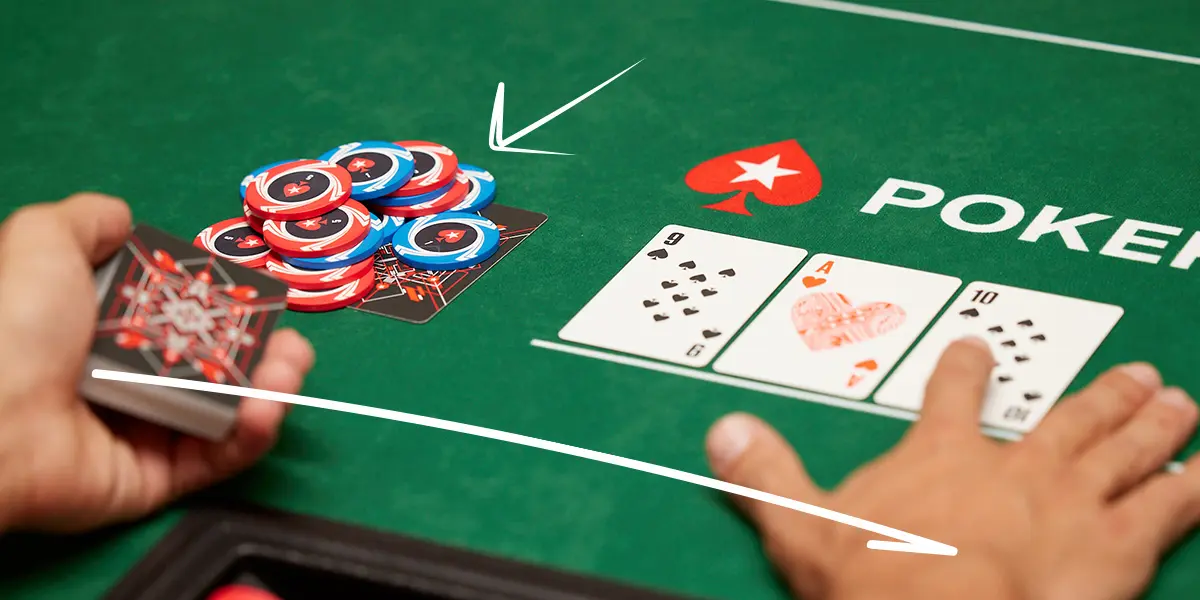
It’s important that you get out of the habit of c-betting with a 100 percent frequency, as c-betting every hand on every flop against any opponent is a mistake.
According to today’s GTO poker strategy, optimal c-betting frequency is around 60-75 percent in position and 35-50 percent out of position.
Aside from position, when to actually make a c-bet varies depending on factors such as:
Board texture
As the preflop raiser, it’s easy to represent a hand with high cards in it, such as aces, kings or queens. A flop that involves one or more of those cards, such as dry ace-high or king-high board, is perfect to c-bet bluff.
On the other hand, you generally should avoid bluffing on very coordinated flops, such as 9-8-7 rainbow or K-9-7, or flops which you suspect have hit your opponent’s range hard.
Always think about what your opponent could have when they call a raise preflop. A common hand to have in that situation is something like suited connectors (eg. 7♦6♦) or middling hands (eg. Q♥J♣). So, when the flop is very draw heavy or favors your opponent’s range, it’s probably best not to bluff!
Stack depth
Always consider stack depth when deciding whether to c-bet. If stacks are deep and other factors are in place, you can c-bet wider with a merged range that includes strong hands, medium hands and bluffs.
With shallow stacks, your flop c-betting range should be more polarized. You’ll either be looking to stack off with your strong value hands or win the pot when you have missed. With short or medium stack, c-betting with medium hands can be a mistake, as it could commit you to the pot.
Opponent type and Tendencies
As with all of your bets in poker, you should adjust your c-betting frequency based on your opponent’s tendencies. If you are up against very tight players who will fold unless they hit top pair or better, you can open up your c-bet bluff range and even bet your entire range.
Against calling stations, you want to c-bet bluff way less often, as they will call with any pair, high card, or weak draw. Instead, look to gain more value when you have a strong hand and consider betting with a merged range to extract value from weaker hands.
Tough, aggressive opponents are your biggest threat when c-betting, as they will raise or check-raise often. Lean towards a polarized range of very strong hands and bluffs so that you either take the pot down or have a hand to fight back with.

C-Bet Sizing Strategy
Your continuation bet sizing has a huge impact on how the hand plays out, influencing how your opponent perceives your range, what hands they can call with, and how much fold equity you will generate.
As such, there’s no standard c-bet sizing that suits all situations, although as a guideline you’ll usually be betting between a third and two-thirds of the pot, as this strikes the balance between getting value for strong hands and keeping your bluffs as cheap as possible to reduce risk.
It’s important to note that whatever bet size you do choose, you shouldn’t be changing it based on the strength of your hand. If you bet huge with strong hands and small with bluffs – or vice-versa – then perceptive opponents will quickly pick up on this, leaving you in a lot of trouble.
Instead, be flexible and change your bet sizing based on factors like board texture, stack depth, range advantage and so on.
Small C-Bets (1/4 to 1/3 Pot)
Use a smaller c-bet sizing of one-quarter to one-third of the pot on dry boards when:
- The board texture is very dry and disconnected with one or more high cards. For example, A-7-2 or K-5-3 rainbow. On these boards, you don’t have to protect against draws and betting small allows your opponent to stay in the pot with weak hands.
- You are betting a wide, merged range consisting of strong hands, medium hands and bluffs. A smaller sizing allows you to get value for your medium hands and build the pot without inflating it too much. At the same time, bluffs will still get through when opponents miss.
- Opponents are tight. Smaller bets allow you to exploit tight opponents. It’s the only way you’ll squeeze value out of them, while at the same time your bluffs can still get through. If you meet resistance and don’t have a strong hand, you could be beat.
Example:
You raise pre-flop with A♠Q♣ and the flop is K♦7♣2♠. A small c-bet of 1/3 pot can fold out hands like QJ, 98, and lower pairs without risking too much. It accomplishes the same as a larger bet on this board.
Medium to Large C-Bets (2/3 Pot or More)
Larger bets definitely have a purpose. A larger value bet can inflate the pot and allow you to gain the maximum, but only if the other player can actually call the bet. You are laying them worse odds, meaning they will have to tighten up their calling range.
Large bets can also make bluffs more effective, as they increase fold equity by putting pressure on a wider range of hands. However, this is balanced by the extra risk involved by placing more chips in the middle.
Use a larger c-bet sizing when:
- The board is wet and coordinated, such as J♠10♠9♦ or A♣7♠6♠. You’ll need a larger sizing for both your value bets and bluffs here to discourage opponents from calling with draws or make them pay the price.
- You have a polarized range comprised of very strong hands and total bluffs. In this case, you want to maximize value as well as fold equity, forcing opponents off most of their hands while stacking off against other strong hands that you beat.
- Against calling stations when you are value betting, as they won’t pay too much attention to bet sizing. A loose passive player is likely to call if they hit any piece of the board, allowing you to size up to gain the maximum chips.
- When you have a polarized range (strong hands or total bluffs)
- When you want to deny equity from draws
- Against sticky or calling-prone opponents
Example:
You raise pre-flop with 9♠9♣ and the flop is 8♠7♠6♦. A large c-bet forces folds from overcards and protects against hands like J♠10♠.
Common Continuation Betting Mistakes (And How to Fix Them)
Here are the most common mistakes players tend to make when continuation betting in poker:
- C-betting 100 percent of the time – C-betting your entire range on any board is no longer a viable strategy. It is too easily exploited by other players, who can easily call you down or raise you off your hand. Use hand strength and board texture to guide your decisions.
- C-bet bluffing with no equity – On very dry boards that favor your range, such as an ace-high board, you can c-bet with no equity. A lot of the time though, this will land you in trouble. If you’re called, you’ll be forced to give up on the turn. Even a little equity can allow you to catch up or fire a second barrel.
- Ignoring position – You’ll have noticed that typical c-betting ranges are much wider in position than out of position. This is because you’ll still have the advantage on the turn when you c-bet in position, whereas c-betting out of position leaves you vulnerable to being called or raised.
- C-betting into calling stations – If you don’t adjust to your opponents, then you could be making a mistake when c-betting by missing bluffs and value bets, or by overbluffing into calling stations. Keep an eye on the table and adapt your play accordingly.