Quackers Slot Review – An Avalanche of Rubber Ducks
September 3, 2026
Blackjack might feel perfectly at home in a modern casino, but the game didn’t begin beneath the bright lights of Las Vegas or on an online casino platform.
Its history stretches back centuries.
Long before players were hitting, standing and doubling down at today’s blackjack tables, Europeans were playing card games built around a familiar objective: reaching a particular total without going beyond it. Among the most important was the French game Vingt-et-Un, meaning ‘twenty-one’, which is widely regarded as one of blackjack’s closest historical predecessors.
From there, the game travelled.
Twenty-One crossed the Atlantic, developed new rules and eventually acquired the name ‘blackjack’. As casinos became established in the United States and elsewhere, blackjack grew into one of the industry’s most recognisable table games.
Its evolution didn’t stop there.
Mathematicians began studying blackjack strategy, card counting changed how some players approached the game and casinos adapted their rules in response. More recently, online casinos and live dealer technology have taken a game with centuries of history and introduced it to players far beyond the traditional casino floor.
The blackjack played today isn’t identical to those early games of Twenty-One. Rules, payouts and even the way cards are dealt can vary between casinos and regions.
Understanding that history gives us a different perspective on a familiar game. Rather than looking for some forgotten strategy or historical ‘secret’, we’ll explore how blackjack developed, why its rules changed and how a centuries-old card game became a global casino favourite.
Where Did Blackjack Originate?
Pinpointing exactly when and where blackjack was invented isn’t as straightforward as you might expect.
There isn’t one documented moment when somebody created blackjack and wrote down the rules we recognise today. Instead, the game appears to have developed gradually from several European card games built around similar ideas.
One of the strongest links is to France.
The French Connection
By the 17th and 18th centuries, a game known as Vingt-et-Un, French for ‘twenty-one’, was being played in France.
The name immediately gives away the most important similarity to modern blackjack: players were attempting to reach 21.
Vingt-et-Un wasn’t identical to the blackjack found in casinos today. Rules varied, and many of the features now considered standard developed later. However, the basic concept makes it one of the clearest ancestors of the modern game.
France also had a thriving culture of card games during this period, making it an important part of blackjack’s early development.
Similar Games Existed Elsewhere
keyboard_arrow_down
France wasn’t the only European country playing games based around reaching a particular card total.
Spain had a game called Veintiuna, another name meaning ‘twenty-one’, while games elsewhere in Europe shared elements that would eventually become familiar to blackjack players.
This makes blackjack less like an invention that appeared overnight and more like the result of card games evolving, travelling and borrowing ideas from one another.
As people moved between countries, so did their games.
Vingt-et-Un: Blackjack’s French Ancestor
Of all the games associated with blackjack’s early history, Vingt-et-Un has perhaps the clearest connection to the game we know today.
The name translates simply as ‘twenty-one’, and by the 18th century, the game had become established in France before spreading further afield.
While there were variations in how Vingt-et-Un was played, its central concept will sound very familiar to modern blackjack players.
The Aim Was Already 21
Players attempted to create a hand with a value as close to 21 as possible without exceeding it.
Going above 21 could result in a loss, creating the same basic risk that remains central to blackjack today. Players therefore had to decide whether they wanted another card or whether they were satisfied with their existing total.
That simple decision helped establish the hit-or-stand dynamic that remains one of blackjack’s defining features.
But It Wasn’t Modern Blackjack
Despite the similarities, sitting down at an 18th-century game of Vingt-et-Un wouldn’t necessarily feel like joining a blackjack table today.
Rules weren’t completely standardised and could vary according to where and with whom the game was being played. Features now associated with casino blackjack, including specific dealer procedures, splitting, doubling down and standardised payouts, developed or became formalised over time.
The role of the dealer or banker could also differ from the highly regulated position occupied by a modern casino dealer.
Blackjack wasn’t finished evolving.
Why Vingt-et-Un Matters
The significance of Vingt-et-Un lies in the framework it helped establish.
Reaching 21, avoiding going over and making decisions about whether to take additional cards are all concepts that survived as the game developed.
Its popularity also helped Twenty-One travel beyond France.
As French settlers and other European travellers crossed the Atlantic, card games travelled with them. In North America, Twenty-One would encounter a completely different gambling culture and begin another stage of its transformation.
Eventually, even its name would change.
Vingt-et-Un had provided much of the foundation. The American casino industry would help turn that foundation into blackjack.
Early Versions of Twenty-One Across Europe
Vingt-et-Un provides one of the clearest links to modern blackjack, but France wasn’t the only place where card players were trying to reach 21.
Several European games shared elements with blackjack, showing how similar ideas were developing across the continent.
Veintiuna in Spain
Spain has an especially interesting place in the story.
A game known as Veintiuna, meaning ‘twenty-one’, appears in Spanish literature dating back to the early 17th century. One well-known reference can be found in a story by Miguel de Cervantes, the author best known for Don Quixote.
The game described by Cervantes isn’t modern blackjack, but players were already working towards a total of 21 while trying not to exceed it.
Interestingly, the Spanish deck traditionally used for the game didn’t contain 8s, 9s or 10s, making the cards and probabilities quite different from those at a blackjack table today.
Britain and Twenty-One
Versions of Twenty-One also became established in Britain, where the French name was naturally translated into English.
Again, there wasn’t necessarily one universal set of rules. Card games were often adapted as they travelled, with different groups introducing their own conventions.
This variation is important when looking at blackjack’s history. Modern casino players are accustomed to clearly defined table rules, but early versions of Twenty-One were much less standardised.
A European Family of Card Games
Rather than thinking of modern blackjack as a direct copy of one historical game, it can be more useful to see it as part of a broader European tradition.
Games based around reaching a target total had appeared in different forms, with rules evolving as they moved between countries and communities.
Some features disappeared. Others survived.
The number 21 proved particularly enduring.
By the time Twenty-One began establishing itself in North America, the basic concept was already centuries old. What happened next would transform it from a European card game into the casino blackjack recognised around the world today.
How Twenty-One Reached America
The next major stage in blackjack’s history took place across the Atlantic.
As Europeans settled in North America, they brought their favourite card games with them. Versions of Twenty-One became established there and gradually evolved within a growing American gambling culture.
By the 19th century, gambling was already an important part of entertainment in various parts of the United States, particularly in saloons and on riverboats.
Twenty-One Finds a New Audience
The basic appeal of Twenty-One travelled well.
The objective was relatively straightforward, hands could be played quickly and players had decisions to make as the cards were dealt. These characteristics helped the game remain popular as it moved into new surroundings.
However, the rules still weren’t necessarily identical from one table to another.
The standardised blackjack rules familiar to modern casino players developed gradually as organised gambling became more established.
From Saloons to Casinos
As gambling venues became more formalised, casino operators had good reason to create clearer rules.
Players needed to know how winning hands would be paid, dealers needed consistent procedures to follow and casinos needed games that could operate efficiently with multiple players around a table.
Over time, Twenty-One began looking increasingly like modern blackjack.
Dealer rules became more structured, betting procedures became clearer and features such as splitting pairs and doubling down became established parts of the game.
Nevada Changes the Story
The legalisation of gambling in Nevada in 1931 was particularly important for the development of the American casino industry.
Las Vegas would eventually become synonymous with casino gaming, and blackjack became one of the classic table games found alongside roulette, craps and slot machines.
The casino environment also helped standardise the experience.
Instead of informal games where rules could differ considerably, players increasingly encountered dedicated blackjack tables with established procedures, professional dealers and clearly defined payouts.
But by this point, Twenty-One was also becoming known by another name.
Somewhere during its development in the United States, blackjack entered the vocabulary, and the story behind that name has become one of the most repeated pieces of casino history.
Where Did the Name ‘Blackjack’ Come From?
The name ‘blackjack’ is now used so universally that it’s easy to forget the game spent much of its early history simply being known as Twenty-One.
So, where did the new name come from?
The Popular Bonus-Payout Story
One of the most commonly repeated explanations takes us back to American gambling establishments attempting to attract players to Twenty-One.
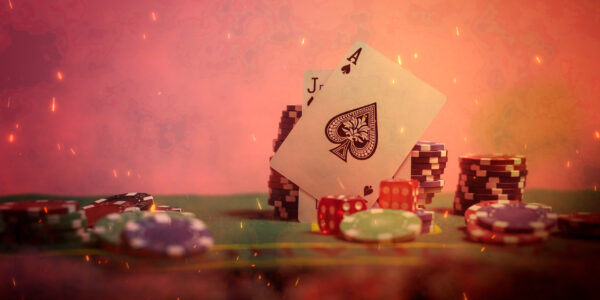
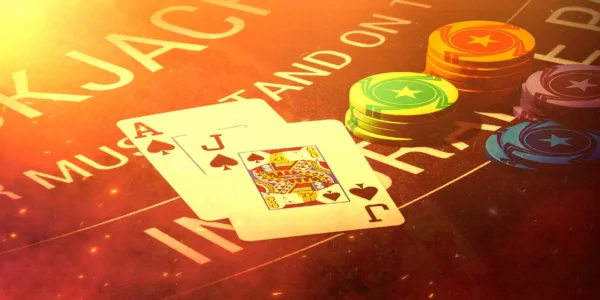
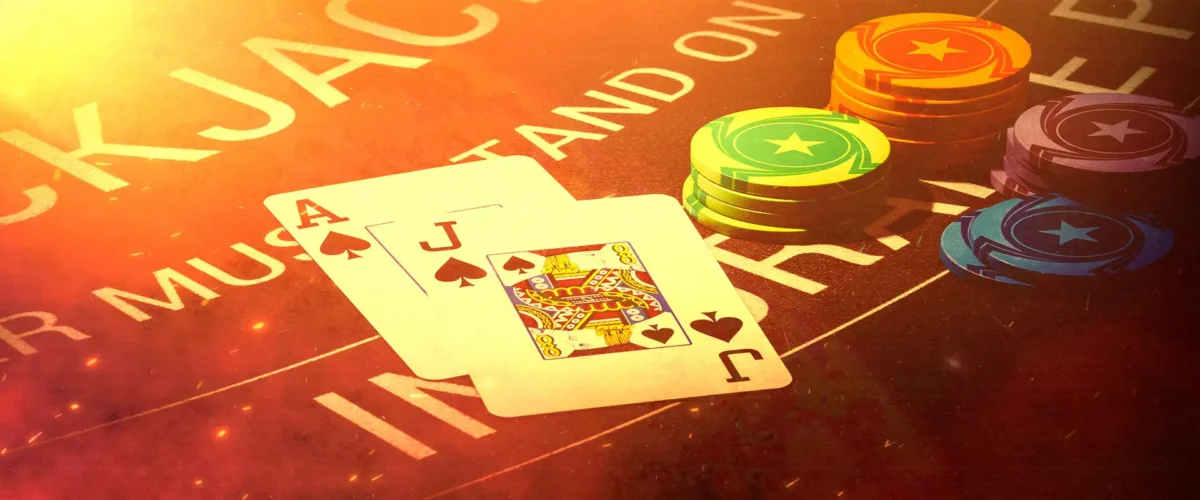
According to the story, some venues offered a special bonus payout when a player was dealt an ace of spades alongside a black jack, either the jack of spades or jack of clubs.
That particular hand became known as a ‘black jack’.
The special promotion eventually disappeared, but the nickname supposedly stuck, gradually becoming the name for the game itself.
It’s a neat story and one that has been repeated extensively in accounts of blackjack history. However, the precise origins of the name are difficult to establish conclusively, so it’s better treated as a popular explanation rather than an undisputed historical fact.
Blackjack No Longer Requires a Black Jack
Whatever its exact origins, the meaning of ‘blackjack’ today is considerably broader.
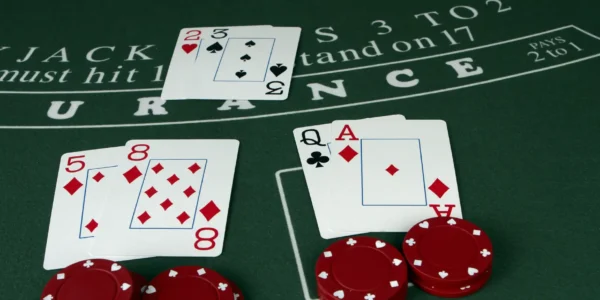
A natural blackjack is normally a two-card hand containing an ace and any card worth 10 points. That could be a 10, jack, queen or king of any suit.
There doesn’t need to be a black-coloured jack anywhere in sight.
That also distinguishes a blackjack from simply reaching 21 using three or more cards. Although both hands total the same amount, a natural blackjack usually receives special treatment under modern casino rules, including immediately beating most other hands totalling 21.
The exact payout for blackjack can vary between tables, making it another example of how the game’s rules have continued to evolve.
By the time ‘blackjack’ had become the familiar name, the game was moving closer to the standardised casino version we recognise today.
How the Rules of Blackjack Changed
The basic aim of blackjack has remained remarkably consistent: get as close to 21 as possible without going over. However, many of the rules surrounding that objective have changed as the game has developed.
These changes helped turn informal games of Twenty-One into the structured casino game played today.
The Dealer’s Role Became Standardised
Early versions of Twenty-One could have different rules depending on where the game was being played.
Modern casino blackjack is much more structured. Dealers follow specific rules determining when they must take another card and when they must stand.
One familiar example is the dealer drawing cards until reaching at least 17. Even here, variations remain. Some blackjack tables require the dealer to hit a soft 17, while others require them to stand.
Players don’t get to influence this decision. The dealer simply follows the rules of that particular game.
Splitting and Doubling Added More Decisions
Blackjack also developed additional player options.
Splitting allows a player dealt two cards of the same value to separate them into two hands by placing an additional wager.
Doubling down allows players to increase their original wager in exchange for receiving one additional card.
Rules governing these actions aren’t universal. Casinos can differ on which hands can be doubled, whether split hands can be split again, and what happens when aces are separated.
These differences might seem small, but they can affect the mathematics of the game.
Blackjack Payouts Developed Too
A natural blackjack became a particularly important hand as casino rules became standardised.
Traditionally, many blackjack games have paid 3:2 for a natural blackjack. However, other payout structures exist, including tables paying 6:5.
This is why two blackjack tables that look almost identical can have different underlying conditions.
One Game, Plenty of Variations
There has never been a single version of blackjack played everywhere in exactly the same way.
The number of decks can change. Dealer rules can change. Splitting and doubling rules can change. Even the payout for blackjack can differ.
That variation isn’t a modern invention. Blackjack has been changing throughout its history.
What modern casinos introduced was greater consistency within individual games. Instead of relying on informal conventions, players can check the specific table rules before deciding whether to play.
And as blackjack became increasingly established in casinos, those seemingly small rule differences would attract the attention of people interested in something else entirely: the mathematics behind the game.
The Rise of Blackjack in American Casinos
As organised casino gambling expanded in the United States, blackjack found an ideal environment in which to grow.
The game was relatively quick to play, easy to understand at a basic level and offered more player decisions than many other casino games. By the middle of the 20th century, it had become firmly established as one of the classic games of the American casino floor.
Blackjack Was Easy to Learn, But Had Depth
Part of blackjack’s lasting appeal was its accessibility.
A new player could quickly understand that they wanted to reach 21 without going over and that they needed to beat the dealer’s hand.
Underneath those simple rules, however, were considerably more complicated probabilities.
Should you hit 16 against a dealer’s 10? When should you double down? Which pairs should be split?
Unlike games where players simply place a wager and wait for an outcome, blackjack gave them decisions throughout the hand.
Casinos Developed Different Versions
As blackjack became more established, casinos also experimented with the conditions under which it was played.
Games could use different numbers of decks, while rules surrounding dealer actions, doubling and splitting varied between tables. These differences allowed casinos to offer slightly different versions while keeping the central blackjack experience recognisable.
This variation continues today.
A blackjack table in one casino may not have precisely the same rules as the table next to it, which is why checking the rules remains important before playing.
By the 1950s and 1960s, however, something else was happening. Blackjack wasn’t simply being played more widely. It was being studied.
Mathematicians and players began asking whether the decisions made during a hand could be optimised using probability.
That question would lead blackjack into an entirely new era.
Related Blackjack Articles
Conclusion
From the card tables of Europe to the casino floors of Las Vegas and today’s online games, blackjack has undergone centuries of change.
Its exact origins are difficult to pinpoint, but games such as the Spanish Veintiuna and French Vingt-et-Un established many of the ideas that remain familiar today. The objective of reaching 21 survived as the game travelled between countries, while the rules surrounding that objective continued to evolve.
The arrival of Twenty-One in North America marked another important stage. The game gradually acquired the blackjack name, became increasingly standardised and eventually established itself as one of the defining games of the American casino industry.
Blackjack’s history also shows how casino games can continue evolving long after their basic rules have been established.
The development of basic strategy introduced a more mathematical approach to player decisions, while Edward Thorp and other researchers helped bring card counting into the public consciousness. Casinos responded by adjusting rules and dealing procedures, adding another chapter to the game’s development.
Today, blackjack is played around the world in numerous forms. Players can find different numbers of decks, payout structures and rules surrounding splitting, doubling and dealer actions. Online and live dealer blackjack have expanded those possibilities even further.
Despite all that change, the central idea has proved remarkably resilient. Players are still trying to reach 21 without going over, just as they were in blackjack’s European predecessors centuries ago.
Understanding that history doesn’t reveal a forgotten secret for winning at blackjack. What it does reveal is how a relatively simple card game travelled across continents, adapted to changing casino environments and became one of the most recognisable table games in the world.
FAQs
How old is blackjack?
Blackjack developed over several centuries rather than being invented on a single date. References to European games based around reaching 21 can be traced back hundreds of years, with the game continuing to evolve after reaching North America.
Why is the game called blackjack?
A popular explanation links the name to an old American bonus that supposedly rewarded a hand containing an ace of spades and a black jack, either the jack of clubs or spades. The promotion disappeared, but according to the story, the blackjack name remained. The precise origin of the name isn’t completely certain.
When did blackjack become popular in America?
Versions of Twenty-One became established in North America before blackjack eventually became a major casino game. The growth of regulated gambling and the Las Vegas casino industry during the 20th century helped make blackjack particularly prominent.
Has blackjack always had the same rules?
No. Blackjack rules have evolved considerably throughout the game’s history and still vary today. Differences can include the number of decks, blackjack payouts, whether the dealer hits or stands on soft 17 and the rules governing splitting and doubling down.
Is blackjack played differently around the world?
Yes. Casinos and blackjack variants can use different rules depending on the region and operator. However, the fundamental objective of reaching a stronger total than the dealer without exceeding 21 remains broadly consistent.
Has online blackjack changed the game?
Online blackjack has changed how and where the game can be played rather than replacing its central objective. Digital versions automate dealing and payouts, while live dealer blackjack uses streamed tables and human dealers to recreate more of the traditional casino experience online.