Blackjack Switch – Understanding This Version
Blackjack Switch hits the sweet spot between being a familiar and evolved variant of blackjack online. The table still looks like classic style, but the player handles two hands side by side and faces a single decision that can change the entire round: whether to switch the second card between them.
It’s the moment that really matters: does the player stay solid or push a little harder? Either way, it still stays faithful to the original versions of the game, just like the other Blackjack titles found on PokerStars. This variant does come with its own trade-offs, but when the right decision is made, it has a chance of shaping the entire round.
The History of Blackjack Switch
Blackjack Switch started with Geoff Hall, a British game inventor who had a gift for maths and a knack for spotting blackjack patterns. After several sessions playing two hands at a time, Hall kept noticing deals where a quick swap of the two top cards would turn two shaky totals into two solid ones.
That realisation became a prototype, then a full ruleset. The game launched in Las Vegas and was patented in 2009, with early casinos testing it soon after. A little later came a tweak that defined the variant played today, the Push 22 rule, which balances the extra freedom the player gains from switching. From there, the modern version found its feet in land-based casinos and online blackjack platforms.
Because the player can move a card, other rules can reduce some top-end outcomes to keep the game more balanced. It isn’t a gimmick, however, but considered a rework of blackjack’s classic opening moments. The player still works with totals, soft hands, pairs, hits, stands, doubles, and splits. Where it differs, however, is that instead of being automatic, the opening becomes a straightforward call that influences the rest of the game.
Blackjack Switch – How Decisions Shape the Game
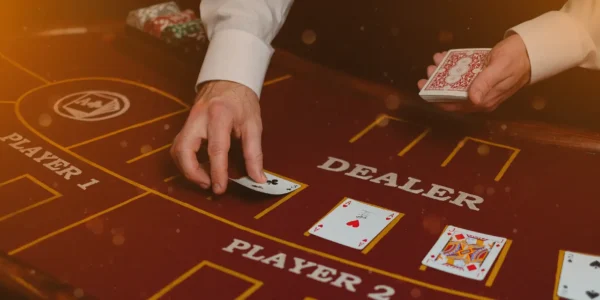
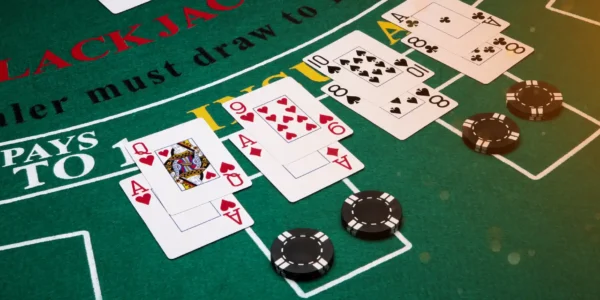
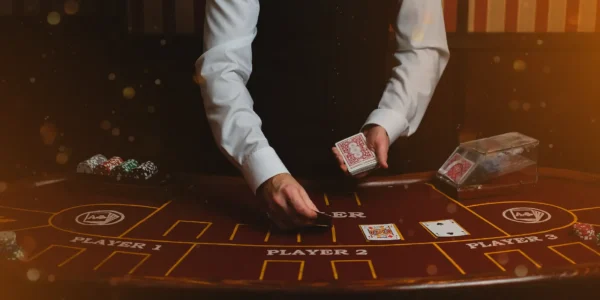
At a Blackjack Switch table, the layout does something simple but clever: two betting spots sit ready at the same player position. The opening deal drops two face-up cards into each hand, while the dealer shows the familiar upcard and holds a hole card (facedown card).
The player will be told when the switch window opens, and one card can be revealed, with both hands taking on new shapes. Switching is totally optional, allowing the player to decide whether a quick swap might tilt the round in a better direction.
From that moment on, the rhythm of the game goes back to its recognisable format. After the switch, or the choice not to switch, the player works through each hand in order, deciding when to hit, when to stand, when a double makes sense, and when a split fits the situation. The dealer then finishes the draw in the usual way, and the round is resolved in the same way blackjack fans are used to. This fresh twist doesn’t live in the endgame at all; it sits right at the start, concentrated in that single, deliberate decision that has a knock-on effect for the rest of the round.
The Core Rules of Blackjack Switch
Blackjack Switch is still blackjack at its core, just with a few features that give the variant its own style. The player gets two equal bets, one for each hand, so the action always begins in pairs. The switch happens before any hits or splits, and it’s always the second card in each hand. Most tables use six decks, while some use eight, which slightly changes the odds. Depending on the house rules, the dealer sometimes hits on soft 17; in others, the dealer will stand on soft 17. The first increases the house’s edge, while the second trims it back a little.
In Blackjack Switch, a natural blackjack usually pays even money (1:1). In classic blackjack, a ‘premium blackjack’ means a natural (Ace + 10-value as the first two cards) that typically pays more than a normal win, which is most commonly 3:2, and sometimes 6:5. In Switch a blackjack made by switching is treated as 21 rather than a premium blackjack. The game also uses ‘Push 22’, which means if the dealer finishes on 22, all non-busted player hands push instead of winning. Together, these rules balance out the extra freedom the switch gives players.
Other rules depend on the casino or table. Some allow doubling after a split; some put a limit on resplits, such as only one card to split aces. In hole-card games, the dealer may look for a blackjack when showing an Ace or a ten.
Related Blackjack Articles
Does House Edge Matter?
Like many other online casino games, the house edge sets the pace of Blackjack Switch. Under a widely used Las Vegas-style setup, this variation uses six decks in the shoe, dealer hits soft 17, switched blackjacks counted as 21, and the Push 22 rule, which makes it popular among seasoned blackjack players as it feels more competitive. The house edge sits at roughly 0.5% with optimal play and shifts a little with deck count and soft-17 rules. What matters more than the exact edge value is how decisions line up over time. A simple, repeatable switching method helps the player keep more of that value compared to playing blindly by following hunches.
The Super Match Side Bet
Many Switch tables feature Super Match, a separate bet that pays on patterns within the four initial player cards (pairs, two pairs, trips, and quads). As it can be profitable if the player is lucky enough and resolves quickly, Super Match is appealing to many blackjack players. With that being said, it does carry a higher edge than the main game. Treating it as a fun extra, instead of a strategy, is the safest way to use side bets, as players can’t make decisions that have a chance of influencing a hand.

Blackjack Switch in Practice
If a player has one hand totalling 16, the other at 14, and the dealer shows a 6, then in standard blackjack, the player usually stands on both hands. In Switch, a single move can change that: the 10 from the 16 moves across and the 4 (the second card from the other hand, 10+4) comes back the other way, giving 20 on one side and 10 on the other. The route through the round is clearer, and decisions become much simpler.
Another example could see one hand being a soft 19, the other at 15, and the dealer again showing a 6. Breaking the soft hand to chase a flat 20 may be tempting, but the real maths sits with the other hand. Soft structure has a value beyond the initial total because it has plenty of opportunities to improve it. In this situation, the better decision could be not to switch at all. This would keep the soft 19 as it is and play the 15 in the standard way (standing against 6). It may be less dramatic, but it tends to protect the player over the long run.
Blackjack Switch Pairs
Pairs come up a lot in Live Blackjack Switch, with eights being a key example. Swapping to make a tidy total can look quite good, but keeping the 8-8, so a normal split is still available, is often better over the long run. Blackjack Switch rewards players who can spot that difference, because keeping 8-8 keeps the option to split into two fresh hands (often with double after split), which usually has better long-run value than switching to one neat total that’s more likely to hit Push 22 (turning some wins into pushes).
Switch Decisions Using Frameworks
Keeping the switch choice simple and methodical is easier when using a small framework that players can stick to every time. A popular setup used is by keeping a mental pecking order: at the top sit the clean totals, 21, 20, 19, followed by ‘structural’ hands such as A-A. Next come totals like 11, 10, and 9 that open useful doubling opportunities. After that, mid-range totals come in. Against a dealer’s 7 or 8, players typically balance the two hands so neither is left weak. Against most other upcards, the approach normally prioritises building one strong hand while the second hand plays safer.
Anchoring One Hand
If the player is dealt 7-9 on the left and 5-10 on the right while the dealer shows a 6, the totals are 16 and 15. By switching the second cards, the hands change to 17 and 14. This creates a more reliable anchor hand alongside a lighter hand that can be played by following a chart. Against weaker dealer upcards, the balance of anchoring one side while keeping the other flexible can often work over the long run.
Preserving A-A
If the player receives A-A and 4-8 against a dealer’s 5, switching can make one strong-looking total at first glance. But the better long-term play usually leaves A-A together. Splitting aces has more value in the opportunities for later, rather than a single immediate total. In Switch, keeping the aces together often gives the player a stronger footing.
The Soft Hand
If the player is dealt A-8 and 6-9 against a dealer 6, switching to create a clean 20 may look really appealing. In practice, soft 19 holds a steady value and is usually worth keeping, while the 15 can still be played using the chart as a guide. This strategy can sometimes be better than switching into a 20 paired with a weak soft hand, which shows how soft hands can be useful, despite not being obvious at first glance.
After the Switch Decision Is Made
Once the switch choice is locked in, each hand drops back into the traditional blackjack setup. Hard totals, soft totals, pairs, the dealer’s upcard, and the same structured options used in classic and online blackjack. If the table has the dealer-hits-soft-17 rule, players can expect the dealer to pull an extra card every now and then. With stand-on-soft-17, that small edge disappears, and the game feels a bit tighter. The Push 22 rule is just there in the background, sometimes turning a win into a push, and in doing so, can slow down overly aggressive plays during close-call situations where playing steady is the best way to go.
Strategy charts created for Blackjack Switch are built with different kinds of situations in mind. A hard nine against a dealer’s 3 through 6 usually opens a good opportunity for a double, while a hard 12 against a dealer 4 through 6 leans toward a stand and lets the dealer take it from there.
Hand values in the mid-teens against weak dealer cards still play much like usual, with the key difference being that a dealer 22 now counts as a push instead of a win. Soft hands still work well in their best doubling spots, but they also allow for the player to take another card more often when there’s plenty of ways to improve the hand.
Pair play still stays familiar: eights are usually split because they often get stronger, while tens are usually kept together since they already have a strong value. The real change comes with the flow, not the core rules of blackjack.
Strengths of Blackjack Switch
What makes Blackjack Switch stand out is how much control it gives the player. The starting deal isn’t locked in; it’s a kind of puzzle that can be improved by deciding to switch, or not. With steady play, the house edge stays in line with what’s seen in regular blackjack, and having two hands on the table can soften the ups and downs of the rounds. Strategy still matters, and because the switch creates a visual moment, it makes the choice feel more impactful.
There’s also some built-in rules that keep things balanced. Push 22 turns the odd win into a push, and naturals only pay even money instead of the usual bonus. The extra layer of decisions makes off-the-cuff play riskier, since straying away from a framework or strategy tends to be less efficient through a session. Also, since two hands mean two bets each round, managing the bankroll takes a bit more care compared to a single-hand table. That’s not really a drawback, but it does show how playing more reserved with Switch can be equally as rewarding as classic and online blackjack.
A Variation That’s Fun and Fair
Blackjack Switch has become a popular variant because it keeps the heart of blackjack in the forefront, while offering players an interesting choice that can change the entire direction of the game. One card slides across the table and, suddenly, both hands are changed. The trade-offs are clear, offering even-money natural blackjacks and a dealer 22 that pushes plenty of outcomes. The result is a blackjack version that feels evolved, but still feels like the traditional version, without losing its core mechanics.
FAQs
What’s the main twist in Blackjack Switch?
Why do naturals only pay even money in Switch?
What kind of house edge does it have?
Is there a side bet in Blackjack Switch?
Does Blackjack Switch change how pairs are played?

Top Content


Trending