Single-Hand Blackjack or Multi-Hand Blackjack
At first glance, blackjack is a simple game putting you versus the dealer. The aim is to land 21 or less, beat the dealer’s total, and hope not to bust. But the details make a huge difference, such as how many decks are in use. The game can be played with a single 52-card deck or with multiple decks (4, 6, 8, or more). The number of decks will impact player odds, optimal blackjack strategy and volatility.
In this article, we’ll explore the differences between single and multi-deck games.
A Look at Fewer Decks
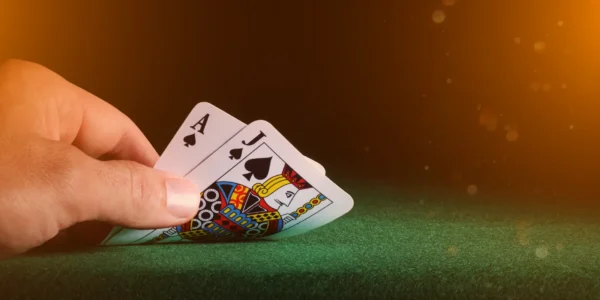
To understand the basics behind fewer decks, you must recognise the law of removal. Each card dealt changes the composition of the deck, and that change has a larger impact when there are fewer cards.
In a single deck, there are 4 Aces and 16 ten-value cards (10, J, Q, K) in 52 cards. The probability of being dealt a natural blackjack is 4.83% in a fresh single-deck game. A large shoe (e.g. 8 decks), the probability is marginally lower, because the proportion of tens vs. non-tens evolves differently as cards are removed.
But beyond blackjack odds, the removal effect influences bust probabilities for the dealer and players, and the value of doubling/splitting decisions.

Lower Returns as Decks Increase
An important point to note is that the marginal penalty of adding additional decks decreases as the number grows. The jump from 1 deck to 2 decks makes a bigger difference than from 6 to 8 decks. That’s why many casinos settle on 6 or 8 decks. The casinos capture most of the anti-player advantage while preserving operational convenience and minimising a per-deck penalty.
However, single vs multi games is a big category, and much of the contrast lies between 1 vs 4–8 decks, and between 2 and 4 decks.
House Edge: Numbers and the Rule Adjustments
While the deck count effect is important, in real casinos you rarely see identical rules for single-deck and multi-deck games.
House edge ranges
Under favourable rules, single-deck games (with 3:2 blackjack, doubling, etc.) might offer a house edge as low as 0.15%. However, many multi-deck games (6 or 8 decks), even with decent rules, carry edges more in the 0.45% to 0.65% range.
- 1 deck: 0.17%
- 2 decks: 0.46%
- 4 decks: 0.60%
- 6 decks: 0.64%
- 8 decks: 0.66%
Rule countermeasures
When some casinos offer single-deck, they often insert subtle rule changes to protect the house. Some of these common tweaks include:
- Reduced blackjack payout: Instead of 3:2, the single-deck game might pay 6:5 (or worse). That change alone can add 1.36% or more to the house edge.
- Restricted doubling: Only allowing doubling on certain totals (e.g. 10 or 11), or disallowing doubling after splits (DAS).
- Split restrictions: No re-splitting, no splitting aces, or limiting the number of splits.
- Dealer hits soft 17 (H17): Rather than standing, the dealer draws on soft 17.
- Limited surrender: Some single-deck tables disallow surrender or restrict when it’s allowed.
- Frequent shuffling: The deck may be reshuffled early, like before all cards are dealt.
- Higher minimum bets: This rule dissuades casual play and limits bet variation.

Basic Strategy Variations and Fine Deviations
Because the probabilities shift, the basic strategy is not identical between single and multi-deck games.
Additionally, advanced players may employ a composition-dependent strategy (considering the actual cards, making your total and not just the total value).
Rule Trade-Offs
As already stressed, many single-deck tables have rules. Even if you find one, you should check:
- Blackjack payout
- Doubling rules & DAS
- Splitting & re-splitting
- Surrender options
- Dealer actions on soft 17
- Shuffle depth (penetration)
Variance and Fluctuations
Single-deck games can be more volatile as the deck resets more often, and the removal effects magnify swings.
Also, dealing and shuffling may be faster with fewer cards, which can accelerate session speed.

Choosing a Table
Here is a practical workflow to decide which type of blackjack to play when faced with tables:
Identify available tables: Note single-deck, double-deck, 4, 6, 8 decks, etc.
Record the rules:
- Blackjack payout (3:2 preferred)
- Dealer hits or stands on soft 17
- Doubling rules (any two cards? DAS?)
- Splitting / re-splitting / splitting aces
- Surrender availability
- Shuffle depth/penetration
- Bets limits & spread
- Entry rules / mid-shoe rules

Top Content


Trending