Poker Guide: Self-Criticism in Poker
On one extreme there is being too soft on yourself, and on the other there is being too harsh.
Neglecting discipline allows your bad mental game habits and a lack of professionalism to run riot. Meanwhile, being an unforgiving self-dictator causes a drop in confidence and a negative association with making mistakes, which are, after all, completely natural and unavoidable.
In today’s online poker scene, where variance is higher, feedback loops move faster, and players are constantly comparing themselves through social media, hand histories, and content platforms, keeping this balance is more crucial than ever.
Our purpose here is to describe the pitfalls awaiting the novice, on either side of this line. In the middle, we shall find the sweet spot, where good cop and bad cop combine to form the right level of self-criticism, necessary for the fastest progression.
Being Too Soft – Ego
Being too soft on yourself as a poker player is usually not a conscious decision to give yourself a break. In fact, this is a practice that the overly harsh player might want to consider adopting. Rather, being too soft is normally caused by one of two subconscious culprits: ego and neglect.
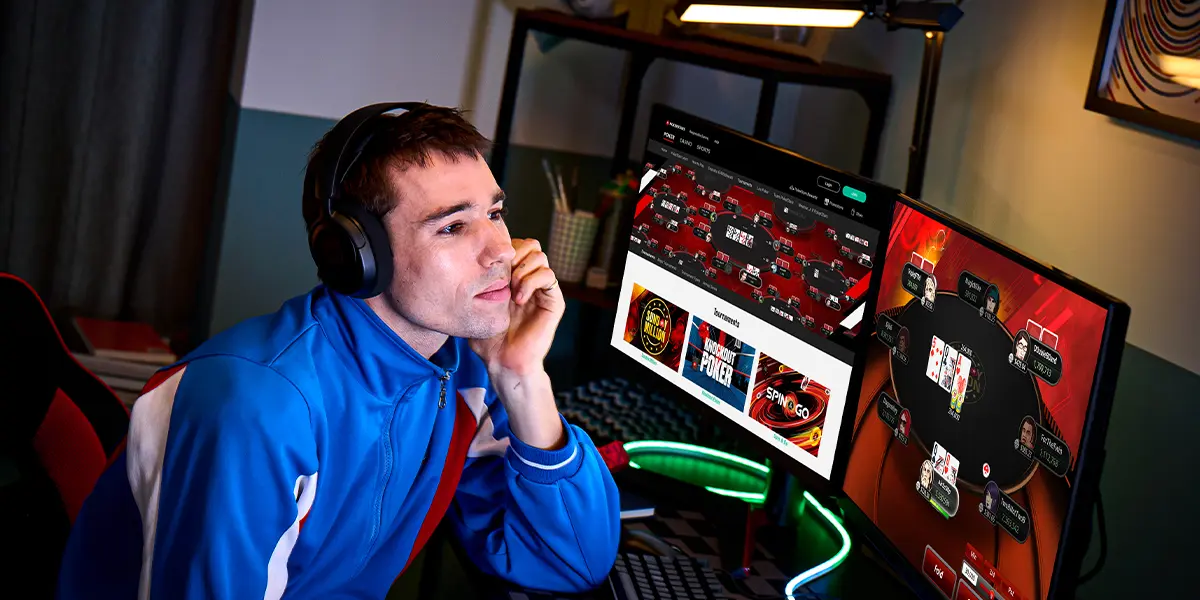
An egotistical player lives under the illusion that they already know everything. When someone refuses to admit mistakes, improvement becomes impossible. Many players still developing their skills lack structured feedback or reliable long-term data, which leaves them with only a surface-level grasp of just how deep the game really is.
You’ll often see this behavior in comment sections, private groups, and coaching Discords, where players defend their habits instead of questioning them. When a respected pro suggests a play was suboptimal, the ego-driven player usually wastes time arguing rather than considering the perspective.
Real progress starts with the freeing realization that you’re not yet a ‘great’ player and still have plenty to fix. Those clinging to delusion and ego will never reach their potential until they change course. Once the mind accepts the countless mistakes it makes every day, it begins to see the real opportunity in correcting them.
Core Principle
Growth accelerates the moment you stop protecting your self-image and start challenging it.
Overconfidence, more often than not, is just insecurity in disguise.
Being Too Soft – Neglect
The other way in which the aspiring poker player can be too soft on himself is by neglecting his mental game completely.
A professional, in any sport or game cannot be so without a great deal of self-accountability. The successful athlete trains, eats and sleeps to a regimented pattern, proven to breed success. The world-class chess player studies theory and works on tactical awareness while being sure to get enough exercise.
There’s often a big gap between a player’s dream of success and the reality of what it takes to achieve it. The neglected path is full of bad habits – playing while intoxicated, grinding six-hour sessions without breaks, or repeating the same tactical mistakes. Multitabling, late-night marathons, and playing while emotionally drained are the most common signs of this neglect today.
Unlike the egotistical player, this one isn’t delusional about their skill level – but they are delusional about the effort required to improve. No tool, coach, or course can replace structure and consistency.
Ask Yourself:
“Am I treating poker like a professional mental athlete?”
Being Too Harsh
Ego can also cause problems on this end of the spectrum. If a player has too much of a burning desire to succeed and is insecure about failure, it can quickly turn into self-destruction.

Every mistake becomes a direct offence to the ego, and is deemed an unacceptable occurrence. Needless to say, such an approach is completely unrealistic and entirely misses the point of mistakes. They will always happen at any level of play. The difference between the successful player and the one who goes nowhere is how each reacts to making mistakes. Just as punishing a dog for chewing up your shoes does nothing to prevent repeat offences, punishing the subconscious for failing to apply a poker concept is equally useless.
Scolding yourself creates anxious associations with mistakes, which leads to emotional reactions instead of logical decisions. This is what’s known as ‘mistake tilt.’ In today’s high-volume environment, mistake tilt can spiral quickly because players have less time between hands to reset emotionally.
A common trap is claiming you only tilt when you make mistakes – not when you get unlucky. In reality, that mindset misses a huge opportunity for growth.
Mental Game Insight
Being overly harsh on yourself can be just as damaging as being too lenient.
The Sweet Spot
Sometimes, finding the correct path is nothing more than avoiding the wrong ones. We can summarise by saying that the correct disciplinary cocktail contains a healthy combination of firm self-awareness and humble modesty. Only by tempering the ego can the aspiring player start to flourish, but this must not happen to the point that he becomes too relaxed. Sustainable improvement today relies more on emotional control and consistency than sheer volume.
Practical steps:
- Study away from the tables with zero distractions
- Take regular breaks during sessions
- Keep a short mental-game journal
- Treat poker like a career – even if it’s just a hobby for now
At the same time, don’t tear yourself apart over mistakes. Start with realistic expectations. Set goals that are achievable if you perform at your best. Make a list of the mistakes you make most often and work on eliminating them gradually. Once you’ve checked them off, create a new list.
Key Takeaway
Improvement is iterative, not exponential.
Small fixes compound over time. You’ll make mistakes for as long as you play poker – which means endless opportunities to improve.
Be firm, be fair and be optimistic. Failure is a chance to succeed next time, but only if you learn from it.


View Other Blogs