How to Spot Giveaway Tells in Live and Online Poker
Most reliable tells sit in the body language a player forgets to control and in how long they take to act, not in the face they’re actively guarding.
New players tend to think reads are the whole game, that a pro looks you in the eye and knows you’re bluffing. That’s mostly a myth. Anyone who’s played live more than twice has learned to freeze their face and stop grinning when they flop a full house. Betting patterns, table image, and how loose or tight someone plays carry far more weight than a stare-down.
But some tells survive even against decent players. The most reliable tells are rarely the dramatic Hollywood moments. More often, they’re the small, unconscious behaviours players don’t even realise they’re displaying. The core principle to remember is this: a tell only means something in contrast to how that specific player normally behaves. Get a baseline first, then read the deviation.
Poker Tell Definition
An involuntary physical, verbal, or timing cue that reveals information about the strength of a player’s hand.
What is the most reliable live poker tell?
Watch the legs. Players spend so much effort controlling their face and upper body that the lower half gets ignored.
Next time you’re in a big pot, take a discreet look under the table. If everything is still, the player is usually calm and probably telling the truth with their bet. A leg jackhammering up and down means something’s off. Either they can’t contain the excitement of holding the nuts, or they’re stressed out running a big bluff.
That won’t tell you which of the two it is. But knowing the player is polarised, either very strong or very weak with nothing in between, narrows your decision.
What this means in practice: if a normally still player suddenly starts bouncing a knee the second they bet into you, treat their range as top-heavy or air, and price your call or fold around those two outcomes rather than a medium hand.

What does it mean when a player reaches for their chips early?
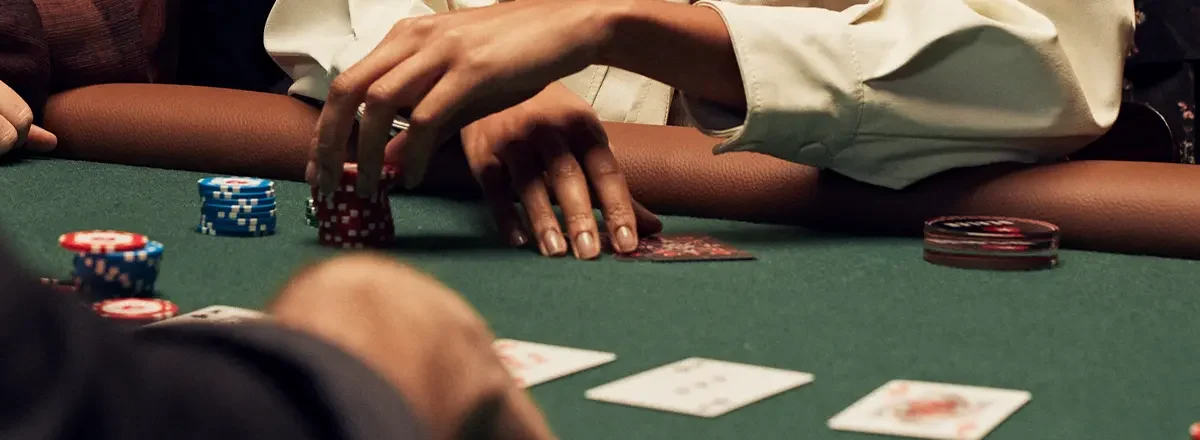
They don’t want you to bet. Reaching for chips before you’ve acted is frequently an attempt to look ready to call or raise, a bit of theatre meant to scare you off.
Take it as an invitation to continue betting. Most of the time it folds out and you take the pot. Same idea when someone visibly starts to bet and then checks instead: that’s weakness. When the action comes back to you, bet big and watch the hand go to the muck.
I’ll admit this one has limits. Strong regulars know reaching for chips reads as weak, so a few will fake it while actually holding a monster. Against a thinking opponent you’ve played with before, weigh it against their baseline rather than treating it as a rule.
What are timing tells in online poker?
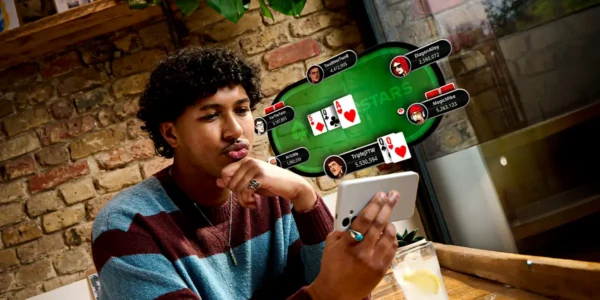
Timing tells are reads based on how long an opponent takes to act. You can’t see anyone online, so the clock is most of what you’ve got, plus bet sizing and history.
Timing Tell Definition
A read drawn from the speed of an opponent’s decision, used most often in online poker where physical cues are unavailable.
Timing tells have become less reliable over the years, but they can still provide useful information. They rarely determine a decision on their own, but they often help tip the balance in close spots.
What does an instant call mean online?
An instant call means an easy decision, which usually rules out both the strongest and the weakest hands. Snap-calling your flop bet points to something like top pair weak kicker, middle pair, or a medium flush draw.
Those are hands nobody wants to fold and nobody’s raising either, so they call without thinking. A set, a nut flush draw, or total air all invite at least a pause to consider raising or giving up. When the call is automatic, you can usually discount those. Fire again on the turn and you’ll often take it down.
One caveat: this reads best in lower-stakes games and against players using standard software. In tougher pools, some players deliberately randomise their timing or use pre-action buttons, which kills the tell. Get a feel for the table before you lean on it.
Does a slow raise on the river mean value or a bluff?
A long tank before a river raise is usually value, not a bluff. When players bluff big, they want to look strong, and acting fast and decisively is the common way to project that. Of all the online timing tells, this is one of the few that continues to hold up surprisingly well.
Taking a long time reads as someone who already knew they were raising and is just sizing it. That’s the shape of a made hand working out how much you’ll pay. Against a genuine tank-then-jam on the river, folding a marginal hand is often right.

Live vs online poker tells: what’s the difference?
Live tells are physical and behavioural: legs, hands, chip handling, breathing, how someone talks. Online tells are almost entirely about timing and bet sizing, since you can’t see the person.
- Live: leg movement, reaching for chips early, eye contact after betting, hand steadiness
- Online: snap calls, long tanks before a raise, bet-size patterns, using or ignoring the time bank
The shared principle across both: read the deviation from a player’s normal behaviour, not the cue in isolation. A snap call from a habitually slow player says more than the same call from someone who plays fast all night.
The biggest mistake players make with tells is treating them as proof instead of evidence. A tell should never outweigh the betting action, but when it supports everything else you’ve observed, it can be the extra piece of information that swings a difficult decision your way.
Pro Tip
Poker tells are most valuable when they confirm what betting patterns already suggest. Treat them as supporting evidence, not as proof.
FAQs
Can I rely on poker tells instead of learning strategy?
What happens if I act on a tell without a baseline?
Are online poker timing tells still useful?
Is a shaking leg a sign of a strong or weak hand?
What does it mean when an opponent reaches for chips before it’s my turn?


View Other Blogs