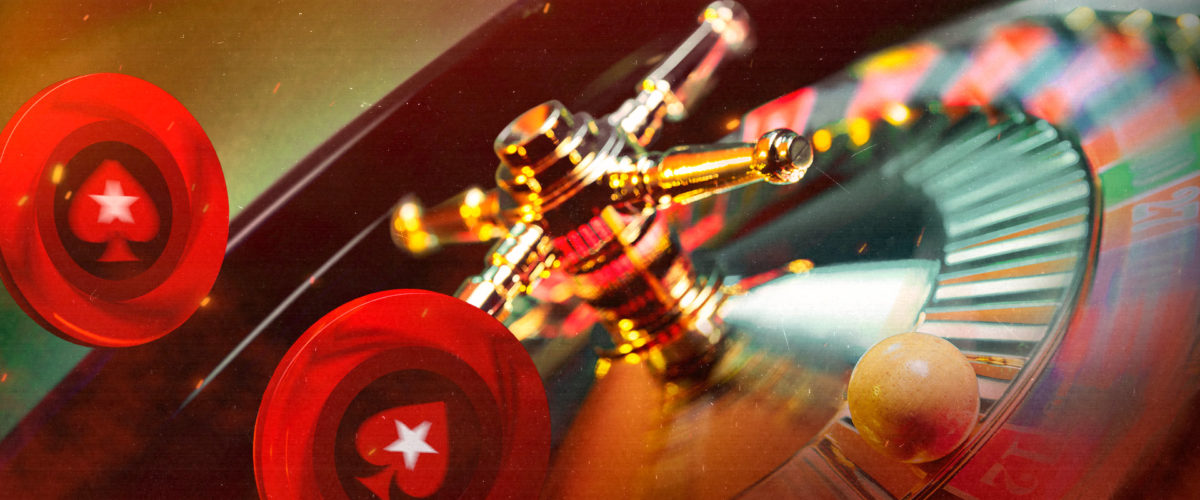
From Europe to Vegas, to a Deal with the Devil – The Origins of Roulette Explained
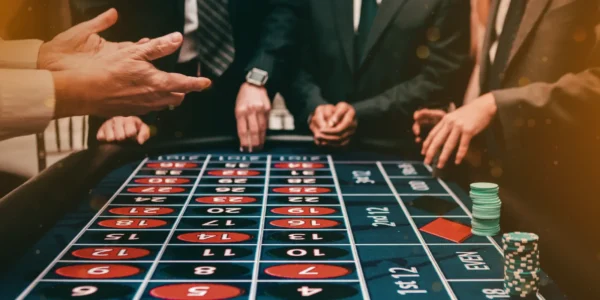
Roulette is synonymous with European casinos and is one of the most famous and popular games in the world.
This legendary game has a past that is as colourful as its wheel, involving among others – 17th century science, the English secret service and the devil himself!
Want to know more about the origins of this popular online casino game? Let’s start at the beginning…
The Invention of the Wheel
If you gather half a dozen so-called ‘experts’ together and ask them where roulette came from, you’ll probably get just as many answers.
The truth is that no one knows for sure, and probably no one ever will. Three of the games most often mentioned as candidates that preceded modern roulette are Biribi, Ace of Hearts and Hoca.
Not only was none of these games a game played on a wheel with balls, they were, in fact, just card or lottery games featuring the 36 numbers that appear on the roulette wheel.
The most likely candidate is an English game that was played in the late 17th and early 18th centuries called Roly Poly.
Roly Poly evolved into EO (Even/Odd), which was played on a wheel very much like the roulette wheel, featuring 20 sections marked odd and even rather than containing any numbers, and had a third section marked house. You can guess how it was played.
Perpetual Motion Machines
An alternative theory is that it was invented in France around the same time: after all, roulette is French for little wheel so there might be some truth in this.
Supposedly, it was a French monk who did this, but, again, not credited by name, and like much of history, completely forgotten.
These were followed by further rumours that roulette was attributed to the 17th-century French philosopher and scientist Blaise Pascal (who was allegedly on a monastic retreat at the time, so the first theory could actually be completely true).
Rather than inventing a gambling machine, Pascal was experimenting with a perpetual motion machine: that is, a machine that doesn’t stop running. It could perform an infinite number of useful tasks.
As it turns out, he failed, but we have all benefited as a result. The most probable truth is that the modern game combined the Even/Odd with the French wheel arrangements.
A Deal with the Devil
It was the Frenchman François Blanc (and his brother Louis) who turned Monte Carlo into what it is today – a gambling haven.
As a result, contemporaries admired and also envied Blanc – accusing him of having sold his soul to the devil in exchange for the secret of roulette.
The numbers on the roulette wheel, when added together, total 666, which is how the game acquired its colloquial name: ‘the devil’s game’.
Blanc added the zero to the wheel, but of course the numbers would still add up to 666 – even if you took the zero out.
One Zero or Two?
Rules played today including corner, straight up, street and split roulette bets are the same as those that were in force in the first casinos of France, Germany, and Monte Carlo.
The American roulette wheel rules are also the same. One notable exception, however: they had two ‘0’ or house pockets. The European tables had and still have just the one ‘0’. It was François Blanc who introduced the two ‘0’ pockets to lure more punters to his Hamburg casino. Whether on the advice of Beelzebub himself or not, nobody knows.
French-style roulette tables come with additional rules, En Prison and La Partage, that further reduce the house edge. In En Prison, if the ball lands on the zero, you can leave your stake on for an extra spin. In La Partage, players get half their original stake back.
These two versions reduce the house advantage still further to 1.35 per cent, which means not only does Europe boast some of the best casinos in the world, but your wallet won’t take such a battering either.
Roulette in the Movies

Unsurprisingly, roulette has featured strongly on screen. Bond has visited a lot of casinos over the years, and his number of choice has always been 17.
Seventeen is, without a doubt, the most-bet number for all punters. This is due to its middle position on the wheel.
Mike Ashley is definitely one gambler who would concur.
Ashley, who owns Newcastle United (the football club) and who set up the UK chain retailer Sports Direct, bet £480,000 on odds that in aggregate totalled £1.3 million. His number was 17.
Number 22 is also prominent in several movies, especially in reference to slots in roulette tables. It figures in the romance plot of Indecent Proposal (1993) but is significant in Casablanca (1942) and Lost in America (1985) as well.
A Worldwide Phenomenon
You can now find a roulette table in just about any country on the planet. It’s estimated that roughly 70,000 tables run at any one time, and of course the numbers are much higher online.
The largest operating number belongs to the Venetian in Macau, with more than 120. The true champ is the Casino of Monaco, which actually has more than that; it’s just that at any given time, there are only 22 of them operating.
Accomplished Records
The largest bet ever placed on a single spin of a roulette wheel was when a player at the Horseshoe Binion in Vegas was awarded the $1 million jackpot when he bet $1 million on red, and yes, he won.
Summary
While its origins remain a little fuzzy, roulette has taken its place in popular culture and entered the lives of many people over the past two centuries.
It’s a safe bet that two hundred years from now, plenty more stories will be written, plenty more records will be set, and plenty more will be broken.

Top Content


Trending