The Most Common Misunderstandings About Casino Odds
Casino games have always been surrounded by myths. Some are harmless myths like lucky numbers, favourite seats, or rituals before a spin. Others are more persistent and more misleading. This often has attitudes like ‘It’s due to hit’, or ‘the machine hasn’t paid out all night’, or ‘Switch tables, this one’s cold.’
These phrases have echoed across casino floors for decades, and they’ve followed to the online casino as well. The truth is that many players misunderstand how casino odds actually work. Not because of a lack of insight or curiosity, but because probability is counterintuitive.

We as human beings are pattern-seeking by nature. We look for cause and effect, streaks, cycles, and meaning, even in games designed to be completely random.
In this myth-busting guide, we’ll break down the most common misunderstandings about casino odds and explain how they really work. Whether you play roulette, blackjack, slots, or poker, understanding the fundamentals of probability can help you approach casino games with clarity and realistic expectations.
Myth 1: The Game Is Due to Pay Out
This is perhaps the most common belief in casino gaming. A roulette wheel hasn’t landed on red for ten spins. A slot machine hasn’t produced a big win in hours. Surely, the next result is due. In reality, casino games do not have memory, and any previous results are meaningless.
In roulette, each spin is independent. The ball doesn’t know what happened before. If you’re playing European roulette, the probability of red landing on any spin remains 18 out of 37 (48.6%), regardless of whether black has landed five times or fifteen times in a row.
Slots operate in the same way. Each spin is governed by a random number generator (RNG). The outcome of the previous spin has absolutely no influence on the next. A machine that hasn’t paid out recently is not building up toward a win.
The belief that a game is due for a result is known as the gambler’s fallacy. The mistaken idea that past outcomes affect future independent events. The randomness doesn’t balance itself out in the short term. It only evens out over very large numbers of trials.
Myth 2: Casinos Adjust Odds Based on Who Is Playing
Some players believe that casinos change the odds depending on player behaviour, tightening machines for certain users or loosening them after losses. In regulated environments, this doesn’t happen.
Casino games operate under strict regulatory oversight. Online casinos use certified RNG systems that are tested by independent auditors. These systems are not designed to identify individual players or adjust outcomes in real time. The odds are built into the game’s mathematics engine and remain consistent for all players.
The house edge is predetermined by the structure of the game itself. For example, European roulette carries a 2.7% house edge due to the single zero. American roulette’s double zero increases that edge to 5.26%. These percentages don’tfluctuate based on who is playing. The short-term variance may feel personal, but mathematically, it isn’t.
Myth 3: High RTP Means You’ll Win More
Return to Player (RTP) is often misunderstood by new players. The RTP represents the theoretical percentage of total wagers that a game will return to players over the long term. For example, a slot with a 96% RTP has a theoretical return of £96 for every £100 wagered. This can also be calculated as a 4% house edge.
What RTP does not guarantee is that an individual player will experience that percentage in a single session. This is based on thousands and thousands of bets.
The RTP is a long-term average. In the short term, the results can vary significantly. A player may win more than the RTP suggests, or lose more during any given session.
Understanding RTP is useful for comparing games, but it should not be mistaken for a promise of specific outcomes. The higher the RTP percentage, the lower the house edge.
Related Slots Articles


Myth 4: Betting Systems Can Beat the House
There are many known gambling systems, from the Martingale to the Fibonacci system. These betting strategies have long promised to outsmart casino odds. The problem is that the betting systems only change how much you wager and not the probability of outcomes.
Let’s take roulette as an example. If you double your bet after every loss (the Martingale strategy), you are still facing the same odds on each spin. A long losing streak can quickly increase stakes, and table limits often prevent infinite progression.
Betting systems can influence bankroll management and pacing, but they cannot eliminate the house edge. The mathematical advantage remains constant.
Myth 5: Hot and Cold Streaks Prove Patterns
Players often track hot and cold numbers, believing certain outcomes are trending. However, while streaks do occur in random systems, they are not evidence of patterns. In a truly random sequence, clusters and streaks are expected. The randomness does not mean alternating results. In fact, long streaks are statistically normal.
Our brains interpret streaks as meaningful because we’re wired to detect patterns. In casino games, these streaks are part of randomness, and nothing more.

Myth 6: Skill Can Overcome the House in All Games
Skill plays different roles in different casino games. In blackjack, an optimal strategy can reduce the house edge, sometimes to just around 0.5% under certain rules. In poker, skill plays a major role because players compete against each other.
However, in chance-based games like roulette or slots, skill does not alter your chances. The decision-making may affect volatility or bet structure, but it cannot eliminate the house edge.
Understanding which games involve skill and which are set entirely by chance is key to realistic expectations.
Myth 7: Online Games Are Less Fair Than Physical Casinos
Some players believe that land-based casinos are more trustworthy because they can see the wheel or cards. In licensed online casinos, RNG systems are tested and certified to ensure fairness. The outcomes are determined by algorithms designed to simulate randomness, and these systems are audited regularly.
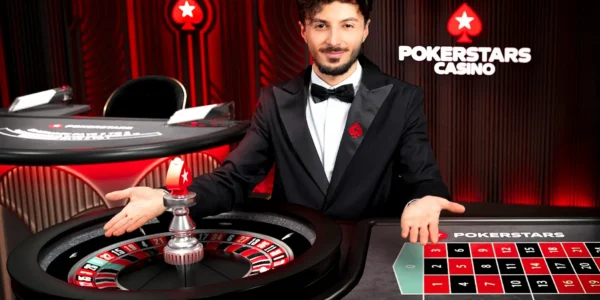
The live casino dealer games bridge the gap by streaming real wheels and real cards in real time, adding visible transparency.
The fairness does not depend on physical presence. It depends on the regulation and oversight.
Myth 8: Jackpots Must Hit Eventually
The progressive jackpots grow over time, leading some players to believe they are ready to pay out. In reality, each spin still has the same probability of triggering the jackpot. The growing total does not increase the likelihood of a win. It simply increases the payout if triggered.
The jackpots must eventually be won, but the timing is unpredictable and not influenced by how long it has been since the last payout.
Understanding House Edge
The house edge is the built-in advantage that ensures casinos remain profitable over time. It means that over millions of bets, the casino expects to retain a small percentage of total wagers.
For example:
- European roulette: 2.7% house edge
- American roulette: 5.26%
- Blackjack (with optimal play): around 0.5%
- Slots: varies, often between 3% and 6%
The short-term results can vary widely, but long-term mathematical expectation favours the house.
Variance vs. Probability
Variance is often confused with unfairness. The variance describes how widely results fluctuate around the average. The high-variance games produce bigger swings with fewer but larger wins. The low-variance games produce steadier but smaller outcomes.

The variance does not change odds. It changes the distribution. Understanding this helps explain why two players can have different experiences in the same game.
Why Misunderstandings Persist
The casino myths persist because randomness feels unintuitive. Humans are not naturally wired to understand probability. We expect balance, fairness, and patterns in small samples. But randomness doesn’t behave that way.
The more spins or hands you observe, the closer outcomes align with expectations. But in small sessions, variance dominates. Recognising this can help players separate emotion from the mathematics.
The Role of Responsible Play
Understanding odds isn’t about discouragement. It’s about clarity. Casino games are designed for entertainment, and knowing how probability works helps players set realistic expectations and avoid chasing losses based on misconceptions.
The responsible play tools, such as deposit limits and session reminders, exist to support safer play.
Final Thoughts
Casino games have always combined excitement, uncertainty, and anticipation, and that’s exactly what makes them entertaining. But many of the beliefs players hold about how games work don’t come from mathematics or probability. They come from intuition, experience, and the human tendency to search for patterns in randomness.
Understanding casino odds doesn’t remove the thrill of play. It puts that thrill into context. When you know that each spin is independent, that the house edge is built into the rules, and that short-term results can vary widely from long-term averages, the experience becomes clearer and more grounded.
Most importantly, understanding odds helps shift expectations from prediction to participation. Casino games are structured forms of entertainment built on probability designed to create suspense, excitement, and memorable moments along the way.
Separating myth from reality doesn’t make casino games less engaging. If anything, it makes them more enjoyable. When players approach games with realistic expectations, they can focus on what matters most.
In the end, the true value of understanding casino odds isn’t about gaining an advantage over the game. It’s about gaining clarity, which is what allows chance, excitement, and entertainment to be enjoyed as they’re meant to be.
FAQs
What are casino odds?
What is the house edge?
Can previous results affect future outcomes?
What does RTP mean?
Do slot machines pay out in cycles?
Can strategy improve my chances?
Can previous results affect future outcomes?

Top Content

Trending