Common Roulette Myths Some Players Still Believe
Roulette has always been surrounded by mystery. There are a few online casino games that inspire as many theories, strategies, and long-standing beliefs about patterns and prediction. Players talk about hot numbers, cold streaks, lucky wheels, betting systems and the idea that outcomes eventually balance themselves out. These beliefs are so widespread that many players accept them as common sense rather than speculation.
Roulette online is one of the most mathematically straightforward games in any casino. Its probabilities are fixed. Its outcomes are independent, and despite centuries of play, no system has ever been shown to consistently overcome its built-in house edge. So why is there still talk around myths?

Roulette looks predictable as numbers repeat and streaks happen. The patterns appear to form, and the human brain is wired to interpret these events as meaningful, even when they’re the natural behaviour of randomness.
In this guide, we’ll explore some of the most common roulette myths players still believe, explain why they seem convincing, and clarify how the game works.
Myth #1: The Wheel Is Due for a Certain Result
This is the most famous roulette belief of all. If red hasn’t appeared for many spins, it must be due to land soon. If a number hasn’t appeared in a long time, it’s more likely to come up next.
This idea is known as the gambler’s fallacy, and it’s rooted in a misunderstanding of independent probability.
However, each spin of a roulette wheel is a separate event. The ball has no memory. The wheel has no memory. The result of the previous spin has absolutely no effect on the next one.
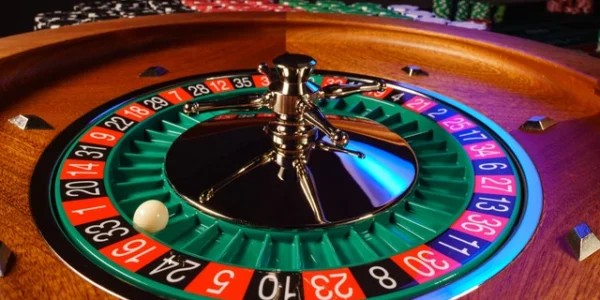
In European roulette, there are 37 pockets with numbers 1–36 plus zero. The probability of landing on red (18 red numbers) is always 18 out of 37, roughly 48.6%. That probability doesn’t change whether red appeared on the last spin or the last ten spins.
It may feel as though outcomes should even out quickly, but probability doesn’t work that way in the short term. The random sequences often contain clusters and streaks. That’s not an imbalance. It’s randomness behaving normally. A game cannot be due to anything if each event is independent.
Myth #2: Hot and Cold Numbers Predict Future Results
In roulette games, physical or virtual show a list of recent results. Some players track which numbers have appeared frequently and which have been absent. The belief is that hot numbers are more likely to continue appearing, or cold numbers are more likely to return. However, both ideas assume that past frequency influences future probability.
Every number on the wheel has the same chance on every spin. A number that has appeared five times in the last ten spins has the same probability of appearing again as a number that hasn’t appeared once. The number tracking can be interesting, but it has no predictive power.
Random sequences produce uneven distributions in short samples. Over many thousands of spins, results will approach averages, but imbalances are normal in small windows. Seeing patterns in these imbalances is a natural human tendency, but mathematically, they don’t change future odds.

Myth #3: Betting Systems Can Guarantee Profit
Roulette betting systems have been around for centuries. Some of the most famous include:
- Martingale: double your bet after each loss
- Fibonacci: increase bets according to the Fibonacci sequence
- D’Alembert: increase after losses, decrease after wins
- Labouchère: use a cancellation sequence
These systems are different in structure, but they all have a common claim of adjusting bet sizes strategically so players can overcome losses and secure profit. The key misunderstanding is that betting systems change stakes, not probability.
No matter how much you bet, the probability of any outcome remains the same. The house edge, created by the zero (or double zero in American roulette), is built into the wheel itself, and no staking pattern can remove it.
The Martingale system assumes you can always double your bet indefinitely until a win occurs. In reality, two constraints make this impossible:
- Table limits: casinos cap maximum bets
- Finite bankrolls: players don’t have unlimited funds
A sufficiently long losing streak can exceed either limit, resulting in substantial losses. The betting systems may change how wins and losses are distributed over time, but they cannot alter the mathematics of the game.
Myth #4: Long Streaks Mean Something Is Wrong
When the same colour or number appears repeatedly, players often suspect imbalance, bias, or malfunction, but long streaks are not unusual in random systems.
If you flip a coin many times, you will eventually see runs of five, ten, or even more consecutive identical results. This is not evidence of bias. It’s a natural property of randomness. Roulette behaves the same way. The streaks feel surprising because we expect randomness to look evenly mixed, but true randomness is uneven in the short term.
Clusters, gaps, and repetitions are normal. If results alternated perfectly like red, black, red, black, that would be suspicious.
Myth #5: European Roulette Can Be Beaten Because the House Edge Is Small
It’s true that European roulette has a lower house edge (2.7%) than American roulette (5.26%). This makes it mathematically more favourable for players. However, more favourable does not mean beatable.
A smaller house edge reduces long-term expected loss, but it does not eliminate it. Over enough spins, the casino still holds a statistical advantage.
Choosing a lower-edge game is sensible if you want to maximise value, but it doesn’t turn roulette into a profitable system.
Myth #6: “Watching the Wheel Reveals Patterns”
Some players believe physical wheels develop biases, and slight imperfections cause certain numbers to appear more frequently. Historically, in poorly maintained mechanical wheels, small biases occasionally exist and skilled observers could sometimes identify them.
Modern casino wheels are regularly calibrated and monitored precisely to prevent this. Online roulette uses random number generators or tightly controlled live equipment.
Detectable mechanical bias in regulated environments is extremely unlikely. Even if a bias existed, identifying it reliably would require enormous amounts of data and precise measurement.
Myth #7: Changing Tables Improves Luck
Players sometimes switch tables when experiencing losses, believing another wheel will produce better results. From a probability standpoint, all properly functioning wheels of the same type have identical odds.
Switching tables may change pace, environment, or emotional state, but it does not change probability. The perception of better luck after switching often reflects natural variation, not improved odds.
Myth #8: Inside Bets Are Riskier Because They Lose More Often
This myth is partially based on confusion between probability and house edge. Inside bets (single numbers, splits, corners) have lower chances of winning but higher payouts. Outside bets (red/black, odd/even) win more often but pay less.
However, in standard roulette, the house edge is the same for all bet types. The expected long-term loss percentage does not change. What changes is volatility, and how frequently you win and how large those wins are.
Myth #9: Roulette Results Should Balance Out Quickly
Many players expect results to correct themselves within a short session. This expectation misunderstands the law of large numbers.
Over very large numbers of spins, results approach expected averages. But very large can mean thousands or millions of spins, not dozens. Short sessions can deviate widely from statistical expectations. The randomness does not promise short-term balance.
Myth #10: Luck Can Be Controlled Through Ritual
Lucky numbers, betting patterns, table positions, or timing strategies are common traditions.
The rituals can make play feel more engaging or meaningful, but they do not influence probability. Roulette outcomes are determined by physical motion or random number generation and not player behaviour. The ritual affects the experience and not the mathematics.
Related Roulette Articles



Why Roulette Myths Feel Convincing
Human cognition is pattern-oriented, so we evolved to detect patterns because it helped us survive. Seeing structure in randomness is natural, even when no structure exists.
Three psychological tendencies reinforce roulette myths:
- Pattern perception: seeing meaningful sequences in random data
- Loss aversion: searching for explanations when outcomes disappoint
- Short-term memory bias: focusing on recent results rather than long-term probability
These tendencies make myths emotionally compelling, even when mathematically incorrect.
The Reality of Roulette
Roulette is elegantly simple, with each spin being independent and probabilities being fixed. The house edge is constant, but short-term results vary widely, while the long-term expectations favour the house.
Understanding these principles doesn’t remove excitement. It clarifies what kind of game roulette truly is. It is not a puzzle to solve or a system to master. It is structured randomness designed for entertainment.
Responsible Play and Realistic Expectations
Understanding roulette myths helps players engage more thoughtfully.
When players accept that no system guarantees profit and no streak predicts outcomes, they can focus on the experience itself, the anticipation, the pacing, the engagement.
Realistic expectations reduce frustration and support balanced play. Roulette is most enjoyable when approached as a game of chance rather than a system to be beaten.
Final Thoughts: The Wheel Doesn’t Remember
Roulette myths persist because randomness is difficult to grasp intuitively. Streaks feel meaningful. Patterns feel predictive. Systems feel logical.
But the wheel doesn’t remember. It doesn’t adjust, and it doesn’t compensate. Every spin begins fresh. Understanding this doesn’t diminish roulette’s appeal. It reveals its true nature. The excitement comes from uncertainty itself, not from hidden patterns waiting to be discovered.

Once myths fall away, what remains is the game exactly as it has always been, simple, unpredictable, and entirely governed by chance.
FAQs
Is a roulette number more likely after a long absence?
Do streaks mean the wheel is biased?
Can betting systems guarantee wins?
Do hot and cold numbers matter?
Is European roulette beatable because of the lower house edge?

Top Content


Trending