EPT Monte Carlo: The pioneer of poker coaching, Raúl Mestre
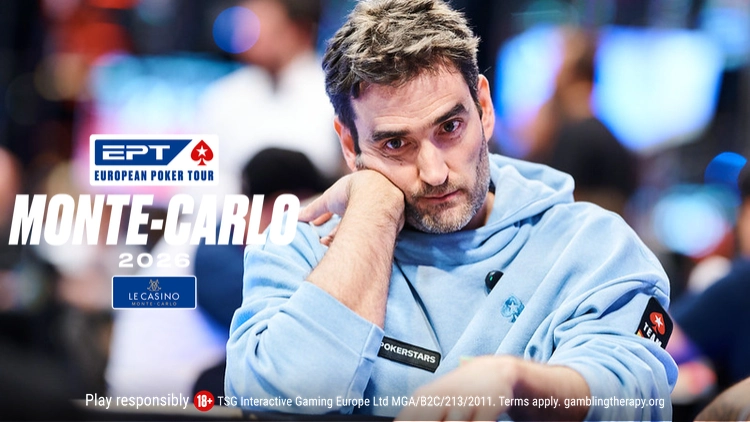
The past seven months have been a whirlwind for Raul Mestre. The Spanish poker legend made his comeback at EPT Malta in October 2025 (where the interview you’re about to read took place), but since then, he has taken down the Spin & Go Championship Live at EPT Paris and become a PokerStars Ambassador.
Mestre is currently a big stack in the EPT Monte Carlo Main Event. Learn more about one of Europe’s most influential players here.
This article was first published at EPT Malta on October 8, 2025
The welcome return of the poker coaching O.G. Raúl Mestre
When Raúl Mestre’s name was first mentioned aloud in the press room of the European Poker Tour (EPT) in Malta this week, no fewer than four reporters turned away from their laptops to say sentences that all included the same word: “legend”. It was a rare chorus of respect from a cohort rarely susceptible to hyperbole.
In Spanish-speaking corners of the poker world, Mestre occupies near godlike status. It’s not just because of his playing career, though he crushed high-stakes online games for years and made two EPT final tables. And neither is it even for some of his breathtaking plays that fuelled some of the earliest viral poker content.
It is instead for his role as pioneer of poker coaching, a pursuit that he began earlier than almost anyone else in the world.
Although it’s commonplace now for poker players to arrange themself into crews, sharing knowledge and strategies, arranging mentorships, working, studying and applying themselves together, Mestre did it first. The first time I ever heard of a poker stable, or of any kind of formal arrangement for poker coaching (at least in Europe), it was with reference to what Mestre was doing in Valencia back in the mid-2000s.
Since then, pretty much any Spanish-speaking poker player of any repute–Juan Pardo, Adrian Mateos, Sergi Reixach among numerous others–have crossed paths with Mestre during the early portions of their careers. And while Mestre himself took a long break from the poker grind, he remained the driving force as his coaching site EducaPoker went from strength to strength, building a roster of teachers, accepting more and more students, and watching many go on to achieve greater and greater success.
And then suddenly here in Malta, Mestre himself was back, clutching a Gold Pass in his hand and sitting down on Day 1A of the EPT Main Event. He’d won the Gold Pass in the made-for-TV Golden Button show, in which he demonstrated that he hadn’t lost any of the skills that took him to the top of the game two decades ago.
‘I ENJOY IT MUCH MORE’
The Mestre of 2025 cuts a calmer and more relaxed figure than the player who blazed through the EPT many years ago. He is also bursting with knowledge and experience accrued through the turbulent past 20 years in poker — and, as always, happy to share what he has learned.
“Now, I enjoy it much more,” Mestre says, reflecting on his first day of EPT competition in more than 10 years. “I just played one day, yesterday, but it was way more enjoyable than what I remembered from the early days. I’m older, and the slower pace feels better now.”
Mestre burst onto the scene in the earliest days of the EPT, when he was a typically all-action, dynamic presence, casually flicking in tournament buy-ins that represented only a couple of the big blinds he was posting in the nosebleed online cash games. He was making a name for himself as a prolific grinder, relentlessly seeking the narrowest margins to boost the EV and the bottom line.
“Back then I was so focused on the results,” he says. “I was grinding full time and it was harder to enjoy the process. Now, I honestly don’t care that much about the results. I try to play my best, I try to focus on what I think is the right play in each situation. And that’s the reward in itself.”
He adds: “I’m 43 now, and I was a kid back then.”
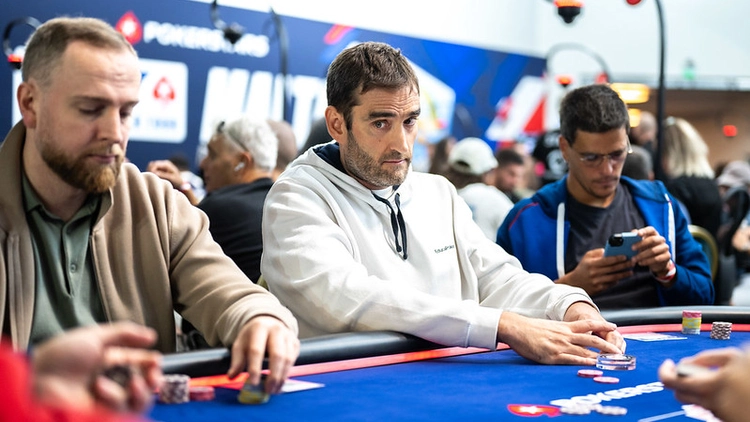
Mestre says he enjoyed his return to the EPT tables
A POKER COACHING PIONEER
Though he has fond memories of the days when his life revolved around cash games, Mestre becomes even more animated as he discusses his transition to a pioneering poker coach and mentor. To hear him describe the early days of what would become EducaPoker, it’s reminiscent of tales told by the Silicon Valley startup innovators who identified a need and then improvised a solution, honing their unique product as they expanded it.
The need was extreme — the financial crisis of the mid-2000s hit Spain especially hard, with even highly-qualified graduates struggling to find work. But the hive mind functioned just as effectively in the dining room of a house in Valencia as it did in those garages of Palo Alto, forging a similar ethos of success and progress.
“These things almost always happen by chance, at least part of it,” Mestre says. “If we go back in time to Spain, 2006, 2007 and 2008. Those were very difficult times for Spanish people. We had a big hit in 2008, the worst year in the economy.
“I was 25 or 26 and most of my friends who were finishing their studies, their degrees or whatever, they had no hope of getting any job. The best they could get was an internship for €300 a month or something like that. There was an opportunity there. There were people who didn’t have an alternative idea of what to do.”
He continues: “I was already playing poker full time, and some of them came asking for help because they wanted to make some money somehow and they didn’t know what to do. So I started with friends from my early childhood, school friends, and that grew up quickly. People were unemployed and it was really hopeless back then.
“I remember early on I had five people in my dining room. Then we moved and I finally had an office in a small office building. They were also very cheap because businesses were also running out of money. I remember having 25 people, all of them childhood friends, and I was feeling proud that I was able to help them make a living when it was really difficult in Spain back then.”
GROWING AND GROWING
News of the poker-playing enterprise quickly spread, fanned by a growing awareness of poker in the mainstream. Mestre suddenly had numerous bright minds knocking at his door, with the demand for his product requiring a more formulated approach.
“The fact that there were so many people forced me to get organised,” Mestre says. “I had to make content for everyone, so I started recording things. I started writing stuff down, because not all of them could be there at the same time. There were players that would help the new people that were joining. That’s what eventually became sort of an organised thing.
“It was the natural way of growing. At some point I thought, OK, I might as well go online with this because it’s already kind of structured. It’s not like I planned to start a coaching company and all that came after that. People came to ask for a chance to play because they didn’t have anything.”
Flash forward more than 15 years and EducaPoker remains one of the most visited poker coaching sites in the world, offering courses to players of all abilities, in all poker variants, and with tutors who have prospered in the toughest games.
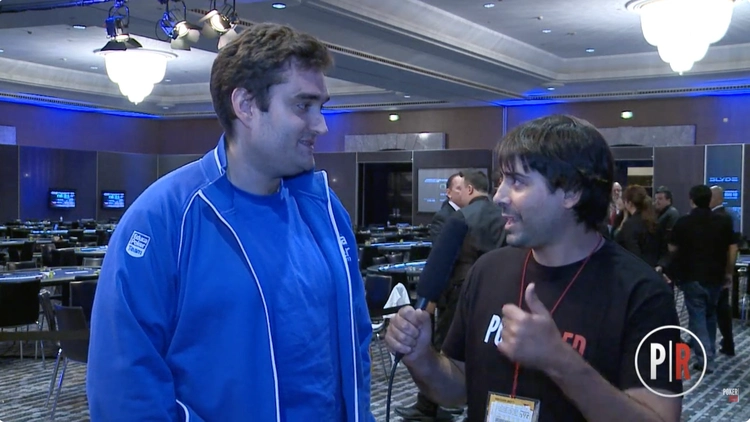
Mestre talks to Poker Red reporters during EPT Barcelona in 2013
It has a discussion forum and hand-analysis tools and is now part of the same group as the leading Spanish poker portal Poker Red, with an ongoing relationship with PokerStars to continue to support poker in the Iberian peninsula and further afield.
It has survived great turbulence, including legislation changes governing online poker in Spain in 2012 that forced many pros to relocate from the country to continue playing. Mestre was among them, moving to London for three years to continue his profession.
But ultimately, Mestre realised online poker needed to take a back-seat to what was happening elsewhere in his life.
REAL LIFE VS. POKER LIFE
In his early days as a poker grinder, Mestre’s commitment to cash games brought quick and vast success. But it demanded hours spent in isolation sitting in front of a computer screen, slowly neglecting other areas of his life.
It wasn’t sustainable — and Mestre says he began to be more seduced by the variety on offer in the business world and, even more potently, as a family man.
“Grinding online, playing online poker, it’s challenging, it’s difficult, but the days all look alike,” he says. “The hands are different of course, but the mindset is the same. When you run a company, things are crazy. You have to re-invent what you do way more than when you’re playing online poker. So I chose that over grinding.
“I did great as an online player, but from very early on, my brain was wired to something like online poker. It was something that just kind of happened to me. But the company, the coaching, it’s something I decided to try. It’s a weird thing to say, but I was gifted the ability to play poker from the beginning. It’s not a very humble thing to say, but I didn’t have to make a huge effort to be able to win early on. Then I started working on it, and things worked so well. But it was a very low-resistance path for me. But the company was way more challenging and the feeling of helping others is way better.”
It became even more pressing following the birth, in 2015, of his first child. It meant a clear and happy shift in priorities. Mestre now has three children and finds parenthood to be the most rewarding aspect of his life.
“When I became a father I couldn’t do it all,” he says. “I really enjoy spending time with my kids. I understand it’s a very personal experience, and it’s different for every person and there’s no right or wrong in that. There are people who had kids and they suffered or they didn’t enjoy it as much as they thought. But for me it’s an amazing experience and I didn’t want to not spend as much time as I could with them.
“There are so many things related to kids that you only get to experience once. They only do lots of things once, and if you’re not there, then you miss it. And at some point, you won’t even be an important part of their life. I’m not saying you need to be there for each and every second, but at some point you aren’t even an important person for them if you aren’t around enough, and I didn’t want that to happen.
“I decided that if I had to quit something, I’d rather quit the online grinding. That’s how I’ve been managing for the last 10 years.”
A PERFECT MENTOR
Mestre’s paternal instincts have also stood him in good stead as a mentor. He now says he takes more pride in seeing his students prosper than he ever did when it was him at the tables, and he regards the longevity of his business as his defining achievement.
“The things that I remember more fondly from my whole poker career — and I’m going to include here both my success at the online tables, my final tables at live tournaments, and helping friends play — is, by a lot, feeling that I’ve helped other people be successful. For me, emotionally, that’s the best thing…Feeling that I’ve helped them make a living from something that wasn’t an option for them when they started, it makes me feel really satisfied.”
He estimates that he has had a personal coaching relationship with close to 1,000 players, but adds that maybe up to 30,000 people have profited from EducaPoker’s resources through the years.
“We started very early with an analytical approach to the game,” he says. “That created the language to discuss poker. I was the first one to start working with databases back then. It created a standard, and also forums, a place to meet each other to start discussing things. When you have a community of people who is invested in the game, when you have the environment to start talking between them, that leads to growth and improvement. That’s been a part of it. Obviously the game has been growing steadily for 20 years. That would have happened anyway over time, but I feel like I started it. Obviously that’s amazing. I feel incredible pride about this.”
‘WE AREN’T ROBOTS’
These days, even as computer-assisted learning (solvers, etc.) has taken the understanding of poker to new heights, Mestre feels strongly that it’s the human element that remains the game’s most significant asset. He emphasises to his students that they must protect their mental well-being. Poker players are at their strongest when they enjoy it the most.
“It’s very easy from the outside to act like a poker player should be a robot, that has no feelings, no emotions, just play your A game and don’t feel anything,” he says. “That would be amazing, but we aren’t robots. We can’t do that. In poker, to me, the main mistake players keep committing emotionally is getting too attached to results instead of how well you are playing.
“When you play a lot, you’re going to get downswings. How that affects you emotionally will make a big difference in the long-term success of players. I’ve seen smart people who had a good theoretical basis have to quit the game because when they had a downswing they were so emotionally distressed that they weren’t able to play close to their A-game.
“When I see that a player is making a big amount of mistakes in situations where I know that he should know better, and he’s having a downswing at the same time, I always recommend that he should take at least two weeks off, and to try to reflect on the long term. Remember, you’ve played 3 million hands in your career. Let’s forget about the last two months, and focus on the last five years. That’s very good advice. Other than trying to focus on the process, on your decision making, avoiding playing when you’re exhausted, having good playing decisions outside of the game, it’s an important part of being a successful player.”
A FLOURISHING LIVE GAME
Mestre says he is happy to see the way the EPT has thrived in his absence, especially the way the organisers now focus on promoting an all-round player experience. There are wellness sessions available daily, and a wide variety of off-the-felt activities available to all guests. It has turned the tour into an attractive proposition both for players and their partners and families.
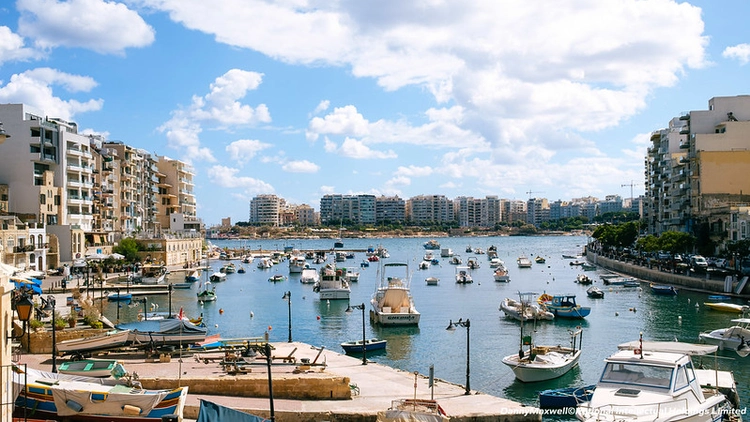
A world outside the tournament room in Malta
“All of the cities are interesting places to visit,” Mestre says. “You go and play a high-stakes tournament, with a big field, which isn’t that easy to find. But at the same time you have a trip that you can enjoy with someone who is not interested in poker. Also the activities surrounding the EPT can be something for that person to do while you are playing, or maybe something to do together.”
Mestre and his wife both came to Malta, the first trip they had taken as a couple since the birth of their third child. And he says it may not be another 15 years until he’s back.
“The longer we go into the future, the harder it is to say what will happen with poker,” he says. “But as far as people have fun playing poker, I don’t think that’s going to finish. Poker is going to keep going.”
He adds: “When I try to remember what I was doing 10 years ago, and where I am now, I would have never guessed half the things. So I think poker will still be a thing, for sure. And I will be involved helping people most likely.”
Further reading
EPT information hub
Monte Carlo activities guide
Official EPT site
EPT photo gallery

Latest Articles

View Other Blogs