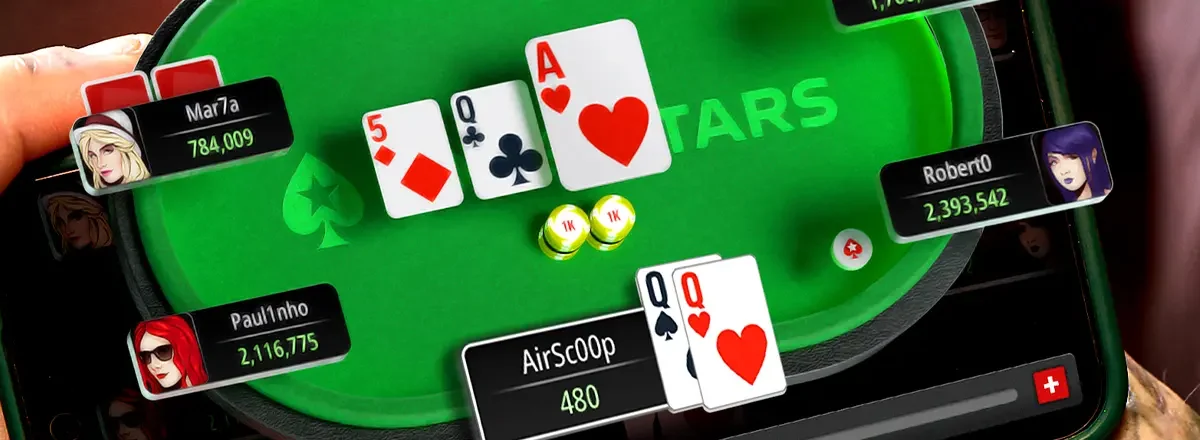
Adapting to Zoom Poker
Zoom looks just like a regular cash table only with less waiting around, but there are actually some more subtle differences that call for quite large strategic adjustments. Let’s explore them so that you can jump into the Zoom pool with an immediate advantage.
Avoid Very Marginal Situations
In Zoom you can start the next hand without having to wait on the conclusion of the hand in which you just folded. Poker is all about making profitable investments and avoiding unprofitable ones. Imagine that in a regular cash game you are presented with a very close spot such as whether or not to open 44 from UTG on a 6-max table. The players behind you are all relatively strong and so there is no obvious soft spot to generate a clear edge from playing this marginal hand. You might decide that this is probably a break-even decision and choose to make a raise here; after all, playing a hand is more fun than not playing one.
In Zoom, however, there is simply no reason to get involved in this spot. The time you will spend breaking even in this hand could be spent fast-folding three times and reaching a very clearly profitable spot. If you constantly reject marginal spots in Zoom for the purpose of getting more hands in, you will increase your hourly expectation by accessing more opportunities for making profitable investments. That time you could have spent playing a pot with 44 form UTG could have been spent opening Q9s on the BU – a clear money-making scenario.
There is also the issue of decision fatigue in modern online poker. Rather than navigating a difficult post-flop spot with 44 for a tiny edge, you can preserve your focus for the far more profitable situations that are constantly appearing in Zoom.
Pro Tip
Fast-folding marginal spots helps you stay mentally fresh instead of burning energy on complicated, low-value situations.
Steal, Steal and Steal Some More
The average Zoom player who does not take the game very seriously is looking to generate more action and cut out a lot of the trash hands he will be dealt by fast-folding. This means that players are, on average, less inclined to defend their blinds, call continuation bets light, or 3-Bet light. With two tight recreational players in the blinds it is probably correct to open any two cards on the BU. On regular tables, this strategy would be a very bad idea for two main reasons.
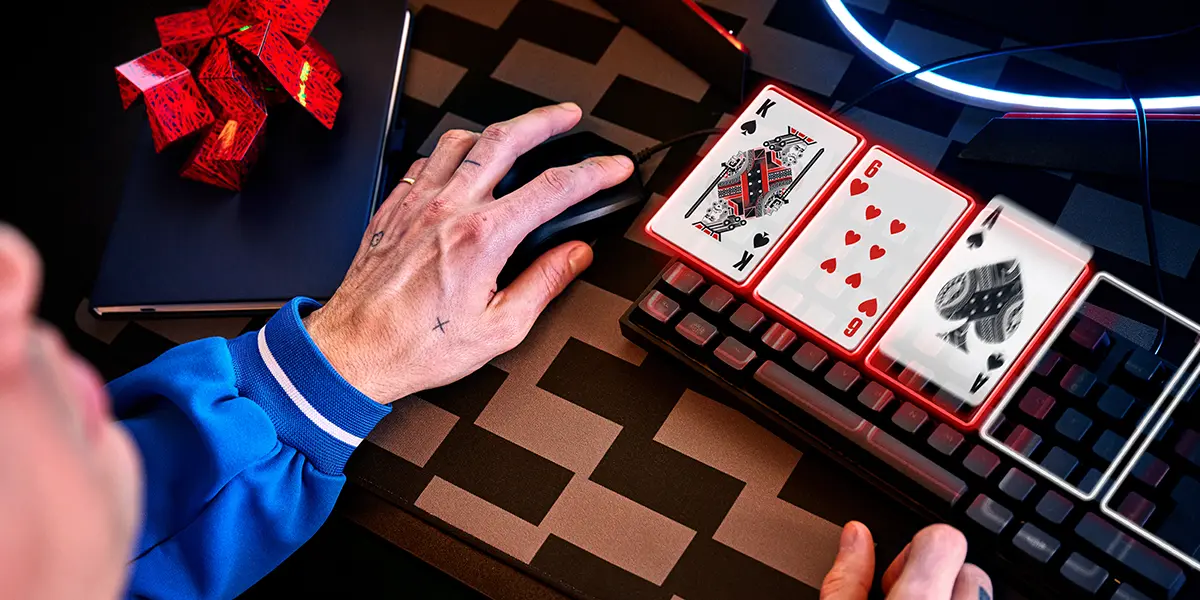
Firstly, your opponents might just about fold often enough to make a steal with 82o defensible right now, but if you repeat this behaviour long-term, you will soon lose their respect and high fold frequencies. In that case, you would be better saving your steals for slightly less hopeless starting hands, given that you would only be allowed to make a finite amount of light BU raises while maintaining high fold equity. Secondly, your opponents would likely fold less in the first place, after all, they have nowhere better to go like they do in Zoom.
It is fascinating how the promise of future action can dramatically affect your opponents’ willingness to enter pots without them even realising. Good Zoom players capitalise on all of these late position spots and open very wide on the right tables from the CO, BU and SB.
Another advantage of stealing aggressively in Zoom is that players have far less immediate history against you. On a regular table, observant opponents will eventually notice repeated blind attacks and begin adjusting. In Zoom, however, players are constantly moved to different tables, making it much harder for opponents to track and counter wider stealing frequencies.
Learn Solid Default Ranges
Zoom pools are huge. These large fields mean that coming across the same opponents enough to build an idea of their strengths and weaknesses is a rare luxury. Normally, then, you shall need a solid game-plan mapped out against the pool as a whole since you are unable to home in on individual opponents. The situations where you should pre-plan some set strategies are the most common ones that have the highest effect on your overall win-rate. Of course, you should often deviate from set pre-flop ranges due to table dynamics and you shall cover this point next. For now, here are the main spots in which it is essential to have a set game plan for the average table:
- Pre-flop opening ranges and reacting to 3-Bets.
- 3-Bet Ranges.
- How wide to call the big blind vs. various positions and raise sizes.
- 4-Bet ranges
- Continuation Bet Strategies for common flop situations, EG. BU vs. BB.
Modern Zoom pools are also significantly tougher than they were a few years ago, which makes disciplined pre-flop fundamentals and strong population-based strategies more important than ever.
Because the player pool is so large, you will rarely have enough history with an opponent to understand their exact tendencies. As a result, having solid default ranges and clear baseline strategies becomes far more important in Zoom than at regular tables. These fundamentals allow you to remain profitable against the general population until a clear exploitative adjustment presents itself.

Practice the Art of Scanning Tables
Default strategies are for situations in which there is no obvious exploitative adjustment to be made. Very often in the Zoom pool, however, you will notice something that causes you to change your strategy somewhat. You should develop the habit of scanning a table when you are faced with a pre-flop decision so that it becomes every bit as automatic as looking before you cross a road.
Here are some of the things you are looking for and the appropriate adjustment to make having spotted them.
- If there are shorter stacked players in the blinds, this is evidence that the blinds are weaker players. Be inclined to open a wider range of hands and use a larger raise size in an attempt to isolate these opponents.
- If the table is full of aggressive regulars who 3-Bet a lot, try to cut out the bottom of your opening ranges and use a smaller raise-size since you want to preserve chips when you get 3-Bet and leave yourself more room to call 3-Bets with better implied odds.
- If the table is full of loose recreational player-types use a larger open size in order to thin the field better with your big hands.
- 3-Bet mainly big cards against tight-passive players who rarely open.
- With a weak player in the BB, consider flatting some hands from the SB even though this is generally not a solid strategy on a tougher table.
A very common mistake made even by relatively experienced students is to act before visually scanning your environment. This is like playing poker with your eyes shut and is bound to become a costly long-term leak. Stop and look before you act in Zoom as each table is very different to the last.
Conclusion
Solid Zoom play will require all of these adjustments and more, but remember, you have a head-start having access to these training materials. All of the cash game materials here on the school are also relevant to Zoom games; it’s just that there are a few extra adjustments to make.



View Other Blogs