What Happens if You Tie in Blackjack?
Blackjack is one of the most popular online casino card games in the world, and for good reason. It is part luck and part strategy, meaning every hand requires a decision that keeps you engaged. But one situation often confuses even players who know the basics well: what happens if you and the dealer finish on the same total?
Do you lose your bet?
Do you win part of it?
Does something special happen if both hands are 21?
This happens more often than many people realise, with around one in every twelve blackjack hands involving a tie. So understanding the rules behind them is essential if you want to play confidently and avoid unnecessary frustration.

This guide covers everything you need to know about blackjack ties (known as pushes) including what happens to your chips, how ties differ in various versions of the game, common tie scenarios, statistics, strategy considerations, and frequently asked questions.
By the end, you’ll be able to recognise tie situations instantly and know exactly what the outcome should be — whether you’re playing at a live table or at a casino online.
What Is a Blackjack Tie?
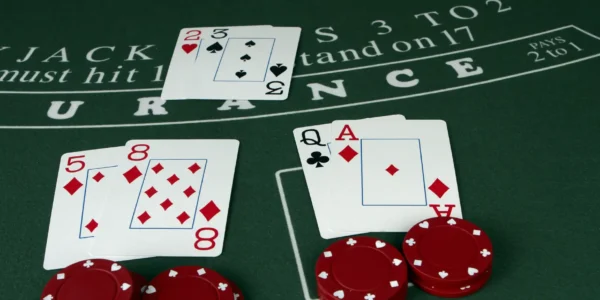
A tie in blackjack occurs when your final hand total matches the dealer’s total after all actions are complete. It doesn’t matter how you reached the number, what matters is that both results are equal and legal (meaning 21 or under).
When this happens, the outcome is called a push.
A push means:
- You do not win the hand
- You do not lose the hand
- Your original bet stays with you and is returned to your stack
Nothing gained, nothing lost, the round simply ends with no financial change for you.
Ties can happen at a wide variety of totals — 17, 18, 19, 20 and yes, even 21. However, ties involving natural blackjacks follow slightly different rules, which we’ll explore later in more detail.
It’s also worth noting that ties do not break the rules of blackjack. They simply sit alongside wins and losses as a third possible outcome.
If you’re playing in a UK or European online casino, you will almost always encounter the push rule. It is the universal default though some blackjack variants add their own twists.

How a Push Works in Practice
The simplest way to understand a push is to see what happens during a typical hand.
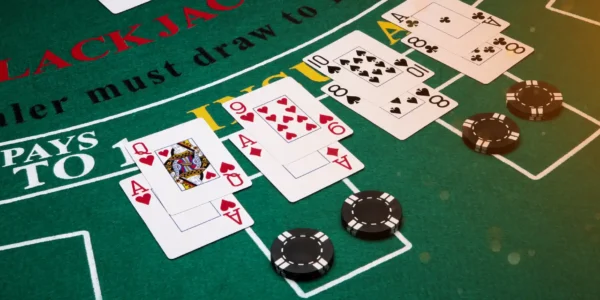
Imagine you’re playing online or at a live table and you stand on 20. The dealer reveals their cards and also finishes on 20. Even though you played your hand well, neither side has the advantage.
In this case, the dealer announces a push.
Your chips remain exactly where they started, and your balance stays the same.
For many beginners, this can feel like a loss, particularly if they were hoping to walk away with extra chips after making strong decisions. But a good mindset shift is this: you avoided losing.
A push is always better than the dealer winning, and in situations where you stood on a high total like 19 or 20, a push is often a sign that you made the correct strategic decision, but the dealer simply matched you.
Pushes are most common when both hands are in the higher range of totals. It’s unlikely for both sides to tie at, say, 13 or 14, because those totals are rarely final. More cards are usually taken, and the hands move up or bust instead.
Ties surface most when the dealer is showing a “dangerous” card such as a 10 or an Ace. These upcards often push players to try to achieve strong totals, and the dealer is equally capable of doing the same.
What Happens to Your Bet if You Tie?
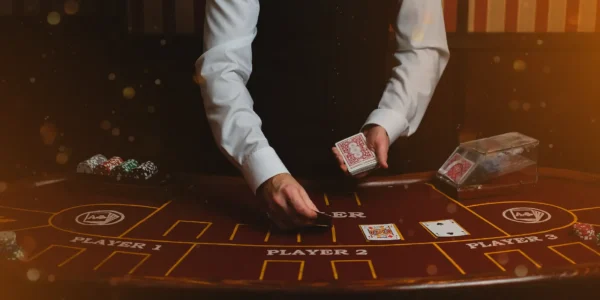
When a push occurs, your original wager is returned to your balance immediately. In online blackjack, this usually happens so fast that players barely notice the chip movement. In a physical casino, the dealer simply leaves your chips in place or pushes them back to your zone.
There is no payout, but crucially, you also don’t lose anything you risked.
This is one of the reasons blackjack is such a strategically attractive game. Even when the odds are close, ties ensure that you don’t automatically lose when the dealer reaches the same total.
Some players see this as a second chance, the next round could be the one that tips things in their favour.
Why Pushes Actually Help You Long-Term
Although a tie may feel disappointing in the moment, it’s useful to remember its impact over many hands. In casino games, anything that avoids losing money is a statistical advantage.
Blackjack already offers one of the lowest house edges of any casino game when played with correct strategy. Pushes help keep that house edge manageable by preventing losses on hands where the odds are close.
This is why push outcomes have a meaningful role in keeping blackjack fair and enjoyable.
Some less common blackjack variants alter what happens on ties, and those versions generally increase the house edge, making ties worse for the player. We’ll discuss this further when we explore blackjack variations later in the article.
Ties vs Player Wins vs Dealer Wins: Understanding the Difference
To appreciate the value of a push, it helps to compare the three outcomes side by side.
A win means the dealer pays out according to the bet.
A loss means your chips are collected immediately.
A push means everything returns to neutral and the hand is a draw.
Many new players lump a push in with losing because there is no reward, but from a mathematical perspective a push preserves your bankroll, which should always be seen as a positive.
The only time ties can feel difficult is when you’ve made a good decision and were expecting a payout — like standing on a 20 against a dealer 10. If the dealer then also finishes on 20, part of that frustration may come from how close you were to a win, rather than an actual financial loss.
If you can mentally reframe pushes as tiny victories over variance, your long-term blackjack experience will feel much more controlled and rewarding.
When Both Hands Reach 21: Tied Natural Blackjacks
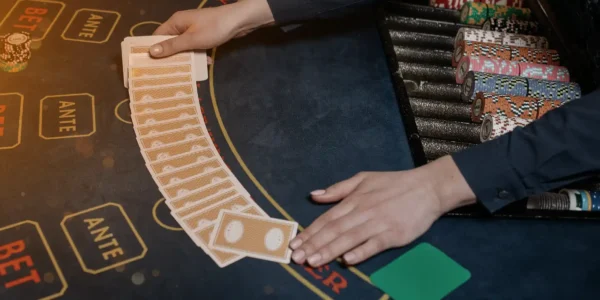
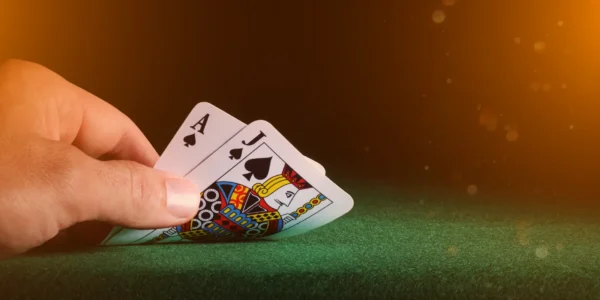
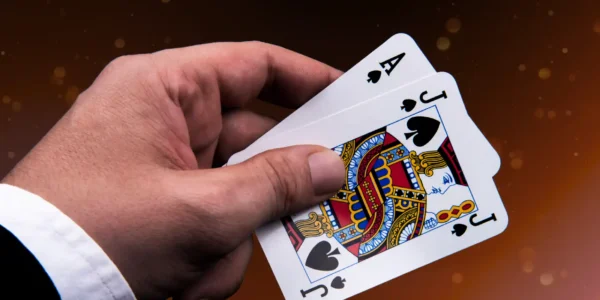
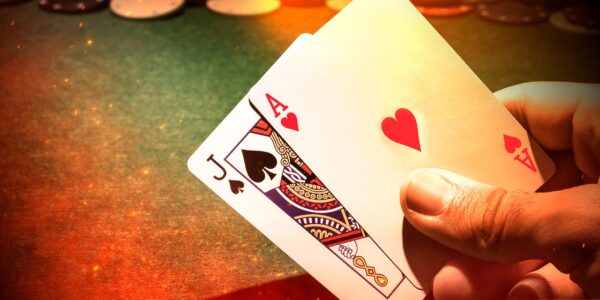
One of the most exciting moments in blackjack is landing a natural blackjack (an Ace plus a 10-value card). It usually pays 3:2 and feels like a guaranteed win.
So what if the dealer turns over their cards and also has a natural blackjack?
It’s a scenario where excitement can very quickly turn into confusion.
Under standard European rules, which are the default at most UK and online casinos, it is a push, your stake is returned, and you do not lose your money. You also do not receive the 3:2 payout you would normally earn for your natural blackjack.
Players sometimes argue that they should at least get something for hitting the strongest possible hand. But the game rules treat both sides as equally matched, so the fairest outcome is a draw.
Some blackjack variants change this outcome, usually to the player’s disadvantage.
If a rule states: Dealer wins all ties…then a tied blackjack is not a push. The dealer takes the pot, thanks to a significant increase in the house edge.
These versions are exceedingly rare, but they are worth watching out for when travelling or playing less familiar formats.
Ties After Splitting Pairs
Splitting pairs is one of the most important features of blackjack strategy, and ties can play out differently depending on how many hands you’re playing.
If you split a pair, for example two 8s, and end up with two separate hands, each is treated independently.
This means:
- One hand may win
- One hand may lose
- One may push while the other wins
- Or both may push
The fate of one hand does not influence the other.
This becomes more interesting when splitting Aces. Under many rule sets, if you split Aces and then draw a 10-value card on one of the hands, that counts as 21, but not as a natural blackjack.
So if the dealer also finishes on 21, the result is a push, not a winning blackjack payout.
Understanding these distinctions helps avoid disappointment. A strong 21 still gives you a great position, but only natural 21s awarded on the initial deal come with that higher payout.
Ties After Doubling Down
Doubling down is one of blackjack’s most exciting strategic decisions, you double your bet and receive exactly one additional card. It’s a high-confidence move when you’re signalling that you believe you can beat the dealer with just one more draw.
But what if the dealer then ties your final total?
The rule here is very straightforward, a push still applies. Your doubled bet is returned exactly as it was placed.
This is another example of how pushes play a crucial role in blackjack’s fairness. Even when you risk more, a tie safeguards your bankroll against the worst-case outcome.

Soft Totals and Ties: Why They Matter
Soft totals (any hand containing an Ace counted as 11) bring flexibility to your decisions. But they can also lead to ties where you feel like you were forced into a stand that didn’t quite convert into a win.
For example:
Soft 18 vs dealer 18 is a very common push.
Strategically, hitting soft 18 in many situations is correct because it gives you a better chance to reach 19–21. Even if the dealer catches up to you, a push reinforces that you didn’t take unnecessary risks.
Probability: How Often Do Ties Happen?
Pushes are more common than many players think. Over thousands of hands, they average around 8% of all outcomes which is roughly 1 in 12 hands.
There are a few scenarios that can increase the likelihood of a push further, and they’re usually linked to optimal strategy, such as standing on a strong total. This can be a sign that you are playing well.
If the dealer also reaches a good number, it doesn’t erase your solid decision-making. It just means the game is balanced, exactly as it’s designed to be.
Strategy: What Ties Can Teach You About Blackjack Decisions
Pushes happen most often when both the player and the dealer make mathematically sound decisions. If you stand on 20 and the dealer reaches 20, you might feel like you deserved more. The truth is, you played well enough to avoid losing.
Over the long term, good decisions do not always deliver instant rewards. Blackjack rewards consistency, not emotion. Pushes are a sign that your strategy is aligned with the correct decisions the game expects you to make.
Many professionals look at pushes as “correct play confirmed”. You applied the right logic. You protected your bankroll. Now you are still in the game, ready for the next hand.
A losing novice might chase excitement and hit a strong total like 19 or 20. That risk would lead to frequent busts. The more experienced player stands, understanding that a push is a successful defensive result when compared with a reckless loss.
Ties are a useful reminder. Patience in blackjack often pays more than aggression.
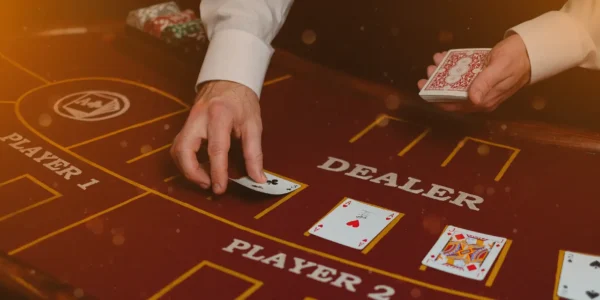
Rare But Interesting Tie Scenarios
Some unusual hands create tie outcomes that surprise new players.
One example occurs when a player splits Aces, draws a ten on both hands, and believes they have two winning blackjacks. After all, both equal 21.
However, only a natural blackjack, dealt on the first two cards, receives the premium payout. Twenty-one scored after a split is counted simply as a high total. If the dealer also finishes on 21, those hands still result in pushes.
Another scenario involves soft totals. Players might hit a soft 18 to improve their chances against a strong dealer card. If both finish at 18, it can feel anticlimactic. Yet, this is often the mathematically correct outcome. You avoided a losing situation.
Finally, double down ties are very common. You took a confident risk, the dealer matched you, and the result was neutral. It is disappointing, but the alternative could have been far worse if the dealer outdrew you.
The key theme in all of these situations is that pushes reflect a balanced result. Neither side outplayed the other. The hand resets, and so does the opportunity to win.
Do Side Bets Push Too?
Most blackjack side bets, such as Perfect Pairs or 21+3, are judged separately from your main hand. If your hand ends in a push, the side bet is still settled based on its own result. A push does not affect whether you win or lose your side bet, since the two wagers operate independently.
The Emotional Side of a Tie: Staying in Control
Blackjack is a game of logic, but no player is a robot. Emotion is part of the experience. That moment when you and the dealer both reveal a 20 can feel flat, especially when you thought you were on the brink of a win. The frustration comes from anticipation. You hit the perfect number for most situations and still walked away without profit.
The key is to recognise the push not as a missed win, but as an avoided loss. Your balance has not changed, which means your ability to keep playing and make better decisions remains intact. A calm reaction keeps you focussed on the strategy that protects you in the long run.
Players who respond emotionally might attempt to make up for the lack of a win on the next hand by raising their wager or making impulsive decisions. This is how losing streaks begin.
A level mindset views the push as a steady checkpoint, not a sign that luck is slipping away. Good blackjack is simply a long run of individual hands, sometimes you win, sometimes you lose, and sometimes you prove you played well by tying the dealer.
If you can develop that calm perspective, you will always walk back into the next hand with the best chance of winning it.
Why the Dealer Checks for Blackjack Early in Some Casinos

In European blackjack, the dealer does not check for blackjack until all players have finished their actions. This means players can double down or split, only to lose their additional stakes if the dealer eventually reveals a natural blackjack.
In Atlantic City or Vegas-style games, the dealer checks for blackjack immediately when showing a ten-value card or an Ace. If they have one, the round ends quickly and no further money is risked by the player.
These rule differences do not change how pushes are handled, but they do change how emotional the moment can be. A push on a natural blackjack in Europe might feel like a rollercoaster. You thought you were ahead. Then the dealer revealed the exact same thing.
It is a reminder to stay calm until every card is revealed.
Related Blackjack Articles
FAQs
Do I lose my bet if I tie with the dealer?
Does a push still happen if I doubled down?
Can split hands tie separately?
What if both I and the dealer have 21?
Do side bets push as well?
Can a push happen if the dealer busts?
Why does a push sometimes feel like a loss?
Do online blackjack games have more ties than live casinos?
Do pushes affect side game features like auto-rebet or streak trackers online?
Why do some players feel like dealers get more pushes than they do?
Conclusion: Pushes Protect Your Bankroll
A tie in blackjack online may not feel as satisfying as a win, but it helps preserve something far more important: your bankroll.
Pushes prevent close hands from turning into losses, they reward solid play even when a dealer mirrors your total, and they give you another opportunity in the next deal without your bankroll taking a hit.
Understanding ties is part of becoming a confident blackjack player. You know what to expect and you recognise strong decisions even when they don’t pay immediately. This means you could play with a clearer mindset.
The next time your 20 pushes against the dealer’s 20, remember this. You made the right move. You’re still in the game. Your bankroll is intact. That, in the long run, is what helps good players continue

Top Content

Trending