Six Common PLO Mistakes – Essential Tips for New Players
Pot Limit Omaha (PLO) continues to grow in popularity. It’s easy to understand. Unlike its two-card cousin Texas Hold’em, PLO offers many ways to make strong hands with the players starting with 4 hole cards. There is, consequently, more action and more excitement.
This action attracts gamblers and fun players, which attracts more serious students of the game. As people convert from hold’em to PLO however, they tend to fall into some common traps that befall most new PLO players. Today we’re going to look at six common mistakes that are made by new and recreational PLO players alike.
As the PLO landscape has matured over the years, the games have become significantly more aggressive and strategically sophisticated. While the fundamentals remain the same, the average player today is far more aware of hand values, equity, and position than they were a decade ago. This means the margins for error are smaller, and making these foundational mistakes will cost you money much faster in today’s games.
Poor Starting Hand Selection
Although this list isn’t in any particular order, poor starting hand selection should probably be #1, as it leads to many problems that doom players to lose in the long term.
One of the biggest differences between modern PLO and the games of a decade ago is the increased emphasis on connectedness and nut potential. While many recreational players still overvalue disconnected high-card hands, today’s strongest players prioritize hands that can make multiple nut combinations and continue aggressively across a wide variety of board textures.
Overvaluing premium pairs like AA and KK
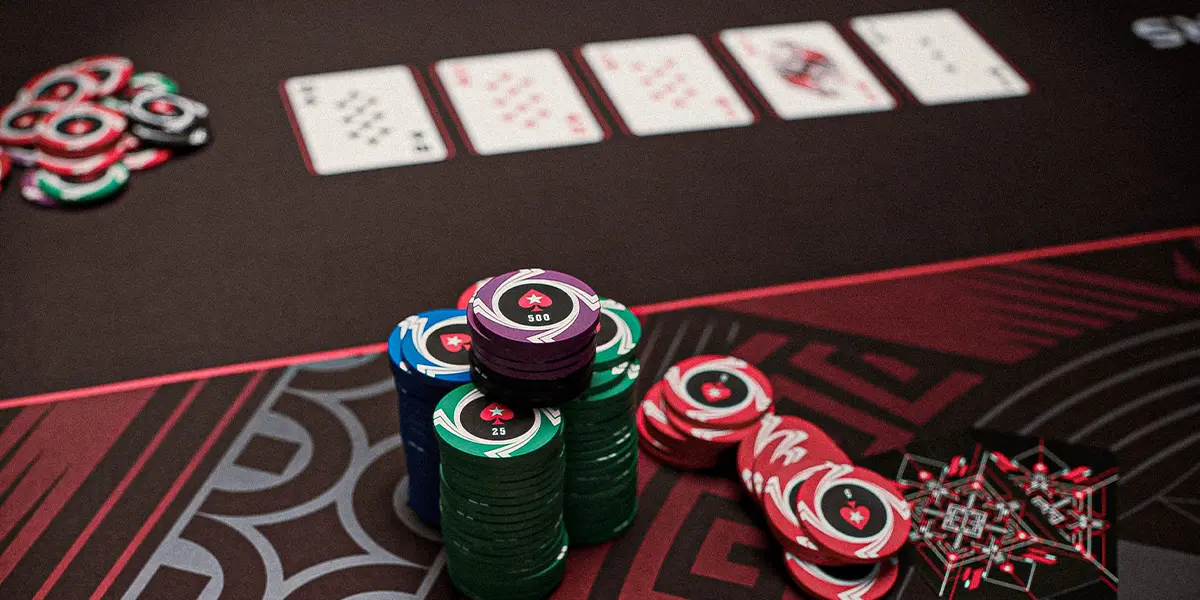
This is a very common problem for new players coming over from NLHE, where AA and KK are very strong hands both pre-flop and post-flop. AAxx and KKxx aren’t of the same muster in PLO. In hold’em, even when they don’t improve on the flop, they are still the strongest of 1 pair hands. While that’s fine in hold’em where strong 1 pairs win a fair bit at showdown, in PLO that’s frequently not the case. If you can get these hands all in preflop, you do so with an edge. But the betting is pot limit, not no limit, so it can be difficult to do on deeper stacks. If you can get close to half the effective stack or more in preflop, you’ll be fine to put the rest in on many flop textures. When the stack to pot ratio is higher though, failure to slow down on board textures when you only have that 1 pair and nothing much else working for your hand tends to lead to disaster for your stack.
In today’s games, players are much more willing to apply pressure against capped ranges and vulnerable overpairs. If you consistently refuse to fold Aces or Kings on coordinated boards, observant opponents will make your life very difficult.
Going broke with non-nut hands
As people migrate from hold’em to PLO, one of the ideas that don’t translate well is the intrinsic strength of non-nut hands. When you make a small flush or non-nut straight in hold’em, you have a very strong holding that will often win at showdown, and you can back these holdings with a lot of chips profitably. In PLO however, these hands cost beginning players a lot of money. Due to the 4 card nature of the game, players will make nut holdings much more frequently. And deeper stacked, that’s problematic for the non-nut hands. Newer players tend to press them hard, betting and raising the size of the pot. This often leads to them winning a small pot when everyone folds and losing the max vs. the nuts.
Getting involved from out of position
Position is even more powerful in PLO than it is in NLHE. Given the more nutted nature of PLO, the player in position has the distinct advantage in losing less with their losers, winning more from their winners, getting away from 2nd best hands easier, and finding profitable bluffing opportunities. The out of position player is less likely to check a nutted hand for fear of missing value, and when they do check, the in-position player can more credibly represent a nutted hand simply by the sheer fact that it’s easier to make a very strong hand in Omaha.
Furthermore, with the rise of pre-flop aggression and frequent 3-betting in modern games, playing out of position in a bloated pot is a recipe for disaster. If you are playing from the blinds today, your hand selection should be considerably tighter as it would be on the button.
Stacking off vulnerable nut hands with no redraws deep stacked
Let’s say you raise preflop with A♣ A♠ J♦ 10♣ and get a caller out of the big blind, a competent PLO player. The stacks are deep. The flop comes 7♦ 8♦ 9♥, giving you the nuts on the flop. They check and you continuation bet the size of the pot. They check/raise the pot. You reraise pot. They raise again. Next thing you know, you’re all-in on the flop with the nuts. Great, right? Not so much. The problem here is when a competent player puts all the money in on deep effective stacks with a high stack to pot ratio, they will pretty much always have the nuts as well. Why is that a problem? Because we have no redraws with our nut straight. Redraws are cards that can improve to a better hand on certain turns and rivers. In the case of our hand though, we have no redraws to a better hand (except for a very unlikely running full house). This puts us in a very bad spot against the competent player, who likely does have redraws with his nut straight. Essentially, you’ve just put all your money in the pot in a situation where almost all outcomes will be either you get your money back (split pot), or you lose it all (they redraw to a better hand). When you look at it this way, you’ve made a terrible investment with your chips. For example, let’s say our competent opponent turns over K♦ Q♦ J♥ 10♥. Whoops! (See example below). We are currently tied on the flop, but they have all the equity. If the board bricks out, it’s a chopped pot, but they will make a better hand on any ten, jack, diamond, or 2 running hearts. With only running full house outs to improve your hand, this leaves you putting all the money in really bad, despite having the actual “nuts” right now on the flop.
Outcomes out of 1,000 times from the flop:
The Flop: 9♥ 8♦ 7♦
You: A♣ A♠ J♦ 10♣ has 26.40% equity, will win 34 times, and tie 460 times.
Your opponent: K♦ Q♦ J♥ 10♥ has 73.60% equity, will win 506 times, and tie 460 times.
If you look behind the numbers, this means that you are basically risking your whole stack for a mere 3.4% chance of a clean win, while your opponent enjoys a freeroll situation with a 50.6% chance to realize their massive equity advantage and win the hand outright.

Ignoring Equity Realization
Modern PLO strategy is not only about raw equity. Many hands that look strong pre-flop struggle to realize their equity when played out of position or against aggressive opponents. Newer players often focus on equity calculators while ignoring how difficult certain hands are to play post-flop.
For example, in theory a disconnected hand may show respectable equity against a range, but in practice it can be extremely difficult to continue on many board textures.
A hand such as A♣ A♠ 7♦ 2♥ may perform well in raw equity calculations, but can be extremely difficult to play profitably on many board textures when stacks are deep and opponents apply pressure.
Strong PLO players understand that realizing equity is often more important than simply having it.
Understanding equity realization has become one of the key concepts separating winning players from break-even players in today’s games.
Pot Limit Omaha is not only a very fun game, but it can be a very profitable game as well for the savvy player. New players to this format can feel a little lost, especially coming from hold’em when they think PLO will be similar in strategy and not realize many of the differences the 4 card flop game brings to the table. Do a little research, and start in comfortable stakes, and you may soon find you have found a new home in PLO.





View Other Blogs