Lesser Known Casino Games
Most land-based and online casinos like PokerStars put a lot of focus on the headliners, like slots, roulette, and blackjack.
Tucked just beyond the obvious choices, though, sit games that many players may overlook. These include unique dice games, poker hybrids that play against the house, and live game-show wheels with high production values and wacky themes. On PokerStars, these titles fit nicely alongside the classics, offering a variety of rhythms, rules, and feels.
Craps
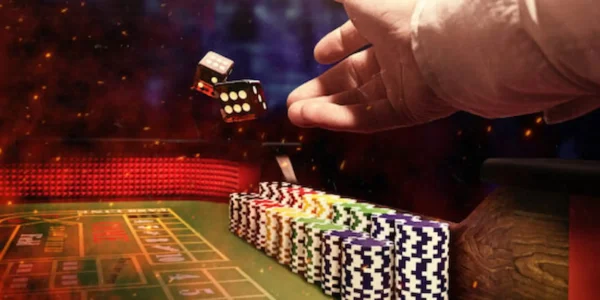
Craps grew out of old dice traditions and was shaped into its modern form in American casinos. The table looks complex at first glance because it’s mapped with many bets, but the heart of the game is straightforward: two dice, a shooter, and a round structure that repeats. The atmosphere tends to be one of the loudest on the floor because multiple people play along together on the same core bets.
How a round actually plays
Each round starts with a come-out roll from the shooter. A Pass Line bet wins straight away on 7 or 11, loses on 2, 3, 12, and sets a point on 4, 5, 6, 8, 9, 10. Once a point is set, the shooter keeps rolling. Hitting the point before a seven pays Pass Line; rolling a seven first (seven-out) ends the round and loses the Pass Line. A Don’t Pass position works the other way.
Once the point is on, an extra wager called Odds can be added behind Pass or Don’t Pass. Odds pay true odds, so there’s no house edge on that add-on. That’s one reason many experienced players consider Pass or Don’t Pass plus Odds the cleanest way to play the main game.
Wheel of Fortune
Wheel of Fortune-style games, nicknamed after TV game shows, divide the wheel face into numbered segments or wedges. A presenter spins the wheel, the indicator stops on a number, and winning bets pay according to that number. Some versions add multipliers to crank up the drama on a second spin or to boost the next outcome.
On PokerStars, these live casino sessions are intentionally energised by the host and visual design, while staying transparent about odds and outcomes. There are several live formats; one of the more unusual and entertaining is Live Adventures Beyond Wonderland.
Live Adventures Beyond Wonderland
This wheel game looks and feels like Alice in Wonderland crossed with a slightly cheesy game show, in the best possible way. Adventures Beyond Wonderland, hosted on PokerStars, leans into bold colours, oversized props, hosts in full Wonderland character, and augmented reality that makes the studio feel like the storybook has come to life.
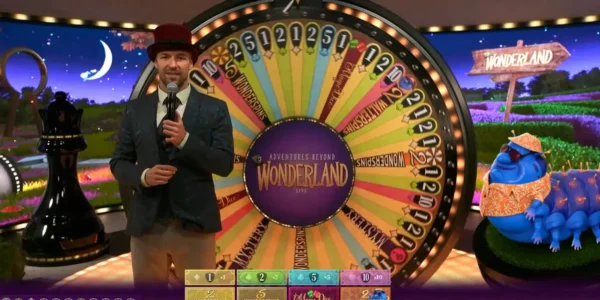
The heart of the game is a huge money wheel dressed with Wonderland-inspired symbols. Beneath the playful look, the format stays simple. The wheel has 54 segments. Most are plain numbers (1, 5, 10, 20) that work like standard money-wheel bets. The Wonderland twist comes from the bonus spaces: WonderSpins and Magic Dice. Chips go down on a number or a bonus, the host spins, and payouts follow the posted table when the pointer lands. A live tracker shows recent outcomes and stats for transparency.
The features carry the theme. WonderSpins moves the table into an animated scene with a second wheel where multipliers and special symbols can stack during the bonus. Magic Dice plays like a quick board game: a coloured die is chosen and moves across a 2D path dotted with multipliers, hearts, and the occasional blocker, collecting boosts along the way. Now and then, characters like the Caterpillar pop in with a surprise, adding to the game-show feel.
What Players Should Keep in Mind
Because this is a pure game of chance, there’s no strategy layer like the one found in land-based and online blackjack. Bankroll structure does the heavy lifting; many players keep stake sizes steady and focus on enjoying the show. The presentation keeps the pace and makes sessions more social, but the underlying maths stays the same.
Spinning the Wheel Is Simple
The host explains the spin, the wheel turns, and the studio team does the rest. That simplicity is the draw: rather than managing a list of decisions, the player picks where they hope the wheel will stop.
Baccarat
Baccarat looks elegant, but it’s not complicated. The table presents three main bets, Player, Banker, and Tie, and the dealing rules run automatically. Totals aim for nine; tens and face cards count as zero; Aces count as one. If a two-card total goes over nine, the first digit is dropped, so a 7 and 8 (which add to 15) is valued at five.
What Happens in a Baccarat Hand
Two hands are dealt: one labelled Player, one labelled Banker. Depending on the totals shown, a third card may be drawn according to fixed rules. There’s no decision to make after betting, which some players find relaxing.
When the drawing stops, whichever side sits closer to nine wins. Banker typically carries a slightly lower house edge than the Player, which is why many consider it the steadier long-run choice. Tie pays more but happens less often, so many experienced players treat it as a side interest rather than the main plan.
Table Details That Matter
Live and RNG baccarat titles on PokerStars display the rules clearly, especially when it comes to commissions. The standard version applies a commission to Banker wins; some variants tweak this with specific payouts to rebalance the numbers. Either way, the info box explains the key points for transparency. As with every online casino game, steady stake sizes and session limits keep the experience enjoyable.
Three Card Poker
Three Card Poker blends poker hand ranks with a short, tidy round structure. It is played against the house rather than other players, and offers two routes at once: Ante-Play (compete against the dealer) and Pair Plus (a separate wager that focuses on the strength of the player’s own three-card hand). The pace is quick, which appeals to players who like more compact rounds.
Choosing the Betting Path
On Ante-Play, a bet is placed on the Ante. Three cards are then dealt face down, and the player decides whether they want to fold or match the Ante with a Play bet. The dealer needs to have a qualifying hand for the comparison to happen. If the dealer doesn’t qualify, the Ante pays 1:1 and the Play bet returns. If the dealer does qualify, the two hands are compared: if the player’s hand is higher, both Ante and Play pay 1:1; if the dealer’s hand is higher, both bets lose; a tie pushes both.
On Pair Plus, there’s no decision after the deal; the bet pays from a separate paytable on a pair or better, with bigger hands paying more.
Pai Gow Poker
Pai Gow Poker takes inspiration from the Chinese game Pai Gow and reinvents it with cards. Each player gets seven cards and sets two hands: a five-card high hand and a two-card low hand, with the high hand ranked above the low. The dealer sets a house hand using a fixed guide (known as the House Way) and makes two comparisons: high vs high, low vs low. If both hands win, the player wins the bet (some tables charge a commission); a split is a push; losing both is a loss.
Why Do Players Like Pai Gow Poker?
The push rate is higher than in most table games, so swings tend to be gentler. Decisions are about how to set two hands and compare strength, not constant hit or stand calls, so the pace is measured and there’s time to think. Before joining a table, players should check the rules, especially how commissions apply and how jokers work (usually as limited wilds that complete straights and flushes or count as an Ace).
Sic Bo
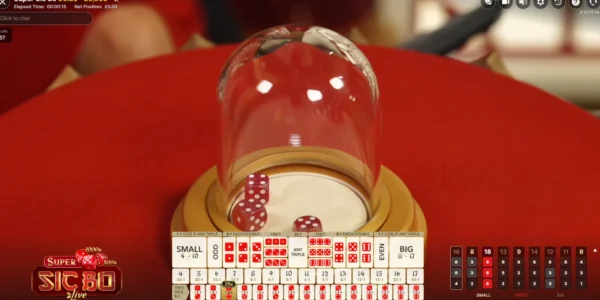
Sic Bo is a pure dice game with a wide betting range. Three dice are rolled; the table offers wagers on totals, specific triples, doubles, combinations, and the familiar Small and Big bands that cover most outcomes except triples. There’s no strategy that can change the odds, but there are choices involving which parts of the board to play and how to size bets.
What Players Watch Out For
On a Sic Bo board, not every bet behaves the same way. Small and Big hit more often, so the results feel smoother. Picks like a specific triple or an exact total land less often, but the payout is higher when they do. Many players build around Small or Big and add an occasional precise pick (for example, a specific total, a named triple or double) for a bit more excitement.
Red Dog (Yablon)
Red Dog deals two face-up cards. The player bets if a third card will fall between the two ranks shown. The wider the spread, the better the odds of landing in the middle, and the payout adjusts. If the two cards are consecutive (for example, 7 and 8), the round pushes. If the two cards are the same rank, a third card is drawn; if it matches that, the hand pays the higher pair payout; if it doesn’t, the round pushes.
Why It Stays Under the Radar
Because decisions are limited, the session often comes down to stake sizing and how much of the payout table is in play. Many players enjoy Red Dog as a change of pace between longer sessions and like how different it feels from online blackjack.
Caribbean Stud Poker
Caribbean Stud deals five cards to the player and five to the dealer (typically with one dealer card face up). After viewing the cards, the player can fold or place a bet to continue. The dealer needs to qualify, usually Ace-King or better, for the comparison to happen. If the dealer cannot qualify, the Ante pays and the second bet returns. If the dealer does qualify, hands are compared and paid according to the paytable.
Why Is Caribbean Stud Not as Common as It Once Was?
It runs at a steady pace and offers a progressive jackpot option in some versions, but the base house edge is higher than in classics like blackjack or baccarat. The progressive can be exciting when big hands land, yet it also increases the cost of play.
Casino War
With Casino War, the dealer and player both get one card, and the higher card wins. A tie does not pay immediately; many versions offer a choice to surrender a portion of the bet or go to war by matching the stake and taking another card. Going to war keeps the session lively, but it also shows the game’s nature: pure luck with very little decision-making. Because it’s easy to follow and quick to play, it’s a good alternative to games that require more decisions.
Related Casino Game Articles


Casino Hold’em
Casino Hold’em brings the classic Texas Hold’em structure to a table where the house is the opponent. Two cards are dealt to the player and two to the dealer; five community cards arrive as flop, turn, and river. The player places an Ante, looks at two cards, and chooses to Call (placing an additional bet) or fold. The dealer needs a qualifying hand (typically a pair of 4s or better in some versions) for the comparison to happen. If the dealer does not qualify, the Ante pays and the Call returns. If the dealer qualifies, the best five-card hand wins using standard poker rankings.
Key difference between Casino Hold’em and Texas Hold’em
The key point is that this is poker against the house, not player versus player. The Ante often includes bonuses for big hands, regardless of whether the dealer’s hand qualifies, so the paytable is worth a close read.
Mississippi Stud
Mississippi Stud isn’t a dealer versus player comparison game. Instead, the player wagers on achieving a certain five-card poker hand from two personal cards and three community cards revealed one by one. After each reveal, the player can fold or raise within limits. The final five-card result is paid according to the paytable. Pairs of sixes or better typically start the pays.
High Card Flush
High Card Flush flips the usual poker focus. The goal is a flush with the most cards; rank only breaks ties when flush lengths match. Players place an Ante, receive seven cards, and then decide whether to raise based on the longest flush they hold. The dealer needs a qualifying flush (for example, a three-card flush) for comparisons to happen; otherwise, Ante pays even money, and the raise is returned. Some versions include side pays for long flushes, such as five, six, or seven cards.
Dragon Tiger
Dragon Tiger deals one card to Dragon and one card to Tiger, with the higher card winning. Suits don’t matter, and Ace is typically low. There’s no drawing and no second round, just a quick resolution for each hand. Some versions include Tie or Suited Tie as optional side bets with higher payouts.
Many players who enjoy the simplicity of baccarat often like Dragon Tiger because it’s even more direct. The appeal is how simple it is to play while still carrying tension.
Dragon Tiger Side Bets
Dragon Tiger includes side bets that sit next to the main Dragon or Tiger pick. They settle on the single card dealt to that side and pay on size (Big or Small) or parity (Odd or Even), separate from the main result.
For Big or Small, Dragon Big and Tiger Big pay when that side’s card is 8 or higher and lose on 7 or lower. Dragon Small and Tiger Small pay on 6 or less and lose on 7 or higher.
For Odd or Even, the Odd ranks are A, 3, 5, 9, J, K; the Even ranks are 2, 4, 6, 8, 10, Q. The 7 doesn’t count in either set. If a 7 lands, all Odd or Even bets on that side lose. Side bets are not tied to the main pick, so a player can back Dragon on the main bet and Tiger Odd as a side bet in the same round, with each one settling separately.
Teen Patti
Teen Patti, a three-card comparison game, sits close to Three Card Poker in how it plays but uses its own ranking system. In some versions, a pure sequence outranks a set. Because rank order can differ from traditional poker in these versions, new players should check the ranking chart and any side-bet options before taking a seat.
The Basics of Teen Patti
Teen Patti, often called Indian Flush or Indian Poker, is a three-card comparison game played with a standard 52-card deck. The aim is straightforward: build the strongest three-card hand at the table while the pot grows through betting.
A round starts with all players posting the ‘boot’, the initial bet that forms the pot. The dealer then gives three cards to each player, one at a time, face down. From there, a player can act as Blind or Seen. Blind play keeps the cards face down; Seen play looks at the cards before acting. A Blind player can switch to Seen later in the hand, after which actions follow the Seen rules.
Betting moves around the table until only one player remains, or until two players are left and one calls Show. In a Show, both hands are revealed and the higher hand takes the pot. If the hands match exactly, the player who asked for the Show loses. Tables usually set different minimums for Blind and Seen actions. Blind actions follow the table minimum, while Seen actions often require a higher amount, commonly twice the Blind minimum, with exact stakes defined by the table rules agreed before the dealing stats.
Final thoughts
Lesser-known casino games are not hidden because they are difficult. They are just less visible because the most popular casino games take the spotlight. Once discovered, players find titles that have a huge range of paces and decision styles. Craps adds a social aspect, baccarat runs on automatic rules, and games like Three Card Poker and Caribbean Stud offer short poker versus house rounds.
What the games here have in common is that many have been flying under the radar for years, which makes them feel a touch more exclusive to those who come across them on PokerStars.

FAQs
What counts as a lesser-known casino game?
Which of these games is the easiest to learn quickly?
Do any of these games remove the house edge?
What should a player read before playing a lesser-known casino game?
Is there a best lesser-known game?
How should a player manage stakes on lesser-known games?

Top Content


Trending