The Evolution of Slot Machine Mechanics: From Mechanical Reels to Digital Innovation
Modern slots on PokerStars are a long way from the heavy mechanical machines that first appeared more than a century ago. What began with physical reels, gears and a lever has gradually become a digital casino game built around software, Random Number Generators and features that simply would not have worked on the earliest machines.
The same basic setup is still there. Symbols land on reels or a grid, the game checks them against its paytable and any payout is based on the rules built into that particular slot. What has changed is almost everything around that process, from the way the reels work to the number of paylines and features such as cascading symbols, expanding Wilds and separate bonus games.
Where Slot Machines Began
The earliest slot-style machines appeared during the 1890s, when coin-operated games were becoming increasingly common in bars and other public venues. One of the best-known early examples came from Sittman and Pitt in New York. Their machine used five drums carrying a total of 50 playing card faces. A player inserted a coin, pulled a lever and the drums stopped to form a poker hand.
It was closer to a mechanical version of poker than the three-reel slot most people would recognise today. It also did not have the automatic cash payout system that became an important part of later machines. Venues could instead offer prizes such as drinks or cigars depending on the hand that appeared. It showed that spinning drums could be used to create different combinations, but the next major step was to simplify the idea.
Charles Fey and the Liberty Bell
In the mid-1890s, San Francisco mechanic Charles Fey created the machine generally credited as the first true slot. The Liberty Bell used three reels rather than five poker drums, with symbols including hearts, diamonds, spades, horseshoes and the Liberty Bell itself.
Using three reels and a much smaller group of symbols also made automatic payouts easier to handle mechanically. The machine didn’t need to recognise dozens of different poker hands and could instead check a much simpler set of combinations.
That format became hugely influential. Three reels, a lever and a horizontal payline became the familiar slot-machine setup copied by many later manufacturers. For decades, the basic process stayed pretty much the same. A player pulled the lever, the reels spun and the final symbols across the centre of the machine decided whether there was a payout.
Fruit Symbols and the Classic Slot Look
The Liberty Bell established the three-reel format, but the symbols soon started to change. During the early 20th century, fruit symbols such as cherries, lemons, oranges and plums began appearing on machines. They became associated with machines offering gum and other non-cash prizes, helping to create the fruit-machine style that is still familiar today.
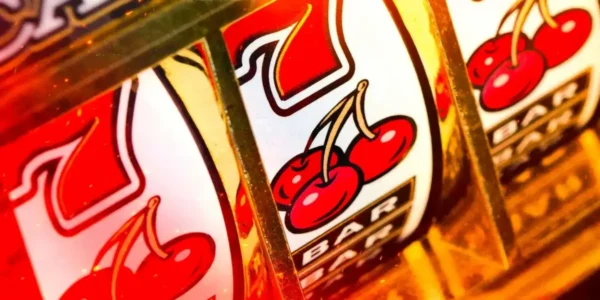
Cherries, bells, BAR symbols and red sevens have survived long after the original machines disappeared. They can still be found in plenty of modern online slots, including games that otherwise have very little in common with their mechanical predecessors. Those early machines were much simpler than modern slots. There was generally one payline running straight through the middle of three reels, while the number of symbols that could physically fit around each reel was limited. Every possible result had to come from those physical strips.
Electromechanical Slots: When Electricity Took Over
The 1960s brought one of the first major technological changes to slot machines. Machines started moving away from systems powered entirely by springs, gears and other mechanical parts. Electrical components gradually took over more of what was happening inside the cabinet, even though the machines still looked familiar from the outside. One of the best-known examples was Bally’s Money Honey, released in 1964.
Money Honey is widely recognised as the first fully electromechanical slot machine. It still had physical reels and kept the familiar side lever, but much of the work inside the machine was handled electrically. Electric motors could control the reels, while hopper systems made larger automatic coin payouts possible. Lights and sound effects also became easier to add, and machines could support more than one coin per spin.
Video Slots: Replacing Physical Reels with a Screen
The 1970s saw the arrival of video slots. In 1976, Fortune Coin developed an early video slot using a modified 19-inch Sony television as the display. Instead of physical reels turning behind the front of the machine, the reels appeared electronically on the screen. Developers were no longer limited by what could physically fit inside a cabinet.
A video slot could show more reels and rows, switch between different screens and add animations that would have been impossible with metal reels. A normal spin could also lead into a completely separate bonus without adding another mechanical system inside the machine. The screen could show far more than three spinning reels. Different backgrounds, bonus rounds, extra symbols and changing reel setups could all be handled by software.
Virtual Reels Changed Slot Maths
Mechanical reels were restricted by the number of physical stops that could fit around them. Computerised slots were not. During the early 1980s, Inge Telnaes patented a system commonly known as virtual reel mapping. Instead of the game only recognising the symbols physically shown on a reel, the computer could work with a much larger number of virtual positions.
A visible reel might still show cherries, bells, sevens and other familiar symbols, but different numbers of virtual positions could be connected to each one. A common symbol might have many virtual positions behind it, while a much rarer symbol might only be connected to a small number.
Those virtual positions are handled behind the screen, while the player only sees the symbol that appears on the reel. This gave developers much more control over how common or rare individual symbols could be without needing hundreds of physical stops on a reel. It also made much larger top prizes possible. A rare combination could have a much lower probability than would have been practical on a small mechanical reel.
Related Casino Articles

How RNG Technology Works in Modern Slots
Modern digital slots use a Random Number Generator, normally shortened to RNG, to determine game outcomes. Online slots use a software-based Random Number Generator. Instead of physically spinning a reel and waiting to see where it stops, the software continuously creates values through a mathematical process designed to make the results unpredictable during normal play.
When a spin begins, values from the RNG are used to determine the positions or symbols needed for that round. The game then checks those against its reel system and paytable. The spinning reels are the visual part of the process. They don’t gradually decide where they are going to land as they slow down. The game software has already selected the result, and the reel animation shows it to the player.
Every Spin Is Separate
Normal RNG-based spins are independent of the ones before them. A long run without a large payout doesn’t make one due. A large payout on one spin also doesn’t prevent another from appearing straight after.
This is where terms such as hot slots and cold slots can be misleading. Random results naturally form streaks, so a player might see several payouts close together or go through a longer period without one. Neither means the software has changed its odds; it just all comes down to chance. The RNG can’t look at a player’s previous results and then decide that the next spin should give them a break. Casino games on PokerStars follow the same principle. RNG outcomes are based on the programmed maths of the individual game instead of changing depending on whether a player has recently won or lost.

From One Payline to Dozens of Lines
The earliest slots generally had one horizontal payline. If the right symbols lined up across the middle of the three reels, the machine paid the amount shown on its paytable. If they didn’t, the spin ended. Video technology made far more paylines possible. Once five-reel, three-row slots became common, paylines could run across different parts of the reels. Games started appearing with 9, 15, 20, 25 and even more lines. Some went straight across, while others travelled diagonally or followed zig-zag patterns. Over time, developers started creating systems that didn’t use traditional paylines at all.
Ways to Win
A Ways to Win slot generally looks for matching symbols on adjacent reels instead of checking fixed lines. The symbols can appear on different rows as long as they meet the rules of that particular game. A five-reel slot showing three symbol positions on each reel can offer 243 Ways to Win. Increasing that to four positions on each reel can create 1,024 ways.
This gave games far more possible combinations without needing hundreds of visible paylines. More Ways to Win doesn’t automatically mean a player is more likely to finish ahead in the long run. The number just describes how the slot checks combinations. The RTP, volatility and paytable still decide the maths behind the online slot.
Megaways Blew Open Ways to Win
Megaways took the Ways to Win format way further. Instead of every reel always displaying the same number of symbols, the reel heights can change from spin to spin. One reel might show three symbols while another shows five or six. A typical six-reel Megaways game can offer up to 117,649 Ways to Win. That shows how far titles have come since the early mechanical slots.
Cluster Pays and Scatter Pays
Other modern slots have moved away from left-to-right combinations completely. A Cluster Pays game generally looks for groups of matching symbols touching horizontally or vertically on a larger grid. A Scatter Pays game can work differently again, with payouts based on a certain number of matching symbols appearing anywhere on the screen instead of touching or following a line.

Classic Reels vs Cascading Symbols
Traditional slot reels spin, stop and then wait for the next paid round. Cascading symbols add another stage. When a paying combination lands, the symbols that formed it disappear from the grid. New symbols then fall into the empty spaces and the game checks again.
If another payout happens, another cascade can follow. Different developers use terms such as Cascades, Avalanches or Tumbles, but the basic mechanic is similar. One paid spin can contain several cascades before no new paying combination lands.
Some games keep the mechanic simple and only replace the symbols. Others can add multipliers or other features as more cascades happen. A mechanical reel could stop on a group of symbols, but it couldn’t remove those individual symbols and drop new ones into the empty spaces.
Wild Symbols Became More Flexible
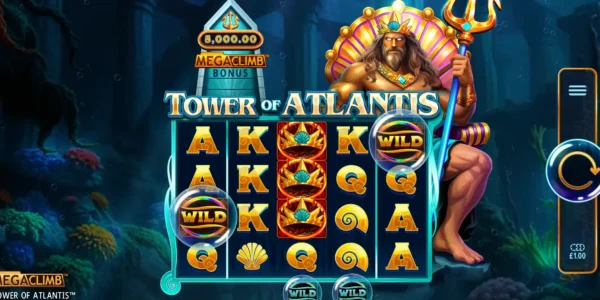
The Wild is one of the most familiar slot symbols. The Wild can replace another paying symbol to help make a win. Standard Wilds are still used in modern casino games on PokerStars, but software has allowed the same basic symbol to work in many different ways.
Expanding Wilds
An Expanding Wild grows after landing. Depending on the game, a Wild showing up in one position might expand until every spot on that reel becomes Wild. This creates more Wild positions without needing several separate Wild symbols to land naturally.
Walking and Moving Wilds
A Walking Wild or moving Wild can stay on the reels for more than one spin. It can move one position or one reel at a time until eventually leaving the screen. Some versions trigger respins while the Wild stays in play, while others only appear during a bonus such as Free Spins.
Multiplier Wilds
Some Wilds also come with multipliers. If the Wild becomes part of a payout, that amount can be multiplied by a set value such as 2x or 3x. Certain games allow several Wild multipliers to work together, while others use them differently. These features all start from the same simple Wild concept but use software to add more to what the symbol can do.

Bonus Features Became Games Within the Game
Separate bonus games were difficult to build into a traditional mechanical slot, but digital slots don’t have any physical restrictions. Free Spins are one of the most familiar examples. A set number of spins is played without another bet being made, usually with changes such as extra Wilds or multipliers.
Another common modern feature is the Hold and Win format. Cash or special feature symbols land and stay on the grid while a small number of respins start. When another symbol lands, the respin counter can reset which gives more chances for extra symbols to appear. Some versions add collectors, Jackpot symbols or changing cash values. Digital slots can also switch to a completely different grid during a bonus. The normal five reels can disappear and be replaced by a collection screen, prize ladder or another feature built specifically for that part of the casino game.
How Jackpots Changed
The physical limits of early mechanical reels also restricted what could be done with jackpots. Digital technology allows more complicated jackpot systems to be added. Some slots use a fixed jackpot, where the amount stays at a set value. Others use progressive jackpots, where the displayed value can increase as bets are made across one or more connected casino games.
Progressive jackpots became more common during the 1980s, with several machines able to add to the same jackpot. Online slots later made it possible to connect games across wider networks. A jackpot reaching a certain size, or going a long time without being won, doesn’t mean it is due to pay out.
RTP and Volatility Are Not the Same Thing
RTP and volatility both describe how a slot is built, but they look at different parts of the game. RTP shows the theoretical percentage returned over a very large number of spins, while volatility gives an idea of whether payouts tend to be smaller and more frequent or larger and less frequent. Neither one can predict what will happen on the next spin.
From Casino Cabinets to Online Slots
The move online during the 1990s changed the physical side of slot machines completely. A land-based slot has a cabinet containing its own screen, controls and internal hardware. Depending on the machine, it may also have equipment such as a cash acceptor or ticket printer. An online slot is software shown through a casino platform like PokerStars.
The game can run through secure server systems while the player’s device displays the reels, buttons and animations. Modern games are commonly built using technologies such as HTML5, which allows the same slot to work across desktop computers, tablets and smartphones. This is one reason online casinos can offer such a broad range of games without needing a separate physical cabinet for every title. On PokerStars Casino, an older-style three-reel fruit slot can sit alongside games using Megaways, Cluster Pays, cascading symbols or large bonus grids.
How Modern Slots Are Tested
Slot software offered through regulated casinos is tested against strict technical standards before and after release. Testing checks things like the RNG, payouts and whether the game is working as it should. Independent labs such as Gaming Laboratories International (GLI), eCOGRA and iTech Labs test casino software to check that it works properly.
Large numbers of automated game rounds can be used when checking whether the software works as expected. That doesn’t mean a small sample of spins should match the listed RTP. Random variation means short sessions can look very different. The testing instead looks at the game over a much bigger number of spins to check its maths and randomness.
PokerStars also uses independently tested RNG technology for its casino games. A regulated slot doesn’t change the next result because of what happened on previous spins. A recent win doesn’t tell the slot to lower the next payout, and a run of losses doesn’t make the game increase it.
Final Thoughts: From Levers to Digital Reels
Slot machines have changed massively since the first mechanical games appeared in the 1890s. The Liberty Bell helped establish the familiar three-reel format. Electromechanical machines introduced electrical components, motors and larger automatic payouts, while video slots removed the need for physical reels altogether.
Modern games on PokerStars now cover everything from simple three-reel slots to games with changing reel heights, cascading symbols and large bonus grids. Despite all those changes, the outcome of each normal spin is still random. Modern features can add far more to a slot than Charles Fey could ever have fitted inside the Liberty Bell, but they do not give a player a way to predict or guarantee a particular result.

FAQs
How Does an RNG Work in a Slot?
What Is the Difference Between Paylines and Ways to Win?
What Are Cascading Symbols?
What Is an Expanding Wild?
What Does RTP Mean in Slots?
How Are Modern Online Slots Different From Mechanical Slots?
Top Content

Trending