A Complete Blackjack Hand Guide For Beginners
Blackjack is one of the most approachable and strategically rewarding online casino games in the world. The rules are simple enough to learn in minutes, yet every hand contains a subtle balance of risk, probability, and psychology.
Whether you are playing blackjack online or at a live blackjack table with cards flicking across the felt, the decisions you make with each hand determine whether you stay in the game longer and whether you give yourself the best chance to win.
This guide breaks down the most common hands you’ll encounter in blackjack and how to play them correctly under European rules, the version most frequently found in UK online casinos. At times we’ll note where Atlantic City or Vegas-style games differ slightly, so you’ll feel confident wherever you choose to play.
Knowing how to handle each type of hand will help you avoid wasting chips on unnecessary risks or missing opportunities to double down, split, or hit with the strongest possible edge.
The more familiar you become with how to respond to each starting total, the more blackjack transforms from guesswork into informed, skilful play.
Before You Begin: Understanding Hand Types
Blackjack hands fall into three major categories, and recognising which one you’re holding is the first step toward choosing the right move.
Hard hands
These contain no Ace counted as 11. An Ace may be present, but if using it as 11 would bust the hand, it becomes worth 1 instead. Hard hands have less flexibility and tend to require more caution.
Soft hands
These include an Ace counted as 11. They give you room to take an additional card without risk of an immediate bust, which often allows for more aggressive plays.
Pairs
Two cards of the same rank. These hands introduce the option to split, turning one hand into two and offering a powerful way to turn a neutral start into a winning opportunity.
We’ll examine each type in detail, along with examples of how the correct move depends heavily on the dealer’s upcard.
Card Values and the Best Starting Hands
Every card in blackjack contributes to the strength of your opening decision. Number cards from 2 through 10 are worth their face value. Jacks, Queens, and Kings each count as 10. Aces are the most valuable cards because they can be either 1 or 11, allowing players to escape from awkward totals or create powerful soft hands.
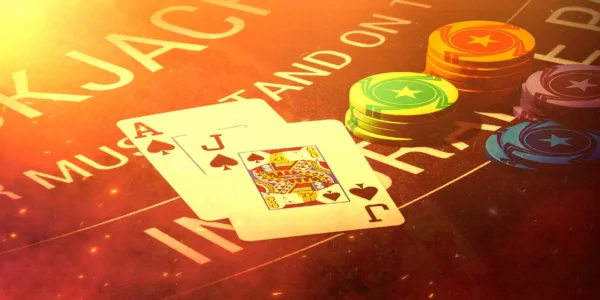
The strongest starting hand you can ever receive is a natural blackjack — an Ace plus a 10-value card dealt immediately. It beats every other hand except a matching natural blackjack from the dealer, where the result usually becomes a push.
Below this, hands like 20 and 19 rank as excellent positions to start from, putting the player in a winning position unless the dealer keeps pace. Hands in the mid-teens sit in a danger zone where correct decision-making becomes far more important.
Blackjack doesn’t always reward perfection instantly. Even so, understanding which hands give you the strongest advantage is the foundation of improving long-term success.

Playing Hard Hands – When You Cannot Rely on the Ace
Hard hands are firm totals. They give you less room to manoeuvre, and mistakes with them are some of the most costly in blackjack. When players attempt to “protect” hard hands by standing too early, they often lose slowly but consistently. When they become too aggressive, they may bust unnecessarily.
The key is reading both your own strength and the dealer’s revealed card, then choosing the move that limits the most risk over time.
Hard 17 and Above – When to Stand
Any hand totalling 17 or more is too fragile to improve safely. Drawing even a mid-value card could cause an immediate bust. These are natural stand positions because your goal is no longer to improve but to allow the dealer a chance to fail.
Many new players panic when the dealer shows a strong upcard like a ten or an Ace. It can be tempting to take a chance, but mathematically the correct play is almost always to stand. The small chance of improvement does not outweigh the huge chance of busting.
In the long run, you save far more by protecting these totals.
A special case occurs with a hard 17 that includes an Ace converted to 1. It feels like it could become a better total, but the risk remains just as high. Stand and trust the odds.
Hard 13–16 – The Toughest Hands in Blackjack
These hands cause more doubt and more discussion than anything else in the game. They are not strong, yet not weak enough to justify reckless hitting. Many players remember the pain of busting when starting on a hand like 16 and hold back on future attempts.
However, standing on a weak total against a dealer’s strong card (7 or higher) is simply handing the advantage to the house. If the dealer is likely to build a competitive total, your priority is to try to reach one too.
The exception comes when the dealer is already in a dangerous position. When the dealer shows a 2 through 6, they are statistically more likely to bust because they are forced to draw to at least 17. In that case, standing on 13–16 becomes a defensive move. You avoid self-destruction and let the dealer’s risk work against them.

Success with these hands is entirely about reading the dealer’s weakness or strength correctly. That is where most improvement occurs for novice players.
Hard 12 – The Most Misplayed Hand
Hard 12 feels uncomfortable on both sides. If you hit, cards like 10 or a face card will bust you. If you stand, it often feels like you will lose anyway. The instinct to protect the total leads many players into passive mistakes.
What matters most is what the dealer shows. Against a 4, 5, or 6, the mathematically correct play is to stand, giving the dealer room to fail. Against any other card, hitting becomes the stronger choice.
Hard 12 is not a hand to fall in love with. Think of it more like a rescue mission. You are trying to get it out of danger.
Hard 5–11 – The Opportunity Zone
Hands totalling 5-11 are some of the most exciting in blackjack. They cannot bust with one hit, which means they hold immense improvement potential. Hard 11 is particularly powerful. You are just a single card away from the best ranges in the game.
This is where doubling down frequently becomes correct. You are seizing the moment when the probability of landing a strong total is at its highest. Even if the dealer shows a good upcard, your position is too favourable to ignore.
A beginner might hesitate, afraid to double and lose more. A strategist recognises the long-term value. You will not always win, but you will give yourself the best chance to earn more when the opportunity appears.
If doubling isn’t an option, as in some European rules depending on the hand, hitting should still be done without hesitation. Time is on your side with these early totals.
Playing Soft Hands – The Power of the Ace
Soft hands are some of the most misunderstood hands in blackjack. New players often treat them with the same fear that comes with hard totals because the numbers look similar. A soft 18 doesn’t appear much stronger than a hard 18 to someone who isn’t familiar with the maths of blackjack.
But a soft hand behaves entirely differently. The Ace sitting in the hand gives you protection.
If the total becomes too high, the Ace simply shifts down to a value of 1 instead of 11, turning the hand into a hard total. This flexibility makes soft hands some of the most exciting opportunities in the game.
Think of soft hands as a safety net. You are allowed to be ambitious.
Soft 20 and Soft 21 – The Elite Hands
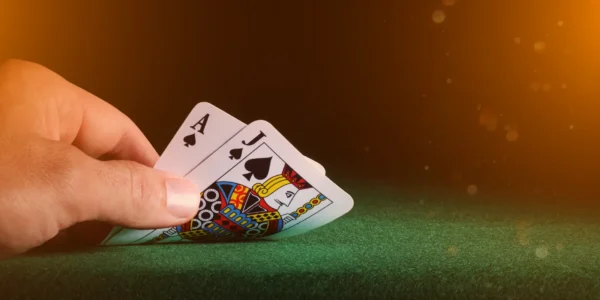
Soft 20 (Ace + 9) and soft 21 (Ace + 10) are already strong enough to beat most dealer totals. These are hands you should almost always stand with.
The only exception involves rule-specific situations such as doubling after split or bonus payouts on certain combinations, but under standard European rules, the correct decision is to protect your advantage. These hands don’t need help. They need patience.
Standing keeps the pressure where it belongs. On the dealer.
Soft 19 – A Strong Hand With Room to Improve
Soft 19 is one of the better soft totals, but there are situations where players can become even more aggressive. Against a dealer showing weakness, typically a 5 or 6, there is strong justification for doubling down when permitted.
Some players hesitate. They worry that turning a soft 19 into a hard total after a hit will cost them the win. Yet statistically, the dealer is much more likely to bust or finish behind you when forced to draw.
When doubling isn’t allowed, a stand is still perfectly acceptable. Soft 19 rarely needs to take big risks.
Soft 18 – The Hand That Confuses Everyone
Soft 18 is the most debated soft total in blackjack. Many beginners fall into the trap of standing every time because 18 feels high. The problem is that against strong dealer upcards, particularly a 9, 10, or Ace, soft 18 loses far too often if left untouched.
The correct move varies depending on the situation. When the dealer looks strong, hitting will help you escape a losing outcome. When the dealer looks weak, doubling can turn a neutral position into a winning one. Only when the dealer confirms a position of disadvantage should you settle for standing.
Soft 18 is not a resigned hand. It is a decision-making hand.

Soft 17 and Below – Where Aggression Matters
These hands are built for improvement. A soft 17 should almost never be a final stop. If the dealer is aiming for a firm 17 or higher, your soft 17 cannot keep up. You must hit, and in many cases, doubling down is your best option if allowed.
Players who freeze with soft 17 often lose quietly. You give up the potential to land a winning number while the dealer continues upward. The Ace protects you from harm. Let it work.
Below that, soft 16, 15, and 14 all benefit from a confident hit. They are not yet competitive hands, and you must push forward while you still cannot bust.
Why Soft Hands Win More for Skilled Players
Soft hands elevate blackjack into a strategy game. With hard hands, your decisions often focus on limiting damage. With soft hands, you have a real chance to build a lead. This is where experienced players gain much of their long-term advantage.
Every time you take the correct risk with a soft hand, you create extra opportunities to win. Every time a player chooses to stand too early out of fear, the house edge grows stronger. Understanding soft hands removes that fear.
Playing Pairs – When Two Cards Become an Opportunity
Pair hands unlock a powerful feature of blackjack: splitting.
Instead of fighting with one uncertain hand, you can turn a single pair into two separate wagers, each with its own chance to win. This transforms many marginal starts into strong positions.
That said, not every pair is created equal. Some are ideal for splitting because of what they can become. Others look tempting but are best left together. The key is understanding whether splitting increases your chances against the dealer’s upcard or makes things more complicated than they need to be.
The Best Pairs to Split
Two Aces are the clearest example. An Ace has the power to shape any hand, and when you hold two of them, you effectively have two chances to form a 21. Splitting Aces is one of the strongest moves in blackjack and is almost always the correct choice.
Eights form the second most important split. A total of 16 is one of the worst positions in blackjack because almost any hit carries danger, and almost any stand leaves you too weak. Splitting 8–8 gives you a fresh start on each hand and a chance to escape from that problem.
Pairs You Should Usually Keep Together
Tens, Jacks, Queens, and Kings all count as 10. Holding two of them makes 20, one of the most dominating totals in blackjack. Breaking up such a strong hand is rarely worth the risk.
It can be easy to imagine the excitement of winning two hands instead of just one, but the reality is simple. A hand worth 20 already beats nearly everything the dealer can make. Keep the advantage intact.
The Tricky Middle Ground
Pairs such as 4–4 or 5–5 often provoke debate. Splitting 5–5 gives you two weak hands instead of one strong option to improve into a solid total. In most cases, it is better to treat 5–5 as a hard 10 and consider doubling instead.
Pairs like 6–6 or 9–9 depend completely on the dealer’s upcard. If the dealer is vulnerable, splitting puts you on the front foot. If the dealer is likely to build a competitive hand, a cautious approach may be the smarter choice.
Good blackjack strategy recognises that splitting is not simply about doubling your opportunity. It is about reading the moment correctly and investing in the better long-term outcome.
Doubling Down – When Confidence Pays
Doubling down gives you the opportunity to turn a strong hand into a powerful move. You double your bet and take one final card. It is a bold gesture that says you believe you already have the advantage.
The most frequent and rewarding situations for doubling down come when your total sits between 9 and 11. These are the totals most likely to leap into the winning zone with one more card.
Many beginners shy away from doubling because they feel exposed. It is uncomfortable to risk extra money on just one draw. Yet that very discomfort is where your edge grows. Blackjack rewards well-timed aggression, not passive defence.
One thing to remember is that not all rule sets allow doubling on any two cards. Some European blackjack formats only allow doubling when your hand is valued at 9, 10, or 11. When opportunities are limited, taking them is even more essential.
Confident doubling is a sign of a player who understands what their hand can become, not just what it is now.
Understanding Dealer Upcards – The Clue Every Hand Depends On
Your hand alone does not determine the best move. Blackjack is a reactive game. Nearly every decision depends on what the dealer shows.
A dealer displaying a 2 to 6 is in a precarious position. They must continue drawing until reaching at least 17, and low cards often drag them into totals that force risky moves. When the dealer is vulnerable, your strategy shifts. You protect your chips. You stand more often. You let the dealer make the mistakes.
A dealer showing a 7, 8, 9, 10, or Ace has strength behind them. In those moments, caution turns into opportunity. You hit and double more to escape losing outcomes. You aim to build a hand that can hold its ground.
Every time you glance at a dealer’s upcard, you are reading the future. Not perfectly (nothing in blackjack is certain) but clearly enough to make the right decision far more often.
Great blackjack players do not fear what they see on the table. They react to it with controlled logic.
Bust Avoidance vs Win Maximisation
A core lesson new players must learn is that avoiding a bust does not always mean you are protecting your bankroll. Standing on a low but “safe” total like 14 when the dealer looks strong simply means you are refusing to fight for the win. You lose quietly instead of risking the chance to improve.
Good blackjack play seeks the highest expected value, not the lowest emotional discomfort.
Whenever a decision feels like it is based on fear rather than logic, stop and reassess. Blackjack is not a game of minimising embarrassment. It is a game of making smart moves even when they feel risky.
Why Splitting Tens Is Almost Always Wrong
A starting total of twenty beats the large majority of dealer outcomes. Splitting tens gives you two hands that must work hard to reach the same success rate. The only true motivation to split tens comes from emotion and a desire to show off or chase a bigger win.
Online vs Land-Based Decision Making
Playing blackjack online has one major advantage. Time. You can take a moment before committing to a move and consider whether your plan follows the correct strategy. Many platforms also offer optional strategy hints or basic reminders, helping players learn while they play.
In a live casino, decisions can feel rushed. The table moves with a rhythm, and players worry about slowing everyone down. Dealers may not offer advice. The noise and speed make it easier to slip into instinctive behaviour rather than strategic play.
Both formats offer different strengths. Online blackjack helps you practise correctly. Live blackjack keeps the game thrilling and immersive.
The best approach is often to learn online, applying strategy in a calmer environment, then bring those skills confidently to a casino table.
Related Blackjack Articles

FAQs
Is there ever a time when you should stand on a soft hand?
Why is 16 such a difficult hand to play?
How important is the dealer’s upcard?
Do pair splits guarantee better winning chances?
Conclusion
Blackjack rewards those who make consistent, informed decisions. Every hand is an opportunity to either place yourself in a stronger position or let the dealer take control.
The more you play, the more each total becomes familiar. You will know when to hit, when to double, when to stand and when to split. You will stop reacting to fear and start responding to the situation.
Remember that blackjack is not about winning every single hand. It is about giving yourself the advantage in as many hands as possible over time. When you understand how to play the cards in front of you, and read the card the dealer shows, confidence follows naturally.

Top Content


Trending