Roulette Betting Options Explained – Inside and Outside Bets
Roulette is often described as one of the simplest casino games to learn, yet it offers one of the broadest selections of betting options found anywhere on a casino floor. A player can back a single number, cover several numbers at once, wager on colours, dozens, columns or even whether the winning number will be odd or even.
Despite the apparent complexity of the betting layout, every wager follows the same mathematical principle: the more numbers your bet covers, the greater your chance of winning, but the smaller the payout becomes.
This balance between probability and reward is one of the reasons roulette has remained a casino favourite for centuries. Unlike games that require strategy or complicated rules, roulette allows players to choose the type of experience they want.
Some prefer the excitement of backing individual numbers in pursuit of large payouts, while others enjoy the steadier rhythm of outside bets that provide more frequent wins.
One of the biggest misconceptions surrounding roulette is that certain bets are somehow “better” than others. In reality, every standard betting option on a particular roulette wheel carries exactly the same house edge. Higher payouts do not represent better value. They simply compensate for lower probabilities. Understanding this relationship is the key to enjoying roulette with realistic expectations and greater confidence.
In this guide, we’ll explain the difference between inside and outside bets, how payouts are calculated, and why choosing the right wager is less about mathematics and more about finding the style of play you enjoy most.
Understanding the Roulette Betting Layout
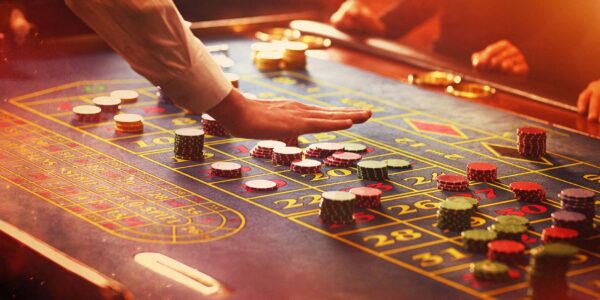
At first glance, a roulette table can appear intimidating. The betting layout is covered with numbers, coloured boxes and intersecting lines that may look confusing to someone playing for the first time. Fortunately, the layout is much easier to understand once you realise that it is divided into two main sections.
The centre of the table contains the numbered grid. Here, players can place chips directly onto individual numbers or on the lines separating them to create a variety of more precise wagers. These are known as inside bets because they are placed inside the numbered area of the layout.
Around the outside of this numbered grid sit larger betting boxes covering colours, odd and even numbers, high and low numbers, dozens and columns. These are known as outside bets because they are positioned around the edge of the table.
Although these two categories look very different, they are governed by exactly the same principle. The only real difference is the number of winning outcomes each wager covers.
Inside bets generally cover fewer numbers and therefore pay more if successful. Outside bets cover larger portions of the wheel, making them more likely to win but offering smaller payouts.
What Are Inside Bets?
Inside bets are often considered the most exciting wagers in roulette because they focus on specific numbers or relatively small groups of numbers. Players who enjoy chasing larger payouts frequently spend most of their time exploring these betting options.
While inside bets can produce substantial returns from a single successful spin. It’s important to remember that they naturally win less often than outside bets. The larger payouts exist precisely because the probabilities are lower.
Straight-Up Bets – The Classic Roulette Wager
The straight-up bet is perhaps the most iconic roulette wager of all. Here, the player places a chip directly onto a single number and hopes that the ball lands in that exact pocket. If it does, the bet pays 35 to 1, making it the highest-paying standard wager available in roulette.
The appeal of the straight-up bet is easy to understand. Watching the ball bounce around the wheel while hoping it settles on one chosen number creates an excitement few casino games can match. Many players enjoy selecting favourite numbers, birthdays or lucky numbers, adding a personal element to each spin.
Of course, the higher payout reflects the relatively small chance of success. On a European roulette wheel, only one of the 37 pockets will produce a winning result for a straight-up wager. While wins may be less frequent, they are also among the most memorable moments in roulette.
Split Bets – Increasing Your Chances Slightly
Players looking for a little more coverage often move to split bets. A split bet is created by placing a chip on the line separating two adjacent numbers. This means either number will produce a winning result.
Although the payout falls to 17 to 1, the probability of success roughly doubles compared to a straight-up bet.
Many players like split bets because they still retain the excitement of backing relatively specific numbers while offering slightly greater flexibility. It’s also common to use split bets when two favourite numbers happen to sit next to one another on the betting layout.
Street Bets – Covering an Entire Row
A street bet expands coverage further by including three consecutive numbers across one horizontal row. Rather than selecting individual numbers, players are effectively backing an entire row on the betting grid.
This increases the probability of success again while reducing the payout to 11 to 1. Street bets often appeal to players who enjoy a middle ground between precision and coverage. They still provide attractive payouts but reduce the number of unsuccessful spins compared to betting individual numbers.
Corner Bets – A Popular Balance of Risk and Reward
Corner bets cover four numbers by placing a chip where the corners of four adjoining numbers meet. Many experienced roulette players appreciate corner bets because they represent an appealing balance between probability and payout.
The wager still offers an attractive return of 8 to 1 while covering enough numbers to produce reasonably regular wins during longer sessions. For players who enjoy inside betting without pursuing the highest possible volatility, corner bets often become a favourite option.

Six-Line Bets – The Largest Traditional Inside Bet
The six-line bet, sometimes called a double street, is created by placing a chip on the outer line between two adjacent rows. This covers six numbers in total.
Naturally, increasing coverage once again reduces the payout, but it also creates a noticeably higher chance of success compared to the more selective inside wagers.
Many players use six-line bets as a way of staying involved in the action while still enjoying the larger payouts associated with inside betting. It offers something of a bridge between the precision of individual numbers and the broader coverage found among outside bets.
Why Players Enjoy Inside Bets
Inside betting is often associated with excitement because every spin carries the possibility of a significant return. While losing streaks can be longer due to the lower probabilities involved, successful spins often produce memorable moments that keep players coming back to the roulette table.
For many people, inside bets capture the classic image of roulette chips scattered across the numbered grid as the wheel spins and anticipation builds.
Importantly, however, these wagers are not mathematically superior to any others on the table. Their larger payouts simply reflect the fact that they cover fewer possible outcomes.
What Are Outside Bets?
While inside bets focus on individual numbers and relatively small sections of the layout, outside bets take a much broader approach. These wagers cover larger groups of numbers, making them more likely to produce winning results but offering smaller payouts in return.
Outside bets are often where new roulette players begin because they are straightforward to understand. Instead of choosing a specific number, you’re predicting a broader outcome, such as the colour of the winning pocket or whether it will be odd or even.
Although the payouts are lower than inside bets, outside wagers can create a steadier rhythm during a session. Frequent wins help maintain momentum, which is one of the reasons many recreational players favour this style of betting.
Red or Black
Perhaps the most famous wager in roulette is betting on Red or Black. Instead of selecting an individual number, players simply predict the colour of the winning pocket. Since there are 18 red numbers and 18 black numbers on a European wheel, these bets cover almost half of the available outcomes.
The presence of the green zero means neither red nor black covers every possible result. If the ball lands on zero, both colour bets lose. This single pocket is what creates the house edge in European Roulette.
Because these wagers cover so many numbers, they pay even money (1:1). While the potential return is modest, many players enjoy the consistency of this betting style. Wins arrive more frequently than they do with inside bets, making for a smoother overall experience.
Odd or Even
Odd and Even bets work in exactly the same way as Red or Black. Players simply predict whether the winning number will be odd or even. Again, each option covers 18 numbers, with the zero sitting outside both categories.
Many players like these bets because they are easy to understand and require very little thought before each spin. Rather than analysing individual numbers or sections of the layout, they can focus purely on enjoying the rhythm of the game.
Like all even-money wagers, Odd and Even bets pay 1:1 and carry exactly the same house edge as every other standard wager on the wheel.
High or Low
High and Low bets divide the numbered wheel into two equal halves. A Low bet covers numbers 1 through 18, while a High bet covers numbers 19 through 36.
Again, the green zero is excluded from both groups, meaning these bets have the same probability and payout as Red/Black and Odd/Even.
Many players alternate between these different even-money bets throughout a session simply to add variety. Mathematically, however, they are identical. Choosing High instead of Red, for example, does not improve your chances of winning over time. It simply changes which numbers you’re rooting for.
Dozens
Dozens represent a natural step between outside bets and inside bets. Instead of covering half the wheel, each dozen covers 12 consecutive numbers. Players can choose:
- First Dozen (1–12)
- Second Dozen (13–24)
- Third Dozen (25–36)
Because each wager covers fewer numbers than an even-money bet, the payout increases to 2:1. Dozens are popular because they strike a comfortable balance between probability and reward. They don’t win quite as frequently as Red or Black, but they provide noticeably larger payouts when successful.
Many regular roulette players enjoy combining dozen bets with smaller inside wagers to create a more varied betting pattern.
Column Bets
Column bets function very similarly to dozens. Rather than dividing the wheel numerically, they divide the betting layout vertically into three columns. Each column also contains 12 numbers, meaning the payout and probability remain identical to dozen bets.
From a mathematical perspective, there’s no difference between betting a column or a dozen. The decision comes down entirely to personal preference and how you prefer to spread your chips across the table.
Combining Inside and Outside Bets
One of the biggest advantages of roulette is that players are never limited to a single betting style. In fact, many experienced players enjoy combining inside and outside bets during the same spin.
Imagine placing a wager on Black while also selecting two favourite numbers with straight-up bets. If one of those numbers happens to be black, both wagers win simultaneously. If another black number lands, the outside bet still produces a return.
This doesn’t improve the mathematics of the game, nor does it reduce the house edge. However, it creates a more personalised experience and allows players to build betting patterns that match their preferences.
Some people enjoy spreading chips around the layout because it keeps every spin interesting. Others prefer placing just one carefully chosen wager and waiting for the result. Neither approach is mathematically better than the other.

Understanding Payouts and Probability
Perhaps the most important concept in roulette is understanding the relationship between payouts and probability. Many new players see a 35:1 payout for a straight-up bet and assume it must be the “best” wager on the table.
In reality, that payout exists because winning is much less likely. The fewer numbers a bet covers, the larger the reward must be to compensate for the reduced probability of success.
Likewise, outside bets pay smaller amounts because they win more frequently. This balancing act is carefully built into every roulette wheel. If a single-number bet paid 50:1 instead of 35:1, players would have a mathematical advantage over the casino.
Conversely, if it only paid 20:1, the house edge would become significantly larger. The current payout structure has been carefully calculated to ensure every standard bet delivers the same long-term value.
That’s why experienced players don’t choose bets based solely on payout size. Instead, they select wagers that match the kind of session they want to enjoy.
The House Edge Stays the Same
One of roulette’s most misunderstood features is the house edge. Many players believe certain bets offer better value than others because they either pay more or seem to win more often.
Neither assumption is correct. On a European roulette wheel, every standard betting option carries exactly the same house edge of approximately 2.7%. Whether you bet on:
- A single number
- A split
- A corner
- Red
- Black
- Odd
- Even
- A dozen
- A column
The casino’s mathematical advantage remains identical. This is an important point because it allows players to choose whichever betting style they genuinely enjoy, without worrying about selecting an inferior wager.
The only meaningful mathematical difference comes from the version of roulette being played. European Roulette uses a single zero, producing a house edge of 2.7%.
American Roulette introduces an additional double-zero pocket, increasing the house edge to 5.26%. French Roulette can reduce the effective house edge even further on certain bets thanks to rules such as La Partage and En Prison, making it one of the most player-friendly versions of the game available.
Common Mistakes New Roulette Players Make
One of the most common mistakes among new roulette players is assuming previous spins influence future outcomes.
If Red has appeared six times consecutively, it’s natural to feel that Black must surely be next. This belief is known as the Gambler’s Fallacy, and it’s one of the oldest misconceptions in casino gaming. Every roulette spin is independent. The wheel has no memory, and previous outcomes have absolutely no effect on the next result.
Another frequent misunderstanding involves confusing bigger payouts with better value. As we’ve seen throughout this guide, larger payouts simply compensate for lower probabilities. They don’t improve the long-term mathematics of the game.
Some newcomers also spread chips across almost every section of the table in an attempt to guarantee frequent wins. While this increases coverage, it also reduces the size of potential returns and doesn’t alter the house edge.
Finally, many players spend too much time searching for the “perfect” betting system. Roulette has inspired countless progression systems over the years, but no staking pattern changes the underlying probabilities of the wheel. The most enjoyable sessions usually come from understanding the game, setting sensible budgets, and choosing betting styles that suit your own preferences rather than chasing a mythical winning formula.
Choosing Bets That Match Your Playing Style
One of the great strengths of roulette is that there is no single “correct” way to play. Unlike some casino games where strategy plays a significant role, roulette allows players to tailor each session to their own preferences simply by choosing different betting options.
Some players enjoy the anticipation that comes with placing a handful of chips on individual numbers. They understand that wins may be less frequent, but they appreciate the excitement that accompanies the possibility of a substantial payout. For these players, the thrill comes from waiting to see whether one carefully selected number, or perhaps a favourite birthday or lucky number will appear.
Others prefer a steadier pace. They are happy to accept smaller payouts in exchange for more regular wins, often favouring even-money bets such as Red or Black, High or Low, or Odd or Even. These wagers can create a smoother playing experience because winning outcomes occur more frequently, helping to maintain momentum throughout a session.
Many experienced roulette players don’t limit themselves to one approach. Instead, they mix inside and outside bets depending on how they want a particular session to feel. One evening they might focus on dozens and columns, while another session could revolve around favourite numbers and corner bets. This flexibility is one of roulette’s enduring attractions.
The important thing to remember is that your betting style should be guided by enjoyment rather than the belief that one option is mathematically superior. Since every standard wager on the same roulette wheel carries the same house edge, the “best” bet is simply the one that makes the game most entertaining for you.
Bankroll Considerations
Understanding roulette betting options is only part of enjoying the game responsibly. Equally important is choosing stake sizes that fit comfortably within your entertainment budget.
Players are often tempted to increase their bets after a losing streak, believing that a win must surely be just around the corner. Others become more adventurous after a series of successful spins, increasing stakes because confidence is running high. While these reactions are understandable, they don’t change the underlying mathematics of roulette.
Every spin remains completely independent of the last. The amount you wager has no influence over where the ball lands.
For this reason, many players find it helpful to decide on a session budget before they begin. This is simply an amount they’re comfortable spending on entertainment, much like purchasing tickets for a sporting event or going out for dinner. Once that budget has been reached, the session comes to an end regardless of previous results.
Likewise, sensible stake sizing allows players to enjoy more spins and experience a broader range of roulette’s betting options without placing unnecessary pressure on individual outcomes. Roulette is designed to be entertaining. Managing your bankroll responsibly helps ensure it stays that way.
Why Understanding the Bets Improves the Experience
Learning the different betting options doesn’t just improve your knowledge of roulette. It often makes the game significantly more enjoyable.
When new players first approach the table, the betting layout can appear intimidating. There are dozens of possible wagers, unfamiliar terminology, and a variety of payout structures that may initially seem confusing. However, once players understand the relationship between coverage, probability and payouts, the table begins to feel remarkably logical.
Suddenly, the different wagers make sense. Straight-up bets offer exciting rewards because they are difficult to hit. Corner bets provide a balanced middle ground. Outside bets create longer, steadier sessions through broader coverage.
Rather than selecting wagers at random, players begin making informed decisions based on the type of experience they want from each session.
This understanding also removes many of the myths surrounding roulette. Players no longer need to search for “lucky” bets or wonder whether one section of the table offers better value than another. They can simply enjoy the game for what it is: a beautifully balanced casino classic where every standard wager has been carefully designed around the same mathematical principles.
Related Roulette Articles



Final Thoughts
Roulette has remained one of the world’s favourite casino games because it offers an ideal combination of simplicity, excitement and variety. The betting layout may appear complicated at first, but every wager follows exactly the same logic. Cover fewer numbers and you’ll receive larger payouts when successful. Cover more numbers and you’ll enjoy more frequent wins, albeit with smaller returns.
Neither approach is inherently better. Inside bets appeal to players who enjoy higher-risk, higher-reward gameplay, while outside bets provide a steadier rhythm that many players find equally entertaining. Between those two extremes lies an enormous range of betting possibilities, allowing every player to develop a style that suits them.
Perhaps the most valuable lesson for any roulette player is understanding that complexity does not equal value. A complicated betting pattern offers no mathematical advantage over a simple wager on Red or Black. Likewise, chasing larger payouts does not improve long-term returns. Every standard bet on the same roulette wheel carries the same house edge, meaning the decision ultimately comes down to personal preference rather than probability.
Whether you’re making your very first roulette bet or returning to the table after years of experience, understanding the relationship between payouts, probability and coverage allows you to approach every spin with greater confidence and realistic expectations.
At its heart, roulette is about anticipation, entertainment and enjoying the experience. Once you understand how the betting options work, you’re free to focus on what has made the game so enduringly popular for generations. You can play many versions of online roulette at PokerStars Casino.
FAQ
What is the difference between inside and outside bets?
Which roulette bet has the highest payout?
Do outside bets offer better odds?
Can I combine different roulette bets?
Why does the straight-up bet pay 35:1 instead of 36:1?
Is European Roulette better than American Roulette?
Top Content


Trending