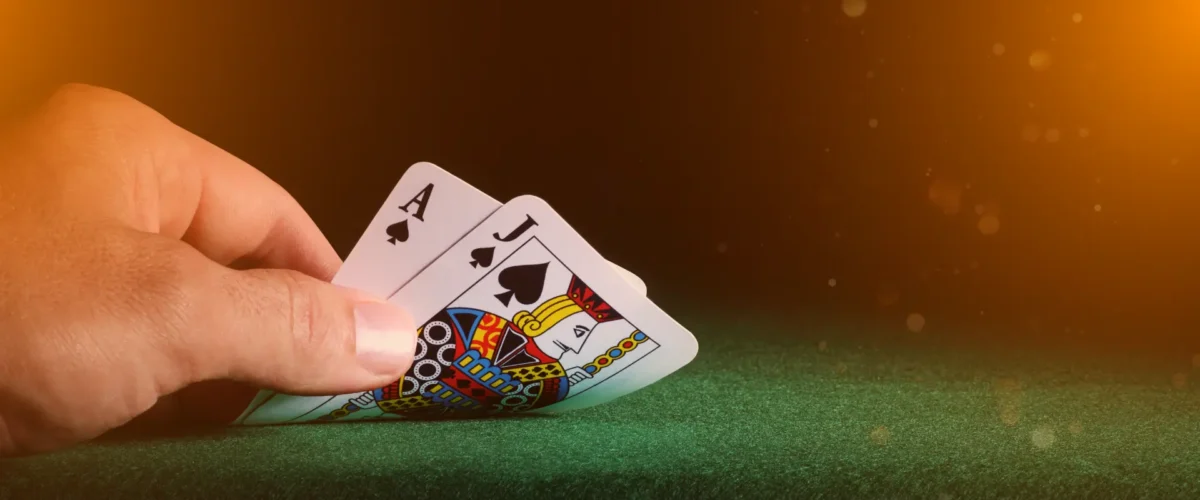
What is Basic Blackjack Strategy
Blackjack sits at the heart of online casino play on PokerStars, in both live casino studios and RNG formats. The rules are clear, the rhythm can be quick, and each round presents several decisions for the player.
Basic strategy doesn’t promise wins; it frames decisions so the game stays fair and, most importantly, enjoyable. With PokerStars’ basic strategy charts, a player can see why a 3:2 natural is stronger than 6:5, how S17 (dealer stands on soft 17) differs from H17 (dealer hits soft 17), and where rules such as late surrender, double after split, and re-splitting Aces become smart, table-focused options.
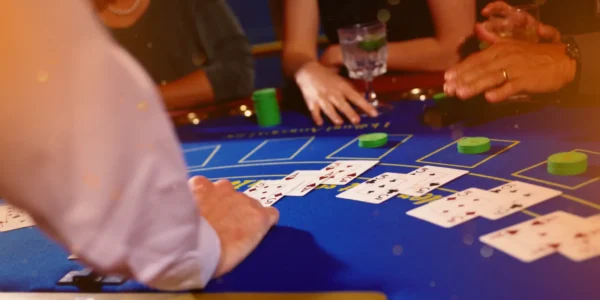
What Does Basic Strategy Mean?
Basic blackjack strategy is a clear map for main-hand decisions. It pairs the player’s total with the dealer’s upcard and, based on probabilities, points to the best move: stand, hit, double, split, or (where allowed) surrender. When the chart matches the table rules, the average disadvantage shrinks compared with many other classic casino games. Results still swing in the short term, but the benefit is steadier choices and fewer avoidable mistakes over time.
One chart doesn’t fit every table. Two near-identical live-dealer games can ask for different plays because of a single line in the rules. A natural that pays 3:2 changes the strategy compared with 6:5. A dealer who stands on soft 17 (S17) plays differently from one who has to hit on soft 17 (H17). Shoe size matters as well. Options such as double after split and late surrender open or close certain routes on the chart. Popular online casino platforms, like PokerStars, lists these details clearly, so players can see the rules up front before committing to a table.
The Rules That Change the Maths
Reading the information panel is part of basic strategy, not an extra step. Many experienced players choose a table, match the chart to the rules, and then let each hand play out with the chart as a guide.
Blackjack Payouts: 3:2 Versus 6:5
A natural blackjack is an Ace plus a ten-value card on the initial deal. Paying 3:2 rather than 6:5 is one of the biggest single differences in a standard game. Naturals appear often enough that payout differences add up. For sessions using basic strategy, 3:2 is a good starting point to look out for when reading the rules.
S17 Versus H17
Soft 17 means A-6 (Ace with a 6). On S17 tables, the dealer stands; on H17 tables, the dealer takes a card. That extra draw can nudge some of those hands into stronger totals and help reduce busts. Because the Ace can drop to 1, A-6 + 10 = 17, and A-6 + 4 = 21. The shift is small in a single round but shows over time.
Related Blackjack Articles
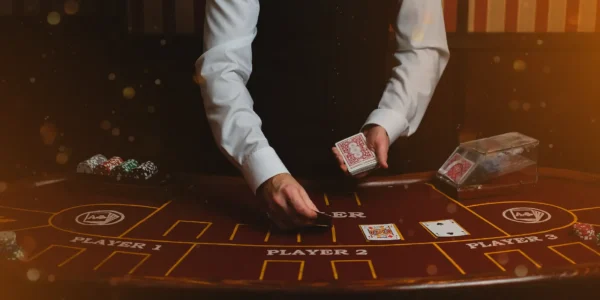


Deck Count and Shoe Size
Fewer decks can be slightly kinder to the player. Multi-deck shoes are the modern standard because they keep dealing smooth and the game moving. Single-deck online is rarer and often tied to conditions that pull the edge back toward the house. Shoe size nudges how often naturals show up and can reduce some of the value from some doubles and splits. This effect is modest hand to hand but more noticeable across longer sessions. It’s another reason many basic blackjack strategy players stack small gains, preferring 3:2, leaning toward S17, and using surrender or double after split when allowed.
Table Options That Can Help the Player
Double after split keeps pressure available after dividing pairs. Late surrender offers a clean exit in a small set of poor matchups. Re-splitting Aces adds extra upside to a strong start (table rules often still limit split Aces to one card each). Each option helps in small ways; together, they make using strategy-focused play smoother.
How to Read and Use a Strategy Chart
A basic blackjack strategy chart can look complicated at first glance, but is straightforward once the layout becomes familiar. The left side lists the player’s starting hands; the top shows the dealer’s upcard from 2 through Ace. Hard totals, soft totals, and pairs sit in separate blocks because the play logic shifts with hand type. Where a row and column meet is the suggested action. Match the chart to the table’s rules, then use it throughout the session.
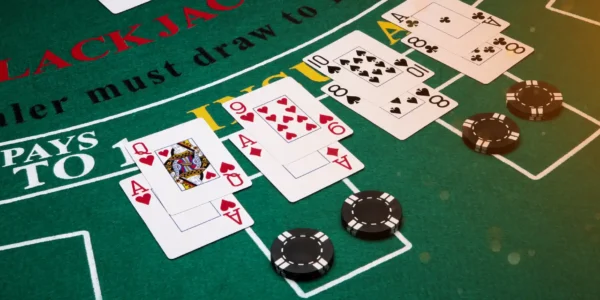
Hard Totals Explained
Hard totals are hands with no Ace, or with an Ace that must count as 1 to avoid busting. Totals of 11 or less are simple: drawing a ten-value card cannot push them over 21. 10 and 11 are classic attack totals and often double well. The tricky band is 12–16, where the dealer’s upcard decides it. Against 4–6, the dealer is more likely to bust, so standing on those middling totals is usually the best move—except 12 vs 2 or 3, which hits. Against 9, 10 and Ace, standing often gets risky, so a hit is recommended.
Soft Totals Explained
Soft hands count the Ace as 11 unless a hit would bust; then the Ace drops to 1, and the total becomes hard. That safety net makes soft hands flexible. Soft 17 (A-6) plays well against weak upcards: it can take a card and, with friendlier rulesets, double with limited downside because the Ace can step down to 1. Soft 18 (A-7) changes with the upcard: double against 3–6, stand against 2, 7 or 8, and take a card against 9, 10 or Ace. Same total, different roles; it just depends on the dealer’s upcard.
Pairs and Splitting in Basic Strategy
Pairs sit apart because splitting changes the number of hands, the bet, and the suggested decisions. Aces are always split on basic charts; two fresh starts with an Ace each have far more potential than a single hand holding A-A. 8-8 is also split because keeping it together means standing on 16 or drawing and risking a bust. 10-10 stays together; a made 20 is already strong enough against most dealer totals.
A 9-9 hand shows how splitting depends on the situation. It splits against many low upcards and stands against 7 because 18 often edges the dealer’s likely 17 in that pairing. 7-7 splits against low upcards and becomes a hit against high ones, where splitting loses value. 4-4 is sensitive to double after split: when that rule is allowed and the dealer shows 5 or 6, splitting opens strong doubles on the next card; without it, the recommended suggestion of the chart often changes.
What is Surrender in Blackjack?
With late surrender, half the bet is lost after the dealer checks for blackjack. It’s used only in a few spots where the numbers start running cold in the long run, no matter if the hand hits or stands. Typical examples are 16 vs 10 (standard), 15 vs 10 (on many charts), and, on H17, 16 vs Ace appears more often.

PokerStars and Basic Strategy
A session played using basic blackjack strategy starts before the first card is dealt. PokerStars shows key rules in a clear panel for each blackjack title, so a player can match a chart quickly.
A good place to start is the info box, where the payout on naturals and the dealer’s S17 rules are clearly displayed. Shoe size appears for live formats, and RNG slots emulate a shoe. Options such as double after split, late surrender, and re-splitting Aces are also listed clearly. With those details in hand, the right chart can help players focus on making better decisions.
When playing with a chart, a 3:2 natural is a huge plus. A dealer who stands on soft 17 (S17) helps a little more. Surrender and double after split are typically useful table rules. None of this guarantees any wins, but it does help set up a clear plan when playing on a PokerStars live blackjack table.
Common Blackjack Misplays
Blackjack rewards calm, repeatable play. Charts are not a magic formula, but they help prevent mistakes. Hard 12 creates more tension than it should. Against a dealer 4, 5, or 6, basic strategy stands to avoid busting first; the dealer must draw. Against a dealer 2 or 3, most multi-deck charts switch to a hit because the bust chance isn’t high enough to justify sticking with a weak total. The number in the player’s hand is only half the decision; the dealer’s upcard is the other half.
Soft 18 (A-7) tempts many players to stand every time, but the truth is, the right play depends on the dealer’s card: stand against 2, 7, or 8; double against 3–6; take a hit against 9, 10, or Ace. Once the pattern becomes second nature, soft 18 stops feeling tricky.
Splitting tens can feel exciting in the moment, but it’s usually a mistake. A total of 20 is already strong against most dealer hands, and two new hands starting from 10 don’t, on average, perform better than keeping the 20.
Insurance is its own side bet against the dealer having blackjack. Without card-count information, it loses on average, so basic strategy leaves it alone. Fun extras like Perfect Pairs or 21+3 have their own pay tables and sit outside the main hand, adding more variety, but they don’t boost the expected payouts.
Live Dealer Blackjack on PokerStars
Live dealer blackjack on PokerStars goes beyond the standard tables, blending classic studio games with smart twists that change the feel without losing the basics. Two prime examples of this are Lightning Blackjack and Live Quantum Blackjack Plus.

Lightning Blackjack
Lightning Blackjack brings a game-show feel to a traditional layout. Multipliers apply to result bands 2–17, 18, 19, 20, 21, and blackjack, and typically range from x2 to x15. When a hand wins, the standard main-bet pays out, and the multiplier carries to the next hand. That carry is the signature feature: if a player wins on 17 when 4x is active, the round pays as normal, and 4x becomes the banked boost for the next hand. The sequence continues until a hand loses, then the carry ends. To fund the mechanic, Lightning tables apply a transparent Lightning fee to the initial bet, shown on screen.
Seating is always available with Lightning Blackjack, with several live tables. Only two player cards and two dealer cards are on the table; even with several players at the table, outcomes are resolved independently. It’s normal to see the dealer continue dealing after some players have stood, with those stand decisions locked while others take a hit. The visual style leans into black-and-gold with clear overlays and hosts who keep the studio lively without crowding the gameplay. Underneath, it remains standard blackjack, so basic strategy is still a useful tool.
Live Quantum Blackjack Plus
Quantum Blackjack Plus shifts the focus from carryover to round multipliers. At the start of each round, three or five ranks are marked as multiplier cards, which are usually x2.5, x3, x5, or x10, and the selections are shown clearly on screen. If the final player hand includes one or more of those ranks and beats the dealer, the main-bet payout is multiplied depending on the given value. When more than one rank applies, the effects stack. There’s one rule that shapes the table’s energy: a dealer three-card bust pushes the main bet unless a multiplier payout applies. Shoes are typically six decks, with shuffles timed to keep the pace quick and the presentation smooth. The studio look is neon-clad and futuristic, and the multiplier reveal creates a moment of excitement before the deal and decision phase. Quantum Plus also offers familiar side bets such as Perfect Pairs and 21+3, adding more variety without overshadowing the core mechanic.
Live PokerStars Blackjack
For players who prefer to stick with the classic format, Live PokerStars Blackjack includes a classy-looking studio, clear bet spots, and steady pacing. The table uses an eight-deck shoe, reshuffled throughout instead of after every hand. The rules are straightforward: blackjack pays 3:2; insurance is available when the dealer has an Ace and pays 2:1 only when the dealer has a natural; doubling on any two cards; pairs split once, and the dealer stands on all 17s (S17).
Practice Makes Perfect
Learning the chart can feel a little intimidating at first, but mastering it comes with practice. Many beginners start with hard totals and learn them in bands. Low hard totals draw freely because a single ten-value card can’t bust them. Tens and elevens are the pressure hands; they double when the dealer looks weak, with one small tweak when an Ace is showing on H17 tables. For 12–16, the dealer’s upcard decides it.
Low upcards, especially 4 through 6, make standing sensible on totals that feel awkward, because the dealer must draw into potential trouble. High upcards push those same totals toward a hit, and surrender layers in for the toughest matchups where the rules allow it.
Then move to soft hands, thinking of the Ace as a seatbelt. Soft 17 and soft 18 press when the dealer is weak and change pace when the dealer is strong. That flexibility is why soft hands often hide value that newer players can often overlook.
It’s advised to finish with pairs, beginning with the straightforward calls: A-A and 8-8 are better split, while 10-10 stays together. After that, the dealer’s upcard and double after split guide the rest, such as 4-4, 6-6, 7-7, 9-9. When a PokerStars live-dealer table allows double after split, 4-4 vs dealer 5 or 6 becomes a split because it can set up a strong double on the next card. Practice works best when it’s short and sharp; ten minutes of focused play beats an hour of unguided play.
Playing Responsibly
Keeping sessions structured really helps. A simple bet plan and a clear stopping point reduce the chance of getting carried away. Flat wagers, or gentler versions, work well with basic strategy. Expected value on the next hand comes from rules and decisions, not from what came before.
Any well-played session can finish behind; a session with lots of mistakes can still finish ahead. The reality is, short-term outcomes are unpredictable. The role of basic strategy is to reduce avoidable mistakes and keep decisions consistent. Treating blackjack as entertainment, with the chart as a guide, is a healthy way to approach land-based and live-dealer tables.
Card Counting and Basic Strategy
Card counting is often mentioned alongside basic strategy, but it’s a separate strategy. Counters estimate the mix of high and low cards left in the shoe and vary bets when the shoe has more tens and Aces. A common counting system assigns positive values to low cards and negative values to high; the running count tallies those values as cards appear, and the true count is divided by the decks remaining to scale bets or change play decisions.
Modern online blackjack is designed to stop counting in most formats. Live-dealer games use multiple decks (often up to eight) with constant shuffling that reduces the information counters need.
Final Thoughts
Basic blackjack strategy turns guesswork into focused play. It doesn’t guarantee wins, but it does help players make steadier decisions. PokerStars presents key rules clearly, such as whether a table pays 3:2 and whether the dealer stands on soft 17, so players can match the right chart to the table before they begin. Luck always moves the game in the short term, but the difference is that decisions follow mathematics rather than just hunches.
FAQs
What is basic blackjack strategy?
Why is 3:2 better than 6:5 on naturals?
What’s the difference between S17 and H17, and why does it matter?
Should insurance be part of basic strategy?
Can card counting affect the edge with live dealer blackjack?

Top Content


Trending